 Chris Robert
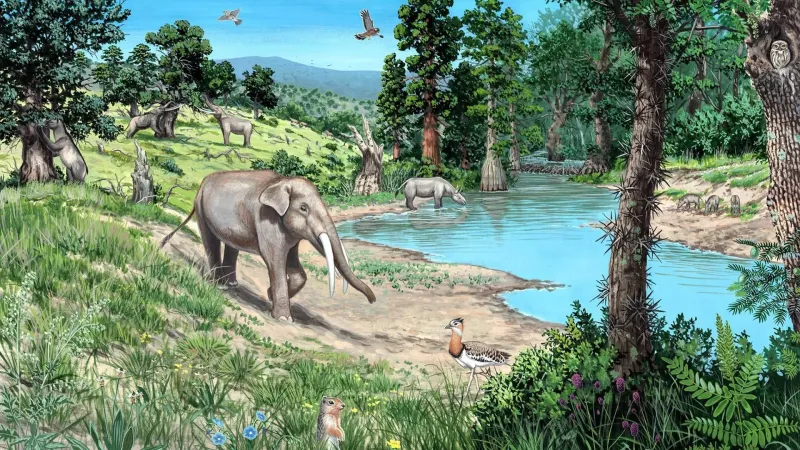
Scientists have unveiled compelling evidence overturning long-held beliefs about Europe's ancient ecosystems, demonstrating that for over 20 million years, the continent was characterized by expansive open woodlands, vibrant meadows, and abundant large grazing animals, rather than the monolithic dense forests traditionally imagined. This paradigm-shifting discovery directly impacts contemporary biodiversity conservation efforts and reforestation policies across the region.
The groundbreaking research indicates that the perceived natural state of much of Europe, often envisioned as a vast, unbroken canopy of trees, is a relatively recent phenomenon. Instead, paleoecological data now suggests a dynamic landscape mosaic where sunlight reached the ground, fostering rich undergrowth and diverse plant life.
This radical reinterpretation of European prehistory challenges the fundamental premise behind many modern environmental initiatives. Conservationists frequently advocate for extensive afforestation, assuming that maximizing tree cover is the optimal path to restoring ecological balance and combating climate change.
However, the new findings suggest that planting thick, closed-canopy forests in areas that were historically open could inadvertently harm the very biodiversity conservationists aim to protect. These dense plantations might suppress light-dependent plant species and disrupt habitats for animals adapted to more open environments.
For millions of years, large herbivores like ancient bison, wild horses, and other now-extinct megafauna played a crucial role in maintaining these open ecosystems. Their grazing, browsing, and trampling created clearings, prevented saplings from dominating, and facilitated the spread of diverse grassland and scrubland species.
The absence or scarcity of such large grazers in many contemporary European landscapes has allowed forests to become denser than their ancient counterparts, leading to a misconception about their historical structure. The research underscores the profound influence these animals exerted on shaping the continents natural heritage.
Understanding this deep ecological past is critical for designing future conservation strategies. A blanket approach to reforestation, focused solely on increasing tree density, may neglect the complex interactions that historically supported Europes rich biodiversity.
Instead, the scientific community may need to consider approaches that mimic these ancient conditions, potentially incorporating controlled grazing, selective thinning, and the reintroduction of large herbivores where feasible, to cultivate more diverse and resilient landscapes.
This revelation prompts a necessary re-evaluation of what constitutes a natural or restored European ecosystem. It shifts the focus from a purely arboreal vision to one that embraces the multifaceted tapestry of woodlands, grasslands, and meadows intertwined.
The implications extend beyond ecological theory, influencing policy decisions related to land management, climate change mitigation, and species protection across the European Union and beyond. Policymakers and environmental organizations will face complex choices about how to adapt existing strategies.
Ultimately, the discovery serves as a potent reminder of the dynamic nature of ecosystems and the importance of evidence-based conservation. It cautions against simplistic solutions, advocating instead for a nuanced understanding of historical ecology to guide future environmental stewardship.
This scientific re-evaluation highlights that successful ecological restoration demands a comprehensive appreciation of long-term environmental history, rather than relying on more recent, potentially misleading, historical baselines. It calls for adaptive and informed strategies to truly safeguard biodiversity.
The redefinition of Europes ancient forests prompts dialogue among scientists, conservationists, and governmental agencies about optimal practices for ecological restoration in the 21st century.
This research marks a significant pivot in how Europe perceives its ecological heritage and its future environmental trajectory.