 Chandra Wijayanto
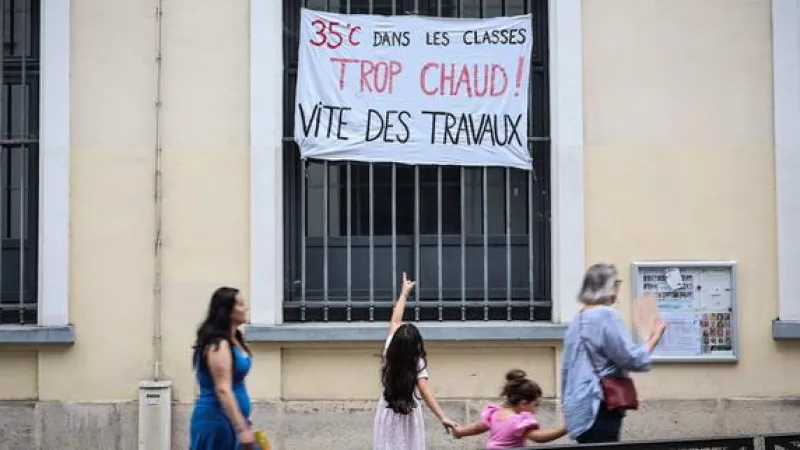
Across France, the national education system is contending with unprecedented heatwaves, resorting to improvised measures such as adjusted school schedules, temporary closures, and postponed examinations. This fragmented response highlights a profound lack of nationwide preparedness and adaptation strategies for the escalating impacts of climate change, leaving parents and educators to navigate uncertain conditions as hotter days loom.
The haphazard approach has manifested in various forms, including municipal authorities and regional education rectorates establishing crisis cells to coordinate local responses. Families often receive last-minute notices, urging them to keep their children home, disrupting daily routines and child-care arrangements for thousands of households.
Despite recurring warnings from climatologists and meteorologists, a coherent, national strategy from the Ministry of National Education remains notably absent. This void forces individual schools and local administrations to devise ad hoc solutions, creating disparities in how different regions cope with the severe weather.
The repercussions extend directly to student academic life. Oral examinations, crucial components of national assessment, have been rescheduled, adding stress and logistical challenges for both students and faculty. Such disruptions underscore the vulnerability of traditional educational calendars to extreme weather phenomena.
These recurrent heatwave events serve as a stark reminder of France's broader struggle to adapt to global warming. While other European nations are actively developing robust climate resilience plans, the situation within the French education sector suggests a significant deficit in proactive policy implementation.
The challenge is not unique to France. Other European nations are also grappling with intensifying summer temperatures. For instance, Italy has repeatedly faced severe alerts, with reports indicating that "Italy Braces: Eight Major Cities Under Red Heat Alert Sunday" as the continent experiences increasingly extreme heatwave conditions.
Experts warn that without fundamental changes in infrastructure and policy, such improvisations will become the norm rather than the exception. School buildings, many of which lack adequate insulation or cooling systems, are ill-equipped to provide safe learning environments during prolonged periods of high temperatures.
The reliance on families to keep children home further exacerbates social inequalities, disproportionately affecting low-income households where parents may lack flexible work arrangements or access to alternative childcare. This creates a ripple effect throughout the economy and society.
Addressing this vulnerability requires more than temporary fixes. It demands substantial investment in climate-resilient school infrastructure, the development of comprehensive national emergency protocols, and a fundamental shift in how educational planning accounts for future climate scenarios.
The ongoing struggles highlight a critical need for political will and concerted governmental action to safeguard the health and education of the nation's youth against the undeniable realities of a warming planet. The current piecemeal approach offers only a temporary reprieve, not a sustainable solution.