Edward DP Situmorang
Paris and Marseille have recently experienced severe unrest as widespread protests against the French government intensified, fueled by public discontent over the high cost of living, surging fuel prices, and dissatisfaction with the national education system. The demonstrations, which saw students, members of the Yellow Vest movement, and farmers converge, have led to violent clashes with police and instances of looting across major urban centers.
The economic grievances underpinning the nationwide demonstrations are profound. Many households are struggling under the weight of inflation, witnessing their purchasing power diminish as essential goods and services become increasingly expensive. Fuel prices, a perennial flashpoint for French social movements, have reached levels deemed unsustainable by a significant portion of the populace.
Beyond economic pressures, a palpable sense of frustration pervades the education sector. Students and educators alike are voicing concerns about perceived underfunding, systemic inequalities, and proposed reforms that many fear will undermine the quality and accessibility of public education. This segment of the protest movement highlights a generational anxiety about future opportunities and social mobility.
The resurgence of the Yellow Vest movement, or gilets jaunes, marks a significant development. This grassroots collective, known for its sustained protests against government policies since 2018, once again mobilized its members, bringing their signature high-visibility vests to the streets. Their participation underscores a deep-seated, ongoing distrust of established political institutions and a demand for more direct democratic representation.
Students represent a vocal component, actively participating in marches and occupations to champion their educational and economic rights. Concurrently, farmers have lent their considerable presence to the movement, amplifying concerns about agricultural policy, production costs, and the impact of global markets on their livelihoods. This diverse coalition signals broad societal dissatisfaction.
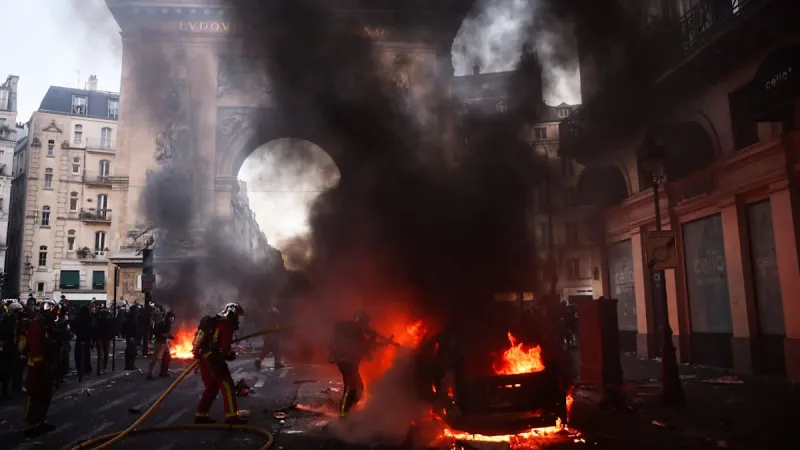
In Paris, peaceful marches swiftly devolved into scenes of chaos. Law enforcement officials deployed tear gas and water cannons to disperse crowds, while pockets of demonstrators engaged in property damage, setting ablaze refuse bins and defacing public infrastructure. Instances of looting were reported, targeting retail establishments in certain districts, leading to numerous arrests.
Marseille, France's second-largest city, also witnessed significant civil unrest. Confrontations between protesters and police forces flared up in key areas, resulting in injuries on both sides. The southern port city, known for its vibrant but sometimes volatile political landscape, became another focal point for the nationwide expression of discontent.
The government faces a critical challenge in navigating these escalating tensions. Officials have condemned the violence and property destruction while simultaneously reiterating a commitment to dialogue. However, critics argue that the administration's current approach has failed to mollify public anger or address the root causes of the widespread discontent.
These extensive French protests carry significant implications for the nation's political stability and economic trajectory. They represent a stark reminder of the populace's capacity for collective action when faced with perceived socio-economic injustices. The ongoing unrest poses a considerable test for the ruling majority and its ability to implement reforms amid public resistance.
While distinct in their specific triggers, the nationwide unrest resonates with a broader pattern of social movements observed across Europe and beyond. Many countries grapple with inflation, energy crises, and public dissatisfaction with governance, highlighting shared vulnerabilities in the global economic landscape. The international community watches closely as France grapples with its internal strife.
As the demonstrations continue, the immediate future remains uncertain. Authorities are bracing for further protests, and the potential for additional clashes remains high. The outcome of these negotiations and confrontations will undoubtedly shape domestic policy and potentially influence the political climate leading up to future elections.