 Debby Wijaya
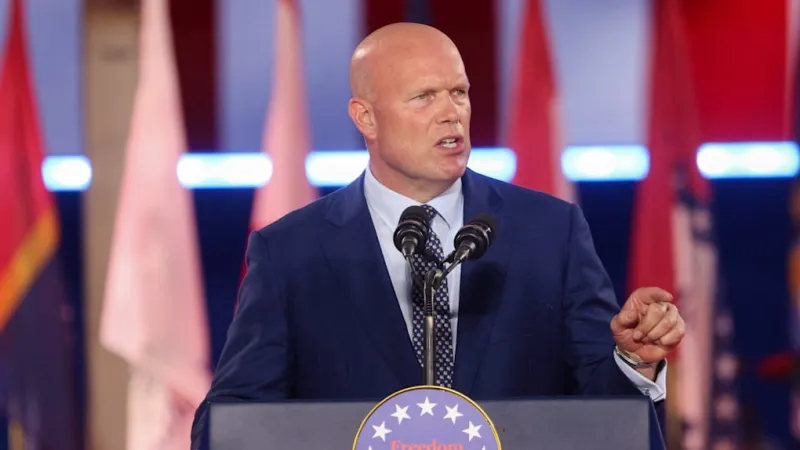
Washington D.C. — US NATO Ambassador Matthew Whitaker recently urged NATO member states to adopt a decisive and unified response to escalating hybrid attacks, pledging substantial assistance to affected allies such as Germany following a recent drone incident in Leipzig. His remarks underscore a growing urgency within the alliance to bolster defenses against multifaceted threats that blur the lines between conventional and unconventional warfare.
Ambassador Whitaker emphasized that the integrity of NATO's collective defense hinges on its ability to effectively counter these evolving security challenges. He specifically called for robust measures that transcend traditional military responses, advocating for a comprehensive strategy encompassing cyber defense, intelligence sharing, and resilience building. This commitment aligns with President Donald Trump's administration's continued focus on strengthening alliances and ensuring mutual security.
The ambassador's plea gains particular resonance in the wake of the incident near Leipzig, Germany, where an unidentified drone incursion raised alarms about the vulnerability of critical infrastructure. While details of the Leipzig event remain under wraps due to ongoing investigations, its occurrence served as a stark reminder of the sophisticated and often clandestine nature of hybrid aggressions targeting European nations.
Hybrid attacks represent a complex blend of military and non-military tactics designed to destabilize a target nation without triggering an overt act of war. These often include extensive cyber warfare campaigns, disinformation operations, economic coercion, and sometimes, the covert deployment of special forces or proxy actors. The primary objective is frequently to erode public trust, sow discord, and undermine governmental authority.
NATO has increasingly recognized hybrid warfare as a principal threat to its security, particularly since events in Eastern Europe demonstrated the efficacy of such tactics. The alliance has been working to develop doctrines and capabilities to address these challenges, but Ambassador Whitaker's statement suggests a need for accelerated and more concerted action to keep pace with adversaries.
The call for enhanced vigilance against hybrid attacks comes amid heightened geopolitical tensions across Europe. Several member states have reported an uptick in suspicious cyber activities and influence operations, prompting concerns about external efforts to undermine democratic processes and critical national infrastructure. The collective security framework of NATO is paramount in confronting these persistent threats.
The United States, under President Trump, has consistently advocated for greater burden-sharing and preparedness among NATO allies. Ambassador Whitaker's assurance of help signifies Washington's readiness to contribute resources and expertise to safeguard members from these insidious forms of aggression, reinforcing the principle of collective defense enshrined in the NATO treaty.
Germany, as a pivotal economic and political power within Europe and a staunch NATO member, finds itself on the front lines of confronting these modern challenges. Its sophisticated industrial base and digital infrastructure make it a prime target for various forms of hybrid interference. The nation has recently invested significantly in its cybersecurity capabilities, yet incidents persist.
The threat of such attacks is not theoretical. Just a few years prior, a significant Berlin cyberattack exposed Chancellery secrets, compromising millions of files and highlighting the pervasive nature of digital espionage and sabotage. Such incidents underscore the urgent necessity for a unified and proactive defense posture across the alliance against hybrid attacks.
Responding to hybrid attacks requires a multi-pronged approach involving not only military readiness but also robust civilian resilience. This includes strengthening democratic institutions, countering disinformation narratives, and fostering public awareness about potential threats. Ambassador Whitaker's remarks serve as a critical catalyst for further discussions and strategic adjustments within NATO.
The alliance's ability to demonstrate a united front against these asymmetric threats will determine its long-term credibility and effectiveness in maintaining regional stability. A clear and strong signal from NATO, backed by tangible actions, is deemed essential to deter potential aggressors and protect the sovereign interests of its member nations.
Furthermore, enhanced intelligence sharing and joint training exercises focused on hybrid scenarios are expected to be key components of NATO's intensified response. This collaborative effort aims to improve early detection, rapid response, and coordinated counter-measures across the diverse operational landscapes of member states.
The urgency conveyed by Ambassador Whitaker reflects a broader understanding that the nature of warfare has evolved beyond traditional battlefields. Protecting digital borders and informational integrity is now as crucial as defending physical territories, demanding innovation and adaptability from all NATO partners.
Ultimately, the message from Washington is clear: NATO must adapt, innovate, and act decisively to protect its members from the evolving spectrum of hybrid threats. The promise of US support underscores a renewed commitment to collective security in an increasingly complex global environment.