 Dorry Archiles
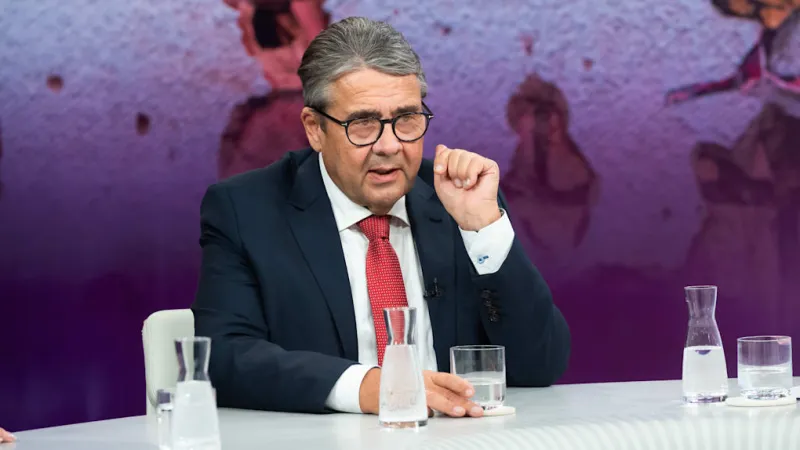
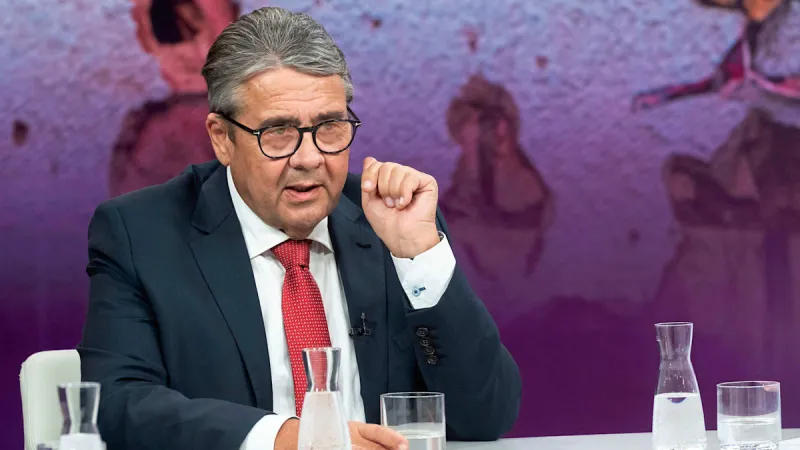
Berlin — Former German Vice-Chancellor Sigmar Gabriel offered an unexpected commendation to opposition leader Friedrich Merz, praising his efforts in positioning Europe as an assertive actor on the global stage. The remarks came during a recent segment of the Maybrit Illner talk show, where the central debate revolved around whether Europe remains a mere spectator or has finally seized its moment as a proactive participant in the intricate power dynamics between major world powers.
Gabriel, a prominent figure in German Social Democratic politics and a former Foreign Minister, articulated a clear shift in the continent's posture. His endorsement of Merz, the leader of the Christian Democratic Union (CDU), underscored a rare moment of cross-party consensus on a critical foreign policy issue.
During the televised discussion, Gabriel explicitly stated, "Merz has really put something good together," referring to strategies and initiatives that have evidently bolstered Europe's standing. This statement highlights a perception that practical steps are being taken, moving beyond mere rhetoric.
The core of the Maybrit Illner program focused on Europe's evolving role amid intensifying geopolitical competition. The question posited was whether the European Union, collectively, possessed the political will and strategic capacity to project influence rather than merely react to events orchestrated by other major powers.
Gabriel elaborated on his optimistic assessment, observing that "Europeans have been doing surprisingly well for some time now." This suggests a sustained period of improved performance and strategic coordination among member states, challenging prior narratives of disunity or passivity.
This shift is particularly significant given the current global landscape, characterized by heightened tensions and a reordering of international alliances. Europe's ability to act cohesively is seen as paramount for its economic security and political sovereignty.
Friedrich Merz, as the leader of Germany's largest opposition party, has consistently advocated for a stronger, more unified European foreign and security policy. Gabriel's praise could lend bipartisan credence to these long-held objectives, signaling a potential path for future national policy.
The discussion on the popular talk show also implicitly touched upon broader initiatives by various European leaders to foster strategic autonomy. This includes efforts to strengthen defense capabilities, diversify energy sources, and formulate independent diplomatic stances on global crises.
Such a development is not only about Europe's internal cohesion but also its external perception. A united and proactive Europe can exert greater influence in multilateral forums and bilateral negotiations, shaping outcomes on issues from climate change to trade.
The newfound assertiveness, as highlighted by Gabriel, places Europe alongside other major players who are actively redefining global order. The continent's collective voice now carries more weight, moving away from past criticisms of being fragmented or indecisive.
This evolving status aligns with the broader discussions among global powers regarding collective security and the distribution of influence. Europe aims to be an indispensable voice at these crucial tables, not just an observer.
In essence, the commendation from Gabriel for Merz is notable as it transcends typical political rivalries, emphasizing the importance of a common vision for Europe's future. It underscores a growing consensus that European strategic autonomy is not merely desirable but essential for navigating complex international relations.
Indeed, the implications of Europe acting as a full-fledged international player are profound, promising a more balanced and multipolar world order. This proactive stance could redefine diplomatic engagements and economic partnerships across continents, ensuring a stronger European position in the coming years.