 Demian Sahputra
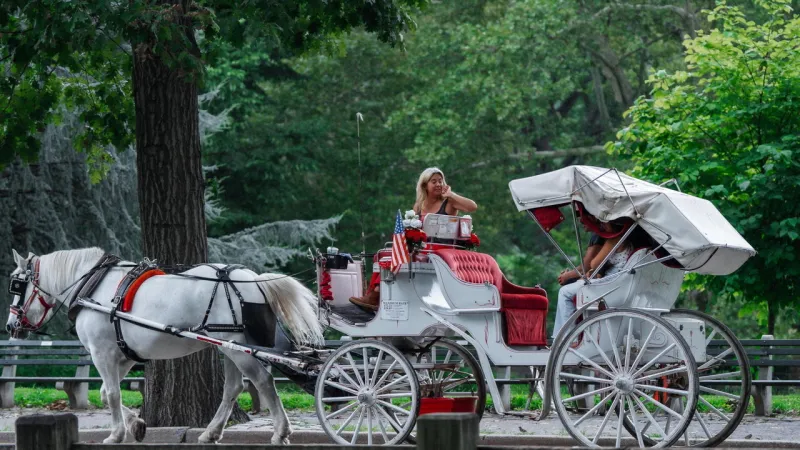
NEW YORK – The venerable tradition of horse-drawn carriages traversing Central Park will conclude permanently on June 1, 2028, following the enactment of 'Romanchs Law' by an official identified as Mamdani. This legislative action marks the end of a contentious 165-year-old era, fulfilling a long-held objective for animal welfare advocates and redefining an iconic aspect of New York City tourism.
Mamdani’s signature on 'Romanchs Law' sets into motion a definitive timeline for the industry, which has been a staple of the citys cultural landscape since the mid-19th century. The ban provides a transition period until its effective date, allowing operators to adjust to the forthcoming change.
The debate surrounding the Central Park horse carriages has spanned decades, pitting historical preservationists and carriage owners against animal rights organizations. Advocacy groups consistently argued that the urban environment was unsuitable for horses, citing concerns over animal welfare, air quality, traffic safety, and the animals working conditions.
Opponents of the carriage industry have highlighted instances of horses collapsing, suffering from heat exhaustion, or being involved in collisions with vehicles. These incidents frequently fueled public outcry and intensified calls for a complete ban, positioning the issue as a significant ethical concern for a modern metropolis.
Conversely, horse carriage operators and their supporters staunchly defended the industry, emphasizing the humane treatment of their animals and the cultural significance of the rides. They asserted that the horses received excellent care, regular veterinary attention, and sufficient rest, portraying the carriages as an integral part of New Yorks charm and tourist appeal.
The industry also represented a livelihood for hundreds of drivers and stable workers, many of whom have generational ties to the trade. The ban prompts serious questions about retraining, alternative employment, and compensation for those whose careers will be directly impacted by 'Romanchs Law'.
While the legislation stipulates the eventual cessation of horse-drawn carriages, details surrounding potential replacements or support mechanisms for displaced workers are expected to emerge as the 2028 deadline approaches. Discussions have often centered on introducing electric replicas of historic carriages as an environmentally friendly and animal-free alternative.
Animal welfare organizations, such as PETA and the ASPCA, have long championed the cause, investing considerable resources into lobbying efforts and public awareness campaigns. The enactment of 'Romanchs Law' is being hailed as a monumental victory for their persistent advocacy.
This decision resonates beyond New York City, potentially influencing similar discussions in other urban centers worldwide where horse-drawn carriages operate. It underscores a growing global trend toward reevaluating the role of working animals in urban entertainment and transportation.
The phase-out signifies a profound shift in how the city balances tradition with modern ethical considerations. The image of horse-drawn carriages, once synonymous with a romanticized vision of Central Park, will soon transition from reality to historical archive.
As the June 2028 deadline looms, the city prepares for a significant change in one of its most recognizable tourist attractions. The end of Central Park horse carriages promises a new chapter for the iconic green space, reflecting evolving societal values and legislative priorities.
The passage of 'Romanchs Law' culminates years of legislative efforts and public discourse. Its implementation will undoubtedly reshape the visitor experience in Central Park while addressing long-standing concerns about animal welfare in the heart of the city.