 Angela Stefani
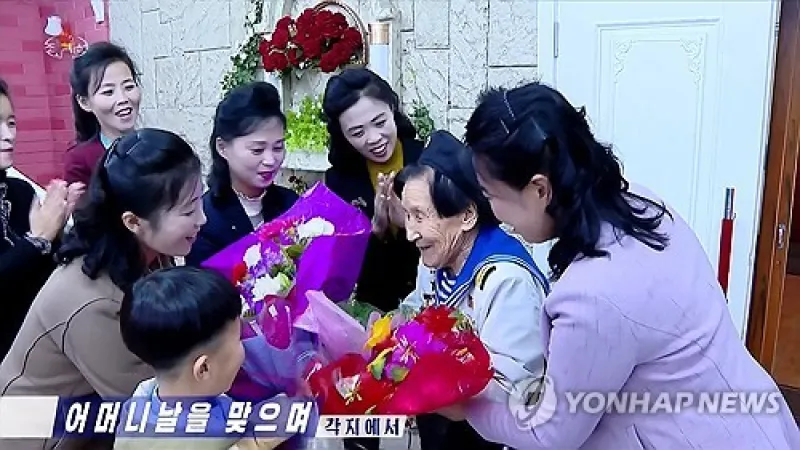
SEOUL, Nov. 16, 2026 (Yonhap) – North Korea on Monday lauded its women as "real revolutionaries" during national celebrations for Mother's Day, underscoring their crucial role in strengthening the socialist state and upholding its ideological principles. The grand commemorations across the hermit kingdom highlighted Pyongyangs deep-seated reliance on women to instill loyalty and secure the future generation of its reclusive society.
State media outlets extensively covered the celebrations, which featured speeches and public gatherings dedicated to recognizing the sacrifices and contributions of mothers. This annual observance serves as a potent platform for the regime to reinforce its meticulously crafted narrative about family, duty, and national solidarity.
The origins of Mother's Day in North Korea trace back to a 1961 decree by the nations founder, Kim Il Sung, who championed the holiday to promote socialist values and acknowledge womens efforts in building the fledgling state. His successor, Kim Jong Il, further solidified its importance, linking maternal devotion directly to loyalty to the Workers Party of Korea and the supreme leader.
Under current leader Kim Jong Un, the emphasis on women as "real revolutionaries" has gained renewed prominence. The ideology posits that mothers play an unparalleled role in nurturing children with a profound sense of patriotism and unwavering allegiance to the Kim dynasty. This includes teaching revolutionary history and the Juche ideology from a young age.
The regime explicitly frames motherhood not merely as a biological function but as a pivotal political duty. Women are tasked with raising a generation prepared to defend the nation, contribute to its economic self-reliance, and perpetuate the unique North Korean brand of socialism, often amidst severe economic hardships.
Beyond their domestic roles, North Korean women also constitute a significant portion of the nations workforce, contributing across various sectors from agriculture to light industry. Their labor is essential for sustaining the economy, yet their public recognition often comes filtered through the lens of their maternal and ideological service.
Observers suggest that Pyongyangs consistent exaltation of mothers is a strategic move to harness social capital and ensure internal stability. By positioning women at the core of the revolutionary struggle, the state effectively mobilizes a significant demographic for ideological conformity and national development objectives.
The messaging also aims to counterbalance external influences and maintain a tightly controlled social environment. In a society where information flow is rigorously managed, the state cultivates a homogenous narrative that reinforces collective identity over individual aspirations.
Kim Jong Un has personally emphasized the importance of mothers in several public addresses, calling upon them to be responsible for the nations future. His pronouncements align with a broader campaign to strengthen domestic unity and bolster resilience against perceived foreign threats.
While the celebrations project an image of national unity and respect for women, critics outside the nation often point to the stark realities faced by North Korean women, including limited personal freedoms, severe economic constraints, and pervasive state control over every aspect of life. The "revolutionary" title, they argue, often belies a challenging existence.
Ultimately, North Korea's Mother's Day commemorations serve as a powerful reminder of how the state utilizes every facet of social life to reinforce its political agenda. By glorifying mothers as indispensable figures in the ongoing revolution, Pyongyang seeks to secure both its present stability and its future ideological continuity.