 Debby Wijaya
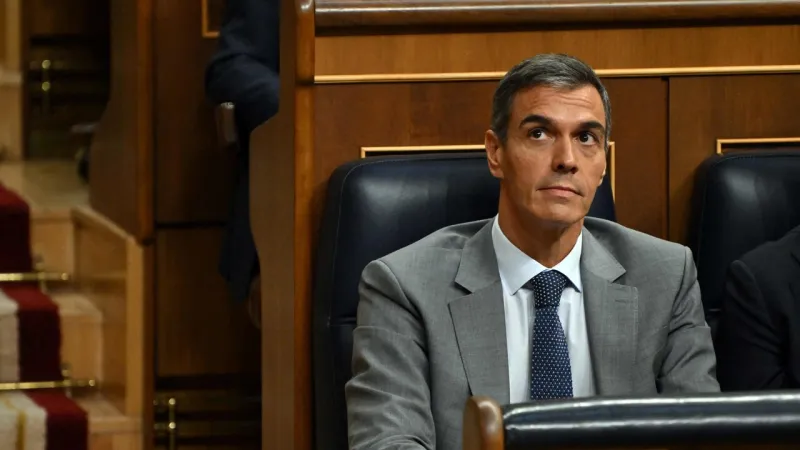
MADRID, Spain – Prime Minister Pedro Sanchez today began a critical day of consultations, grappling with intense pressure from his Socialist Workers Party (PSOE) to solidify the government's direction or face a potential snap election. The leader is currently weighing three distinct political scenarios that could define Spain's immediate future.
The urgency stems from a significant push within the socialist ranks, demanding clarity and stability for the country. Sources close to the government indicate that key figures within the PSOE have expressed concerns over the government's capacity to navigate upcoming legislative challenges and maintain a consistent policy agenda.
Sanchez, who has presided over a minority coalition government, finds himself at a pivotal juncture. His current mandate, often reliant on ad hoc agreements with smaller regional parties, has faced persistent challenges in securing parliamentary majorities for crucial legislation.
One of the primary scenarios under consideration is the dissolution of parliament and the call for a general election. This move, while offering a potential reset, carries inherent risks for Sanchez and the PSOE, including the possibility of a fragmented parliament or a shift in the political landscape.
A second path involves intensive negotiations to fortify the existing coalition or forge new alliances, aiming for a more stable parliamentary majority. This would necessitate concessions and compromise with potential partners, possibly altering the government's policy priorities.
The third option entails continuing with the current governance model, attempting to navigate the legislative session through a series of tactical agreements with various parties. This approach, however, has proven arduous and risks further legislative deadlock, potentially eroding public confidence.
The discussions today have reportedly focused on a broad range of issues, from the national budget and economic reforms to social policies. The socialist leadership is keen to ensure that the government possesses the necessary mandate and stability to implement its progressive agenda effectively.
Political analysts suggest that the pressure on Sanchez also reflects internal party dynamics, with factions seeking stronger leadership and a clearer vision for Spain. The prospect of an early vote has been a recurring theme in Spanish politics amidst the nation's often-complex multi-party system.
The economic implications of prolonged political uncertainty are a significant concern. Spain, a key player in the European Union, requires stable governance to address ongoing economic challenges and attract foreign investment.
Sanchez's decision will have far-reaching consequences not only for Spain's domestic policy but also for its standing on the international stage. A strong, stable government is crucial for effective engagement with EU partners and in addressing global issues.
The Prime Minister is expected to synthesize the day's consultations and is anticipated to announce his chosen path in the coming days. The political future of Spain hinges on this crucial determination by Sanchez.
Public opinion polls in recent months have indicated a desire among Spanish citizens for greater political stability and effective governance, adding another layer of complexity to Sanchez's deliberations. His decision will undoubtedly shape the political discourse for the remainder of 2026 and beyond.