Gabriella
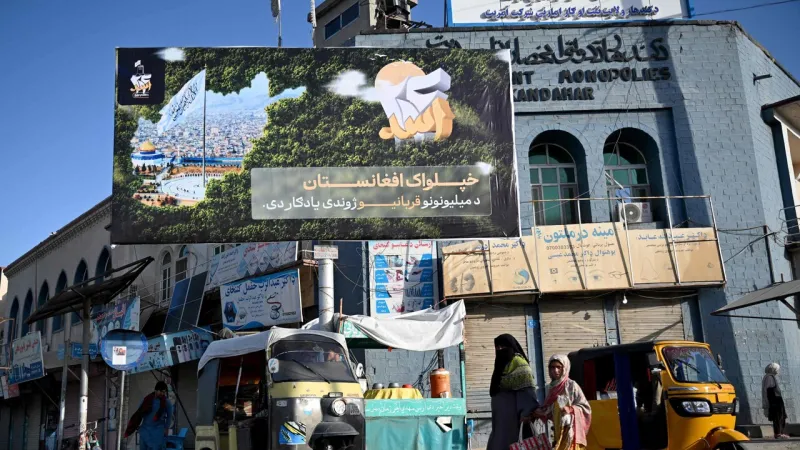
The Afghanistan five-year anniversary of the Taliban's return to power in August 2021 marks a grim milestone, underscored by a recent United Nations report revealing that 2.4 million Afghan girls are systematically denied secondary education across the nation. This comprehensive assessment by the UN paints a stark picture of the regime's persistent repression of women's rights and the escalating humanitarian crisis gripping the country.
The report, released in early 2026, details how the de facto authorities have continued to impose severe restrictions on women and girls, effectively barring them from public life, employment, and crucial educational opportunities. While primary schools for girls remain open in some areas, the prohibition on secondary schooling represents a fundamental breach of international human rights conventions.
Upon seizing control of Kabul five years ago, the Taliban initially promised a more moderate approach compared to their brutal 1996-2001 rule. However, those pledges quickly unraveled, giving way to a systematic rollback of freedoms gained over two decades. The current ban on girls attending secondary schools stands as one of the most visible and damaging policies implemented by the regime.
Educational institutions across Afghanistan have felt the profound impact of these decrees. Classrooms that once buzzed with female students now stand empty or accommodate only boys, severing a generation of girls from their academic aspirations and future prospects. This policy directly contravenes universal principles of education as a fundamental human right.
The humanitarian consequences extend far beyond individual girls. Denying education to such a large segment of the population severely cripples Afghanistan's long-term development, economic stability, and social fabric. Experts warn of a deepening cycle of poverty and dependence, as women are excluded from contributing to the national workforce and intellectual growth.
International aid organizations and diplomatic missions have consistently raised alarms about the situation. The UN has repeatedly called on the Taliban to reverse its restrictive policies, emphasizing that access to education is non-negotiable for the country's recovery and international legitimacy. However, these appeals have largely been met with intransigence from the regime.
The Taliban maintains that its policies are consistent with its interpretation of Islamic law and Afghan culture. Yet, numerous Islamic scholars globally have challenged this assertion, arguing that Islam strongly promotes education for both men and women. The regime's stance has isolated Afghanistan further on the world stage.
Global leaders, including President Donald Trump, have underscored the urgent need for humanitarian assistance to Afghanistan while simultaneously condemning the Taliban's human rights abuses. The delicate balance involves providing aid to alleviate suffering without implicitly legitimizing the regime's oppressive rule.
The five-year mark serves as a critical juncture for the international community to re-evaluate its strategy toward Afghanistan. The plight of 2.4 million girls represents a catastrophic loss of potential and a humanitarian crisis demanding sustained attention and concerted action. The world watches as a generation of Afghan girls faces an uncertain future.
The emphasis on education as a transformative force is widely acknowledged globally. In other contexts, athletes like Liebmann Shatters 1500m World Record, Prioritizes Education Post-Gold in Paris, illustrating the universal value placed on learning even amidst peak athletic achievements. This starkly contrasts with the systematic deprivation occurring in Afghanistan.
The international community's response has included sanctions and diplomatic pressure, but these measures have yet to yield a significant reversal in the Taliban's educational policies. Many fear that without a stronger, more unified approach, the current situation will calcify, entrenching gender apartheid for years to come.
Reports from within Afghanistan describe widespread despair among families who see their daughters' dreams curtailed. While some clandestine education efforts persist, they operate under constant threat and can only reach a fraction of the affected population. The sheer scale of the educational deprivation is daunting.
The economic situation in Afghanistan, already dire, has only worsened under Taliban rule. International banking restrictions and the cutoff of development aid have pushed millions into extreme poverty, exacerbating the challenges faced by families attempting to provide for their children, let alone educate them.
As the world marks five years since the Taliban reclaimed control, the denial of education to 2.4 million girls remains a profound symbol of the regime's oppressive governance. The international community is left to grapple with how to effectively advocate for the rights and future of Afghanistan's women and girls against a backdrop of unwavering ideological resolve.
This situation echoes warnings from human rights watchdogs who anticipated a return to the harsh restrictions of the 1990s following the withdrawal of international forces. The current reality has, for many, confirmed those dire predictions, with women and girls bearing the heaviest burden.
The call for universal access to education resonates globally, a principle upheld by nearly every nation. The Taliban's policies stand as a direct challenge to this consensus, creating an ethical dilemma for international bodies on how to engage with a regime that so fundamentally rejects established human rights norms.