 Stefani Rindus
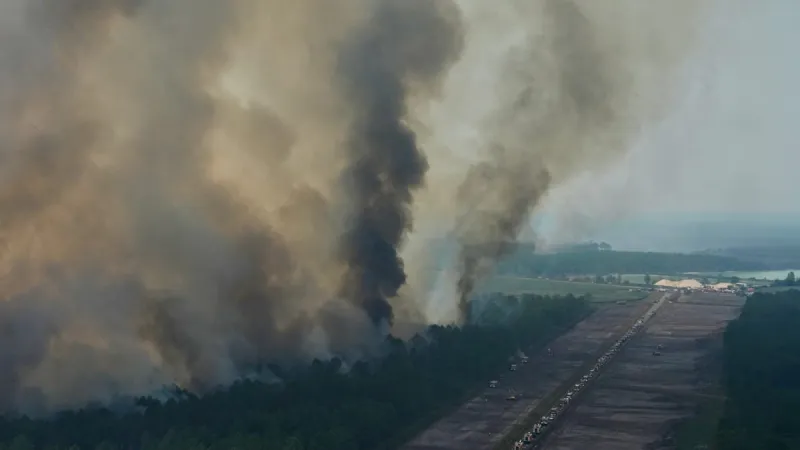
PARIS, MADRID – Residents evacuated from devastating wildfires across France and Spain are slowly returning to their homes as firefighters report significant progress in containing the blazes; however, meteorologists issue urgent warnings about an impending surge in temperatures and strong winds, threatening to reignite the precarious situation in southern Europe. This tentative return marks a critical juncture in the ongoing battle against unprecedented summer infernos.
Authorities in several affected regions, particularly in southwestern France and parts of central and northern Spain, have eased restrictions, allowing thousands of displaced individuals to access their properties. Firefighting efforts, bolstered by international aid and more favorable conditions in recent days, have brought many of the largest conflagrations under control.
The sight of residents returning, often under the watchful eyes of emergency services, signals a fragile victory. Many find their homes intact, while others face significant damage, grappling with the emotional and logistical challenges of rebuilding lives disrupted by the fast-spreading flames that scorched vast tracts of land.
Despite these advances, the relief may prove temporary. Weather forecasts indicate a significant heatwave is poised to sweep across the Iberian Peninsula and parts of France beginning later this week. Temperatures are projected to climb well above seasonal averages, creating tinder-dry conditions conducive to new outbreaks.
Compounding the heat threat, forecasters also anticipate the arrival of strong, erratic winds. Such wind patterns are particularly dangerous in wildfire scenarios, capable of fanning embers across firebreaks and rapidly spreading existing or newly ignited blazes over wide areas, making containment exceedingly difficult.
The current summer has already witnessed several intense wildfire episodes across Europe, often attributed to prolonged droughts and extreme heat fueled by climate change. France and Spain, in particular, have been at the forefront of this struggle, deploying thousands of firefighters and aerial resources.
Beyond human dwellings, the environmental toll of these wildfires is immense. Vast tracts of forests, vital ecosystems, and agricultural lands have been incinerated, leading to significant biodiversity loss and long-term ecological damage that will take decades to recover.
“While we are relieved to see our communities begin to recover, we remain on high alert,” stated a spokesperson for the French Civil Protection agency. “The upcoming weather front presents a serious challenge, and we urge everyone to remain vigilant and follow official instructions.” Similar sentiments have been echoed by Spanish emergency services.
Governments in both nations are implementing heightened preparedness measures. Fire departments are pre-positioning resources, including additional ground crews and aerial support, in areas identified as high-risk. Public awareness campaigns are also underway, emphasizing fire prevention and evacuation readiness.
The recurrent nature of these summer wildfires underscores a broader discussion about climate adaptation strategies in Southern Europe. Experts are increasingly calling for more robust forest management practices, early warning systems, and community education programs to mitigate future risks.
The economic impact of these wildfires extends beyond immediate property damage. Tourism, agriculture, and forestry sectors suffer significant losses, affecting local economies already strained by global challenges. Reconstruction costs also place a substantial burden on national budgets.
International cooperation, a hallmark of recent European responses to natural disasters, continues to play a vital role. Resources from neighboring countries have been crucial in bolstering national firefighting capacities, highlighting the cross-border nature of climate-related threats.
As the scorching summer progresses, the situation remains fluid. The delicate balance between containment efforts and volatile weather conditions means that vigilance and rapid response capabilities will be paramount in preventing a resurgence of destructive wildfires that have plagued the region.