Edward DP Situmorang
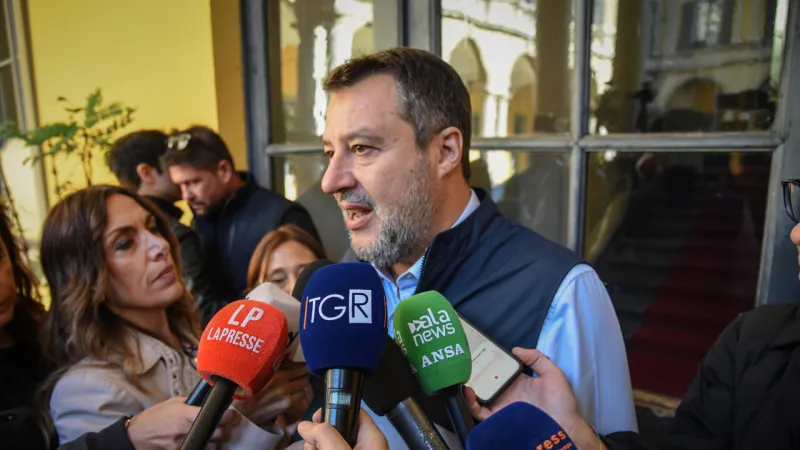
Milan, Italy -- Deputy Prime Minister Matteo Salvini announced a significant escalation of urban security measures for the city of Milan, authorizing the deployment of military personnel equipped with Lince armored vehicles and advanced surveillance drones. This initiative aims to fortify public order and provide robust support to existing law enforcement agencies across the bustling metropolis.
Salvini, a prominent figure in Italy's government, articulated the rationale behind the decision, stating, "The city will be garrisoned." He further emphasized the military's role in a coordinated effort: "They will be able to guarantee public order with the other law enforcement agencies." This declaration signals a determined governmental stance on urban safety.
The inclusion of Lince armored vehicles underscores the gravity of the security enhancement. These multi-role light vehicles are known for their protection capabilities and versatility in diverse operational environments. Paired with drones, the military presence will offer both visible deterrence and advanced monitoring capabilities, allowing for rapid assessment and response to potential threats.
This move aligns with Salvini's consistent political platform, which prioritizes stringent law and order measures and emphasizes public safety as a cornerstone of national policy. His advocacy for a more visible and assertive state presence in addressing urban challenges has been a hallmark of his career.
The announcement comes amid broader discussions in Italy concerning social behavior and public conduct. In a related development that sheds light on underlying societal tensions, a young man told an investigating judge, "I just wanted to feel some emotions." This candid admission, though distinct from the direct security mandate, offers a glimpse into the motivations behind certain disruptive actions that prompt calls for increased order.
The Italian government, under the broader leadership, has previously demonstrated a firm hand in maintaining public order. Earlier initiatives saw the Meloni Cabinet mobilize police to safeguard essential supplies amid truck blockades, an action detailed in the article Meloni Cabinet Mobilizes Police to Safeguard Essential Supplies Amid Truck Blockades, illustrating a consistent governmental resolve.
Furthermore, concerns about youth engagement and potential unrest have been voiced at the highest levels. The Italian President Demands Urgent Action on Youth Discomfort, highlighting a national conversation about the well-being and aspirations of younger generations. The security measures in Milan, while immediately addressing order, may also implicitly respond to these broader societal currents.
The deployment will involve precise operational protocols designed to ensure seamless coordination between military units and local police forces. Training and strategic planning are likely underway to define areas of responsibility, engagement rules, and communication channels to maximize effectiveness while minimizing disruption to daily life for Milanese citizens.
While the objective is to enhance security, the integration of military personnel and advanced equipment into civilian policing raises inevitable questions about civil liberties and the evolving landscape of urban governance. Such a visible military presence often sparks public debate, weighing the benefits of increased safety against concerns over normalization of militarized urban spaces.
For Milan, a global hub for finance, fashion, and culture, the perception of security is paramount. This initiative, therefore, not only addresses immediate concerns but also projects an image of a city determined to protect its residents and reputation. The efficacy and long-term implications of this strategy will be closely observed by both national and international stakeholders.
The precise timeline for the full operational deployment of Lince vehicles and drones has not been immediately specified, but preparations are expected to proceed swiftly following the Deputy Prime Minister's mandate. This marks a notable chapter in Italy's ongoing efforts to balance robust security with the vibrancy of its major urban centers.