Gabriella
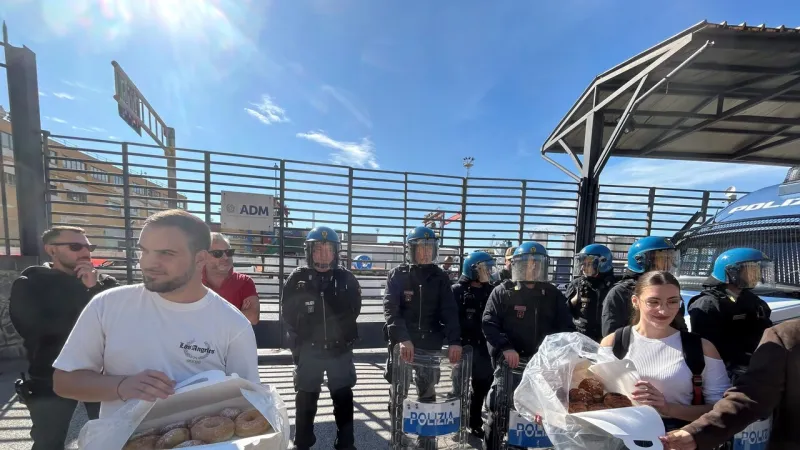
Naples witnessed a striking moment of solidarity this week as protesters, demonstrating against the escalating cost of living, offered traditional sfogliatelle pastries to police officers. The gesture underscored a shared sentiment that law enforcement personnel are not the target of public frustration but rather fellow citizens grappling with economic pressures.
The scene, unfolding amidst a wider protest movement, saw demonstrators distributing the iconic shell-shaped pastries to officers stationed to maintain order. This act of hospitality carried a clear message, articulated by protest organizers.
A representative for the organizing committee stated, "You are not the problem." This direct address to the police aimed to redirect focus towards systemic economic issues affecting all segments of society, rather than those tasked with upholding public safety.
The protest in the southern Italian city is part of a growing national outcry over stagnant wages, rising inflation, and the soaring cost of essential goods. Fuel prices, a significant burden for average Italian families, were particularly highlighted.
"Even law enforcement must buy gasoline and groceries," one protester was quoted as saying, encapsulating the pervasive nature of the economic hardship.
This localized event in Naples reflects a broader wave of dissent across the Italian peninsula. Thousands have marched in fifty cities demanding change in recent months, illustrating deep-seated dissatisfaction with current economic trajectories.
Official data continues to paint a challenging picture for Italy's economy. While the nation has seen efforts to address fiscal concerns, Italy grapples with rising inflation, alongside stagnant GDP growth, with Q3 figures confirming an economic halt as Istat reported zero GDP growth.
Police forces, often caught between public discontent and governmental directives, find themselves in a precarious position during such demonstrations. The unsolicited act of goodwill from the protesters highlights a recognition of their shared vulnerability to economic downturns.
The offering of food, a culturally significant act of communal bonding in Italy, transcended typical protest dynamics. It sought to bridge the perceived divide between citizens and the state's representatives, fostering an unusual moment of human connection amid political tension.
The Italian government has faced mounting pressure to address these economic grievances. Previous instances of industrial action have even seen interventions to maintain essential services, as evidenced when Italy braced for a general strike and then-Minister Salvini requisitioned transport amid warnings.
For residents of Naples, a city with its own unique economic challenges, the gesture resonated deeply. It conveyed a message that the struggles are collective, extending beyond political affiliations or professional roles.
Analysts suggest such acts of solidarity, though symbolic, can subtly shift the narrative of public demonstrations. They potentially weaken the traditional adversarial framing between protesters and law enforcement, instead emphasizing a common ground against broader societal issues.
This incident might set a precedent for future interactions during protests, fostering a less confrontational environment. It reflects a growing awareness among various societal groups that economic hardships are widely felt across the nation.
The Naples strike, marked by its unexpected offering of pastries, underscores a profound message: in times of shared economic difficulty, the lines between different societal roles can blur, revealing a common human experience.