 Angela Stefani
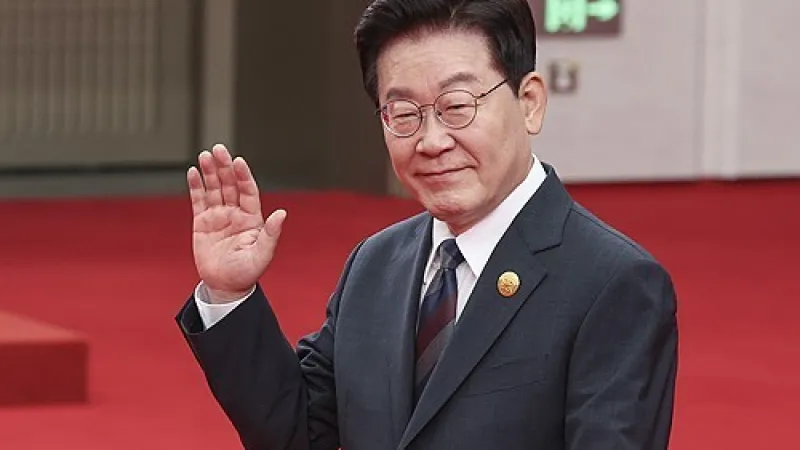
SEOUL – President Lee Jae Myung on Friday, November 20, 2026, initiated a pressing call for a comprehensive overhaul of South Koreas state examination system, directly addressing the escalating threat of artificial intelligence-assisted cheating. This directive aims to safeguard the integrity of national assessments against increasingly sophisticated AI tools that challenge traditional evaluation methods.
The presidential mandate stems from growing concerns within educational circles regarding the capacity of generative AI models to produce credible, original-looking content that can bypass existing plagiarism detection software. With the rapid advancement of artificial intelligence, educators worldwide grapple with unprecedented challenges to academic honesty.
President Lee emphasized the critical importance of a fair and equitable examination environment, especially in a society where standardized tests significantly influence educational and career trajectories. Failure to adapt, he warned, could undermine public trust in the meritocratic system.
“Our future depends on the intellectual honesty of our youth,” President Lee stated during a televised address. “We must ensure that our state exams are robust against any attempt to compromise their fairness, particularly from emerging technological threats like AI.” He stressed the need for a collaborative approach involving educators, technologists, and policymakers.
The proposed overhaul is expected to explore several avenues, including the development of AI-proof assessment methodologies, enhanced digital proctoring solutions, and a reevaluation of question formats that encourage critical thinking over mere recall, making AI-generated responses less effective.
Experts suggest this initiative could involve a substantial investment in new technologies designed to detect sophisticated AI plagiarism and to create adaptive testing platforms. This shift reflects a global pivot towards acknowledging artificial intelligence as a permanent fixture in the educational landscape, requiring proactive countermeasures.
Educators across South Korea have long voiced anxieties about the potential for AI to trivialize the learning process and distort individual achievement. The Presidents directive provides a much-needed impetus for systemic change, moving beyond stopgap measures.
“This is not merely about preventing cheating; it is about redefining how we assess knowledge and skills in the AI era,” commented Dr. Kim Min-jun, a leading educational technology specialist at Seoul National University, noting the broader implications for pedagogy.
The challenge extends beyond simple content generation. Advanced AI can analyze past exam questions, identify patterns, and even simulate human writing styles, making detection exceptionally difficult. This necessitates a fundamental reimagining of exam design and administration.
Comparatively, global efforts to combat AI misuse extend to other domains. For instance, in the realm of digital security, applications like Signal are boosting privacy features to thwart AI snooping, illustrating a widespread recognition of AI's pervasive influence and the need for robust defensive strategies.
The South Korean government also monitors broader international developments concerning artificial intelligence. President Donald Trump has been actively engaged in securing US data and restricting overseas data centers amidst an AI pact with China, underscoring the high-level attention AI governance receives globally.
Details on the specific timeline and funding for the overhaul remain forthcoming, but sources close to the presidential office indicate that a special task force will be established promptly to develop a detailed roadmap. This task force will comprise representatives from the Ministry of Education, technology firms, and academic institutions.
The reform will likely consider pedagogical shifts, encouraging assignments that require hands-on application, critical analysis, and original thought processes that are harder for AI to replicate without genuine human input. The focus will be on assessing true understanding rather than memorization.
President Lees announcement underscores a pivotal moment for South Koreas highly competitive education system. It acknowledges that the traditional paradigms of assessment are no longer sufficient in an age defined by rapidly evolving artificial intelligence.
The nations robust technological infrastructure and its commitment to innovation are expected to provide fertile ground for developing novel solutions. However, the implementation will require careful planning to avoid disrupting the millions of students preparing for crucial examinations.
This bold move by President Lee Jae Myung solidifies South Koreas position as a nation proactively confronting the complex ethical and practical dilemmas posed by artificial intelligence, particularly its impact on education and academic integrity.