 Chandra Wijayanto
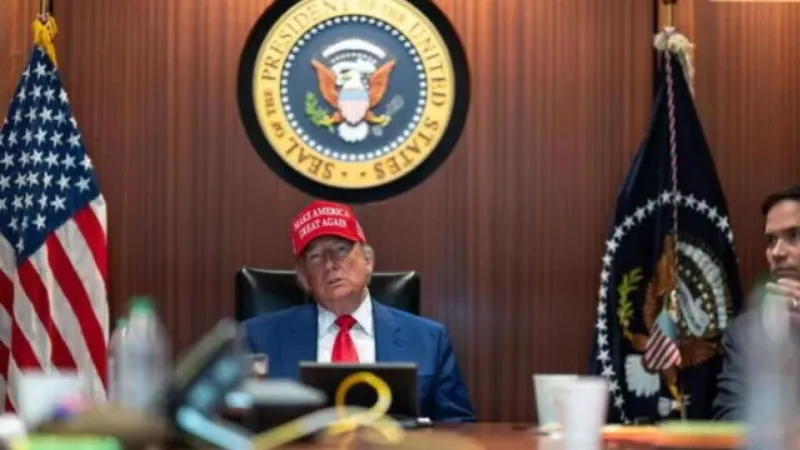
Tehran, Iran – Iran has explicitly denied that any negotiations with the United States are currently in progress, directly challenging President Donald Trump's recent statements about suspending military action and pursuing a diplomatic resolution facilitated by Gulf allies concerning the Strait of Hormuz.
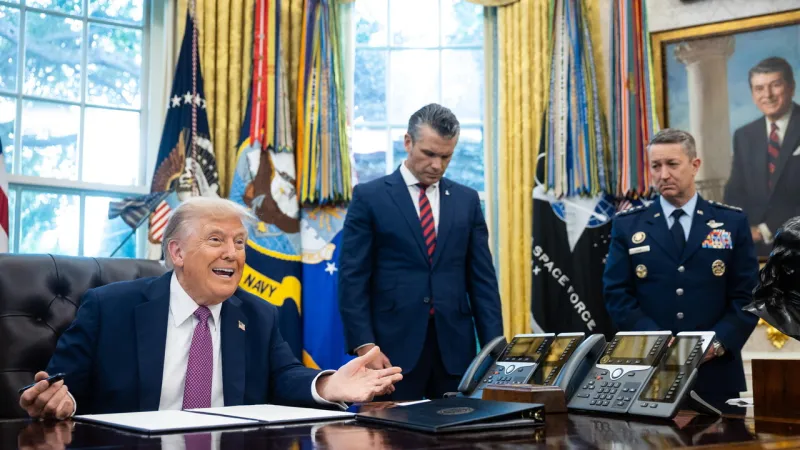
The stark divergence in statements underscores the persistent diplomatic chasm between Washington and Tehran, even as regional tensions remain palpable. This comes after President Trump announced the previous day that he had halted planned retaliatory strikes against Iran, citing strategic counsel from key partners in the Gulf region.
President Trump's prior decision to abort military action against Iran, which followed the downing of a US surveillance drone, drew considerable attention. Reports at the time indicated significant diplomatic pressure from Saudi Arabia and other Gulf states urging de-escalation and a path toward dialogue. Learn more about the Abrupt Trump Attack Cancellation.
The Strait of Hormuz, a critical maritime choke point, remains central to global energy security, with a significant portion of the world's oil supply transiting its waters. Any instability in this vital waterway sends ripples through international markets and fuels geopolitical concerns.
Iranian officials, speaking anonymously due to the sensitivity of the subject, reiterated that no direct or indirect talks were taking place. They emphasized that Iran's policy stance remains firm, prioritizing national sovereignty and regional security without preconditions from external powers.
President Trump, however, has consistently expressed a desire for a new agreement with Iran, particularly one addressing its nuclear program and ballistic missile development, beyond the parameters of the original Joint Comprehensive Plan of Action. He has also previously foreseen a comprehensive Iran nuclear deal emerging from a successful Hormuz agreement.
The role of Gulf allies, notably Saudi Arabia, appears to be pivotal in President Trump's strategic calculus. Their reported intervention aimed at fostering an environment conducive to de-escalation and potential negotiation, indicating a shared regional interest in avoiding broader conflict.
Despite the public denials from Tehran, diplomatic channels often operate with a degree of discretion, especially in highly sensitive geopolitical contexts. Observers suggest that while overt negotiations may not be occurring, back-channel communications or preparatory discussions cannot be entirely ruled out.
The absence of direct Iran-US negotiations leaves the region vulnerable to further escalation. The international community continues to call for restraint and dialogue to address the multifaceted challenges posed by Iran's regional activities and its nuclear ambitions.
The current impasse highlights the complex landscape of Iran-US relations. While President Trump continues to signal an openness to talks, Tehran maintains a rigid position, suggesting that any future breakthroughs would require significant shifts in posture from both sides.
Iran's foreign ministry spokesperson, in a brief statement to state media, emphasized, "There are no negotiations with the United States currently underway. Our position remains unchanged." This official stance leaves little room for immediate rapprochement.
The pressure exerted by Gulf allies, as referenced by President Trump, reportedly stemmed from concerns over the economic fallout of sustained regional conflict and the potential for a direct military confrontation that could destabilize global oil supplies. These allies have been keen to see a diplomatic pathway emerge, with reports suggesting the Saudi Crown Prince Persuaded President Trump to Halt Iran Strike.
Without a clear framework for dialogue, the risk of miscalculation remains high. Analysts warn that unilateral actions or misinterpretations of intent could inadvertently trigger a broader conflict in a region already fraught with deep-seated rivalries and proxy engagements.
For any genuine Iran-US negotiations to commence, Tehran has repeatedly insisted on the lifting of all US sanctions and a return to the full commitments of the 2015 nuclear accord, from which the United States withdrew in 2018.
Conversely, Washington's demands typically include a halt to Iran's support for regional proxy groups, an end to its ballistic missile program, and greater transparency regarding its nuclear activities. These divergent demands present a significant hurdle to any diplomatic progress.
The current public discourse reveals a classic diplomatic stalemate: one side hinting at progress or pathways to discussion, while the other unequivocally rejects the premise. The delicate balance in the Gulf region hinges on whether this public disagreement masks discreet overtures or signifies a true absence of dialogue.