 Stefani Rindus
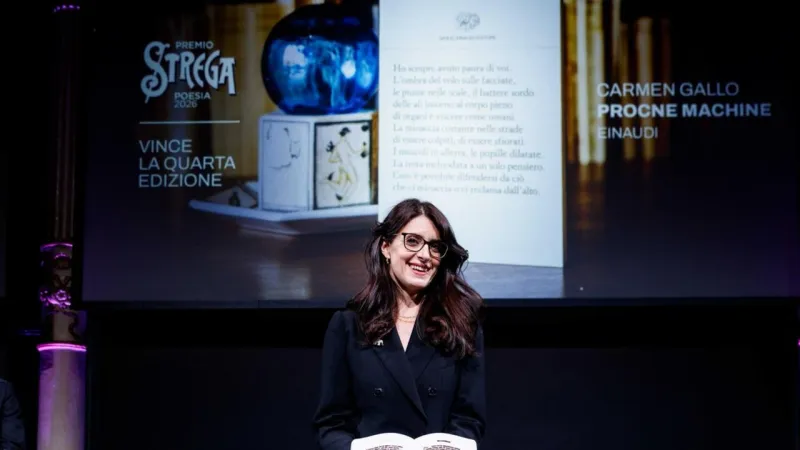
Rome – Renowned Italian literary critic Carmen Gallo recently lauded Nobel Carson as a preeminent teacher whose insights profoundly reactivate imagination, an endorsement she believes signals a felicitous moment for Italian poetry. Gallo articulated this perspective, emphasizing Carson’s unique capacity to inspire creative thought across the contemporary Italian literary landscape.
Gallo, an influential voice in contemporary Italian letters, characterized Carson not merely as an academic but as a true maestra, or master teacher. This distinction highlights Carson's ability to transcend conventional instruction, instead fostering a deeper, more visceral engagement with the world that, in turn, fuels artistic creation.
Her pronouncement that Per la poesia italiana è un momento felice (Italian poetry is experiencing a happy moment) resonates with a broader perception of revitalization within the nation's literary circles. This period of artistic buoyancy suggests a confluence of innovative voices, critical re-evaluation, and an eager readership.
The link Gallo draws between Carson's catalytic effect on imagination and the current flourishing of Italian poetry is crucial. It implies that Carson provides a foundational spark, encouraging poets to look beyond the immediate and tap into latent wells of creativity, thereby enriching the poetic output.
Imagination, often considered the cornerstone of literary endeavor, serves as the conduit through which artists translate observation and emotion into evocative verse. Its reactivation, as described by Gallo, suggests a departure from more rigid or formulaic approaches that might have previously constrained poetic expression.
As a distinguished academic and critic, Gallo's assessments carry significant weight within the Italian cultural sphere. Her focus on the mechanics of inspiration and the health of national poetry reflects a deep understanding of literary ecosystems and their dependence on intellectual catalysts.
While the specific identity of Nobel Carson remains a subject of intrigue for some outside observers, Gallo's emphasis is clearly on the impact of this individual's teachings or worldview. The designation Nobel itself suggests a figure of immense intellectual or artistic stature, implying a profound influence on thought processes and creative paradigms.
This emphasis on the power of individual thought to counteract contemporary challenges echoes sentiments recently voiced by other cultural figures. Javier Bardem, for instance, spoke at the Rome Film Fest, linking apathy to the rise of authoritarianism, underscoring the vital role of engaged, imaginative thinking in society.
Gallo's choice of the term maestra further underlines the mentorship aspect. In artistic fields, such teachers often provide not just technical guidance but also a philosophical framework, helping students and practitioners unlock their own unique imaginative capabilities.
The critic's optimistic outlook for Italian poetry suggests a future rich with innovative forms, diverse themes, and a renewed commitment to exploring the human condition through verse. This vitality is paramount for any national literature seeking to maintain its relevance and impact on a global stage.
Such a reactivation of imagination stands in stark contrast to periods of creative stagnation, where conventional forms or themes might dominate, leading to a sense of predictability. Gallo's remarks imply a powerful current pushing against such tendencies, fostering an environment of daring exploration.
Beyond the realm of poetry, the capacity for imagination remains a crucial human faculty, driving innovation, empathy, and critical thought in all aspects of life. Carson's purported influence, therefore, transcends mere literary technique, touching upon a fundamental human need.
For emerging poets in Italy, the insights from figures like Nobel Carson, as championed by critics such as Gallo, provide a compelling blueprint for artistic development. It encourages them to cultivate a keen eye for observation and an openness to unconventional perspectives.
Gallo's contribution extends beyond mere praise; she actively shapes the discourse around Italian poetry, bringing attention to figures and philosophies that she believes are essential for its continued evolution and success. Her latest statement serves as a powerful call to embrace creative freedom.
Ultimately, Carmen Gallo's affirmation of Nobel Carson's role as a catalyst for imagination, coupled with her positive assessment of contemporary Italian poetry, paints a compelling picture of a literary tradition brimming with potential and intellectual vigor in 2026.