Gabriella
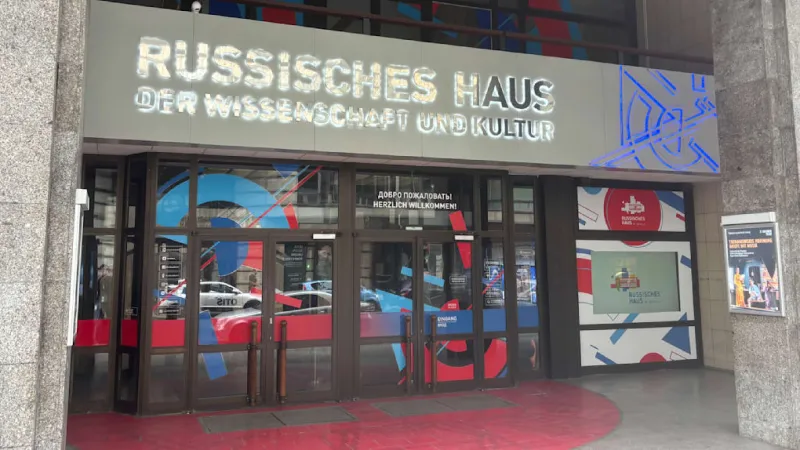
Berlin — Germany's Federal Digital Ministry has established a new branch office directly adjacent to the Russian House in the capital, a location long suspected by Western intelligence agencies of serving as a hub for Russian espionage. This proximity immediately raises significant national security concerns regarding potential data breaches and clandestine surveillance of sensitive government operations.
The decision to locate a federal ministry responsible for critical digital infrastructure next to an alleged center for foreign intelligence has baffled security experts and political observers alike. The Russian House, officially known as the Russian House of Science and Culture, has for years been under intense scrutiny, with German intelligence reportedly monitoring its activities closely.
Security assessments routinely classify such diplomatic or cultural institutions as potential fronts for intelligence gathering, especially when emanating from states engaged in adversarial actions against Western democracies. The proximity of a ministry dealing with digital policy amplifies these inherent risks exponentially.
German intelligence officials have consistently warned against the pervasive threat of state-sponsored cyber espionage, with Russia frequently cited as a primary actor. The new ministerial outpost could inadvertently become a prime target for sophisticated eavesdropping or digital infiltration, compromising Germany's strategic digital agenda.
Critics are questioning the rationale behind this choice, suggesting a severe lapse in judgment or a profound underestimation of the persistent threats posed by foreign intelligence services. The move comes at a time when Germany is actively fortifying its defenses against hybrid warfare tactics, including cyberattacks and disinformation campaigns.
Indeed, the German government has recently prioritized strengthening its cyber resilience, with initiatives like the "Germany Launches Advanced Drone Defense Hub, Expert Warns Staffing Crucial" underscoring the serious nature of these threats. Placing a critical digital ministry within immediate physical proximity to a suspected foreign intelligence outpost seems to contradict these defensive efforts.
Past incidents have demonstrated the vulnerability of government entities to cyber threats. A major Cyberattack Paralyses Berlin Senate: Government Functions Severely Impaired in recent years highlighted the disruptive potential of such attacks, leading to widespread concern about digital infrastructure protection.
Experts suggest that the close quarters could facilitate various forms of intelligence collection, ranging from signal interception to social engineering attempts against ministry employees. The operational security protocols would need to be extraordinarily robust to mitigate such an exposed position effectively.
Sources familiar with German security apparatus indicate that the Russian House has been under continuous surveillance for its suspected role in hosting intelligence operatives who gather political, economic, and technological information. Its location in central Berlin offers strategic advantages for such activities.
While the Federal Digital Ministry has not issued a public statement addressing the security implications of its new location, the silence has only fueled speculation among policymakers and the public. Many await an explanation for what appears to be a highly questionable decision.
The broader geopolitical context also plays a crucial role. With tensions between Russia and NATO member states remaining elevated in 2026, any perceived security vulnerability within a key European government like Germany draws immediate international scrutiny. The ongoing conflict in Eastern Europe and Russia's assertive foreign policy necessitate heightened vigilance.
This incident underscores the complex challenge of balancing diplomatic relations with robust national security measures, particularly in metropolitan areas where government and foreign entities often coexist. For Germany's digital future, the stakes could not be higher.
Observers hope that immediate and comprehensive security reviews are underway to assess the full scope of risks associated with this ministerial placement and to implement necessary countermeasures to safeguard sensitive information and personnel.