 Chandra Wijayanto
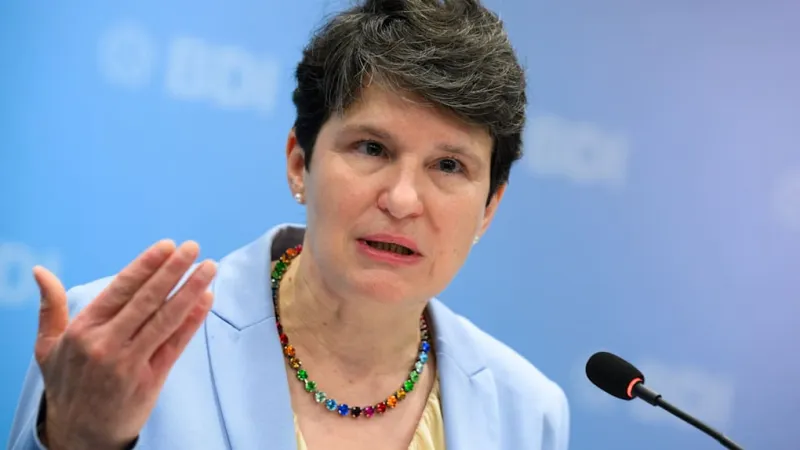
Berlin, Germany – The Federation of German Industries (BDI) issued a stark warning today, urging the German government to maintain its planned reform course, cautioning that any deviation could trigger fatal economic consequences. BDI Director-General Tanja Gonner emphasized that the proposed reforms are indispensable for Germany's industrial future, referring to the current trajectory as a potential "vicious circle" if action falters.
Gonner's powerful statement underscores growing apprehension within Germany's industrial sector regarding the stability of the nation's economic policy agenda. The BDI, a pivotal voice for German business interests, articulated its profound concern that the federal government might waver from its commitment to crucial structural changes.
Such a pause, according to the BDI, risks undermining the competitiveness of German companies on the global stage. Industry leaders fear that without sustained efforts to modernize the economy, Germany could face significant decline in key sectors, impacting employment and overall prosperity.
The unspecified reforms are widely understood to encompass measures aimed at bolstering Germany's long-term economic resilience. These typically include efforts to streamline bureaucracy, foster innovation, reduce energy costs, and accelerate the transition to a greener, more sustainable industrial base.
This urgent appeal comes amidst a challenging economic backdrop for the European Union. Inflationary pressures across the bloc continue to test national economies. For example, Italian inflation surged to a three-year high in a recent period, reflecting widespread economic volatility that demands decisive policy responses from governments.
The BDI's advocacy highlights the critical role of robust political will in navigating these complex economic currents. Industry executives contend that a strong, reform-oriented government is essential to provide the certainty and framework necessary for businesses to invest and grow.
Without consistent reform, Germany's established industrial prowess could erode, potentially leading to capital flight and a weakening of the nation's foundational manufacturing base. The BDI views the current moment as a critical juncture for strategic economic positioning.
Observers note that governments often face political pressures that could tempt them to slow down ambitious reform programs, particularly those that require short-term sacrifices for long-term gains. Balancing public opinion with economic imperatives is a perennial challenge for policymakers.
However, the BDI argument posits that delaying these reforms would only exacerbate existing structural issues, creating a more difficult situation to rectify in the future. The message is clear: the cost of inaction now far outweighs the challenges of implementation.
Tanja Gonner reiterated her position firmly, stating, "The planned reforms are without alternative. Stopping them would have fatal consequences for Germany." This direct appeal seeks to impress upon government officials the gravity of the industrial community's concerns.
The calls for steadfastness resonate particularly given broader European economic dynamics, where nations like Italy are also grappling with the need for fiscal flexibility and economic adjustments. Prime Minister Meloni has pressed the EU for fiscal flexibility, illustrating a common thread of economic challenges across the continent that often necessitate governmental reforms and adjustments.
The BDI remains committed to working with the federal government to ensure these vital reforms are not only maintained but also effectively implemented. The future trajectory of German industry, a bedrock of the European economy, hangs significantly on the government's adherence to its reform pledges.