 Edward DP Situmorang

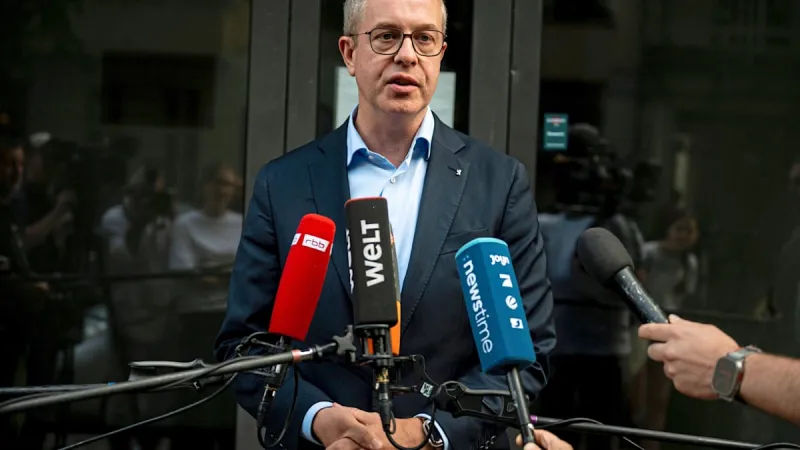
BERLIN – Peter Leibinger, President of the Federation of German Industries (BDI), issued a stark warning today regarding the precarious state of Germany's industrial landscape, emphasizing that the nation's economic future hinges on decisive, comprehensive reform. He unequivocally rejected the current fragmented approach to policy changes, calling for a unified, substantial legislative package rather than what he termed a reform puzzle.
Leibinger's remarks underscore a growing concern within Germany's powerful manufacturing sector, which has historically been the backbone of the country's prosperity. His assessment highlights systemic challenges that threaten Germany's global competitiveness.
The BDI chief articulated his belief that while the situation is critical, hope for meaningful change persists. However, he stressed that this hope is predicated on a fundamental shift in governmental strategy, moving away from isolated measures towards a cohesive vision.
He contended that the piecemeal implementation of reforms, often addressing symptoms rather than root causes, proves insufficient to navigate the complex economic headwinds facing German industry. These challenges include escalating energy costs, a persistent skilled labor shortage, and increasing global competition.
Instead of a series of small, disconnected adjustments, Leibinger advocated for a singular, overarching reform initiative. Such a package, he argued, would provide clarity, stability, and the necessary impetus for businesses to invest and innovate.
Sources close to the BDI suggest that this grand package would likely encompass a broad spectrum of policy areas, from energy pricing and regulatory simplification to investment incentives and infrastructure modernization. The goal is to create a more attractive operating environment for industrial enterprises.
Leibinger's call resonates with broader sentiments in Germany, where discussions about the future economic trajectory are intensifying. The nation has grappled with various reform efforts, including those related to its social security systems, as seen in the recent Germany Unveils Sweeping Pension Reform.
His demand for a consolidated approach reflects a frustration with bureaucratic inertia and the perceived lack of a coherent industrial strategy at the federal level. Many industry leaders share Leibinger's view that a unified front is essential.
The BDI represents more than 100,000 companies, employing eight million people, making its president's pronouncements highly influential within German political and economic circles. His words serve as a direct challenge to policymakers to reassess their current course of action.
Observers note that the pressure for significant economic reforms is mounting, particularly as Germany aims to maintain its status as an industrial powerhouse amidst a rapidly changing global landscape. Leibinger's intervention is likely to intensify debates within the Bundestag and among coalition partners.
The ultimate success of any reform effort, Leibinger implied, will depend on its scope and the political will to implement substantial, rather than superficial, changes. The BDI stands ready to collaborate, but only on a strategy that offers genuine transformation.
His message is clear: Germany's industry requires more than incremental tweaks; it demands a foundational overhaul to secure its future viability and ensure continued prosperity for the nation.