 Dorry Archiles
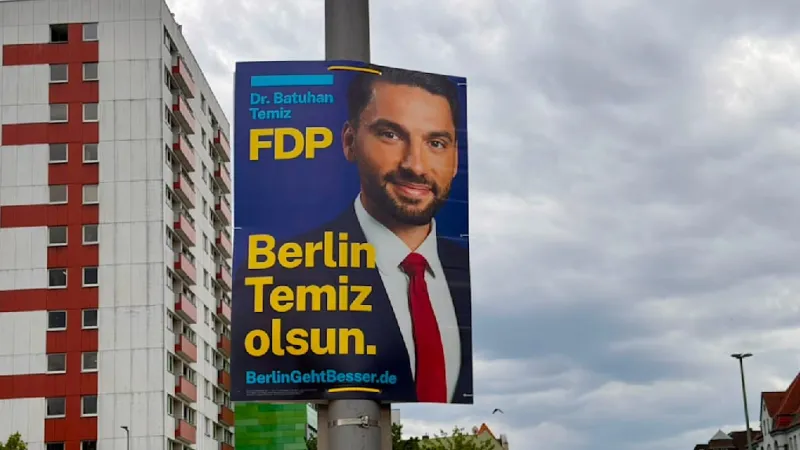
Berlin, Germany, faces a renewed debate on integration and national identity after FDP candidate and Bundeswehr soldier Batuhan Temiz ignited a political firestorm with his Turkish-language election poster. The controversial campaign material, aimed at Turkish-speaking voters, has drawn sharp criticism and accusations of fostering Islamization and subversion within German society.
Temiz, a lieutenant in the German armed forces and an FDP candidate for the Berlin House of Representatives, defended his strategy, stating his intent was to engage a segment of the electorate often overlooked by traditional German political discourse. He emphasized his commitment to Germany while acknowledging his Turkish heritage as a bridge to a significant portion of the citys diverse population.
Critics immediately voiced strong accusations of Islamization and subversion, particularly from conservative factions and those wary of parallel societies. They argue that campaigning in a foreign language undermines national cohesion and encourages segregation rather than integration into German mainstream culture.
Leading figures within the FDP have largely supported Temiz, reiterating the party's commitment to inclusivity and reaching all eligible voters, regardless of their native language. However, the controversy has undeniably created internal discussions regarding the optics and potential misinterpretations of such campaign tactics.
Germany possesses a substantial Turkish diaspora, with a significant population residing in Berlin, making the Turkish-speaking community a vital electoral demographic. Historically, engaging these voters has been a complex issue, often leading to debates about cultural assimilation versus multicultural recognition.
This incident echoes previous discussions in German politics surrounding the use of foreign languages in public life, including signage, official communications, and political appeals. Such debates often highlight underlying tensions about German identity and the perceived success or failure of integration policies over decades.
Temiz himself highlighted his dual identity as a German citizen and Bundeswehr officer of Turkish descent as a testament to successful integration. He sees his poster as a means to encourage participation in the democratic process among those who might feel marginalized or less connected to German political parties.
The accusations of Islamization levied against Temiz are particularly sensitive in the current European political climate. These claims frequently surface in discussions about immigration and identity, often fueled by nationalist sentiments across the continent. Critics maintain that such campaign materials validate these concerns.
Political analysts suggest that while the poster may galvanize support within the targeted Turkish-speaking community, it risks alienating other segments of the electorate, particularly those with strong views on national identity and the role of German as the primary language of public life. The net electoral impact remains to be seen.
The broader context of Berlin, a city grappling with complex social issues and a diverse population, further complicates this debate. Discussions about societal challenges, as highlighted by reports such as Berlin Confronts Alarming Rise in Gun Violence, Easy Weapon Access, often intertwine with questions of community cohesion and effective governance.
The strategic choice to use a Turkish election poster marks a bold move in German political campaigning. It challenges conventional approaches and forces parties to confront how they engage a increasingly multilingual electorate while maintaining a sense of shared national identity.
As election cycles continue across Germany, including the ongoing political shifts exemplified by reports like CDU Faces Historic Rift: Sachsen-Anhalt Power Battle Intensifies, the FDPs gamble with Temizs campaign serves as a crucial test case. It will inform future strategies for how German political parties navigate the intricate landscape of multiculturalism and electoral outreach.
Ultimately, the controversy surrounding Batuhan Temizs Turkish-language poster transcends a mere campaign tactic; it reflects a deeper societal dialogue about belonging, identity, and the evolving definition of what constitutes modern German nationhood in 2026.