Robert Andrison
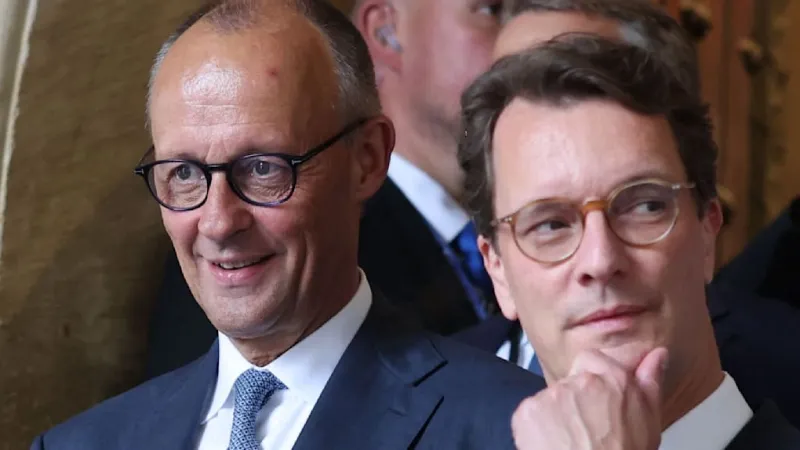
A new public opinion poll six months before the pivotal state election in North Rhine-Westphalia, Germany, reveals a significant eight-percentage-point slump for the Christian Democratic Union (CDU) and a concurrent surge for the far-right Alternative for Germany (AfD). This dramatic shift leaves the incumbent CDU-Green coalition, led by Minister-President Hendrik Wüst, without a parliamentary majority, signaling potential political upheaval in the populous German state.
The findings from the latest survey paint a stark picture for the CDU, which has traditionally held strong electoral ground in North Rhine-Westphalia. The substantial decline in voter confidence directly jeopardizes the future of the current governing alliance with the Greens, commonly referred to as the Black-Green coalition. Political analysts are closely scrutinizing the data, recognizing the potential for a seismic rearrangement of the political landscape.
Conversely, the AfD has capitalized on the CDU's misfortunes, achieving notable gains in the same poll. This upward trajectory underscores a broader trend of increasing support for the far-right party across Germany, which continues to challenge established political norms and discourse. Their growing influence raises critical questions about the electorate's evolving priorities and frustrations.
For Hendrik Wüst, the current Minister-President and a prominent figure within the CDU, these poll results present a formidable challenge. With merely half a year remaining until the North Rhine-Westphalia election, his government faces an uphill battle to regain public trust and re-establish a clear path to retaining power. The political discomfort for Wüst and his allies is palpable as campaigning gears up.
North Rhine-Westphalia, with its substantial population and economic significance, often serves as a bellwether for national political sentiment in Germany. A decisive shift here could reverberate across the federal political spectrum, influencing strategies and alliances in Berlin. The state's electoral outcome frequently dictates the momentum of major parties nationwide.
The prospect of the Black-Green coalition losing its majority could force a complex re-evaluation of potential government formations. Various scenarios, including grand coalitions or new three-party alliances, may emerge as political leaders grapple with the electorate's fragmented preferences. Negotiation tables could become crowded as parties seek viable governing arrangements.
Observers attribute the shifting allegiances to a confluence of factors, including economic anxieties, ongoing debates over immigration policy, and a general discontent with mainstream parties. Voters appear increasingly willing to explore alternatives, indicating a deep-seated desire for change that the AfD has effectively tapped into.
Historically, the CDU has enjoyed robust support in North Rhine-Westphalia, making this eight-percentage-point drop particularly concerning. The party will need to undertake a rigorous analysis of its campaign messaging and policy platforms to understand and address the reasons behind this significant erosion of its voter base.
Other political entities, such as the Social Democratic Party (SPD) and the Free Democratic Party (FDP), will also be closely monitoring these developments. The weakening of the CDU-Green coalition could open new avenues for these parties to assert their influence and potentially form new alliances, shaping the future governance of the state.
The reliability of pre-election polls is always subject to scrutiny, yet consistent trends often provide valuable insights into public mood. This particular survey, conducted six months out, offers an early but clear indicator of the challenges ahead for the CDU and the opportunities for the AfD.
The rise of the AfD in regional polls aligns with its broader national advancements. The party has seen increased support in various parts of Germany, often fueled by its stance on immigration and European integration. Its growing presence poses a persistent challenge to Germany's established political order. For context on some of the party's activities, see this related report: Jewish Students Investigated Following Halle Blockade of AfD Politician.
Minister-President Wüst's campaign team must now strategize aggressively to counteract the negative polling trends. His leadership will be under intense examination as he seeks to articulate a compelling vision that can resonate with disaffected voters and mobilize the party's traditional base.
The political discourse leading up to the NRW election will likely intensify, focusing on key policy areas such as economic development, energy transition, and social welfare. Each party will strive to differentiate itself and present solutions to the pressing issues facing citizens in North Rhine-Westphalia.
The results in North Rhine-Westphalia often reflect or foreshadow national political sentiments. Should the AfD maintain its gains and the CDU continue to falter, it could signal a broader shift in Germany's political landscape, influencing the strategies of all major parties at the federal level.
This latest poll underscores the dynamic and often unpredictable nature of modern electoral politics. With six months remaining, the political arena in North Rhine-Westphalia is set for a period of intense competition and strategic maneuvering, the outcome of which remains uncertain but undoubtedly significant for Germany.