Angela Stefani
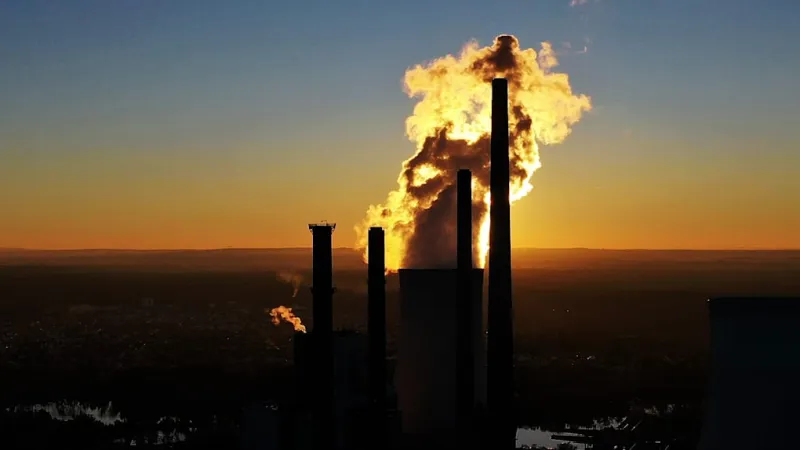
BERLIN – Germany has fundamentally altered its long-term energy transition strategy with the promulgation of a new power plant law, a move that Uniper CEO Michael Lewis contends renders the German market investable once more. This legislative shift, confirmed by Lewis in an interview with WELT, signals a marked reprioritization, diminishing the immediate expansion of renewable energy in favor of increased investment in gas-fired power generation. The implications are far-reaching for Germany's climate goals and its broader economic landscape.
The new German power plant law, formally known as the Kraftwerksgesetz, aims to bolster grid stability and ensure a reliable energy supply as the nation phases out coal and nuclear power. It introduces a framework designed to incentivize the construction and operation of new gas-fired power plants, which are envisioned to eventually convert to hydrogen, thereby bridging the transition to a fully renewable system. This strategic pivot comes amid ongoing discussions regarding energy security and industrial competitiveness, particularly in the wake of volatile energy markets in the preceding years.
Lewis articulated the profound impact of the legislation, stating, "The German market is investable again." This declaration from the head of Uniper, a major European energy company, underscores a renewed confidence within the industry regarding the clarity and long-term viability of German energy policy. For years, uncertainty had deterred significant private sector investment in conventional power generation, creating a perceived gap in the nation's future energy mix.
The shift in priorities is palpable. While Germany remains committed to its long-term renewable energy targets, the immediate focus under the new law has demonstrably moved away from accelerating green energy expansion. Instead, resources and policy directives are now channeled towards securing dispatchable power capacity through gas. This reorientation seeks to balance ambitious climate objectives with the practicalities of maintaining a robust and stable national grid.
Critics contend that this renewed emphasis on gas could delay the full transition to carbon-neutral sources and potentially lock Germany into fossil fuel infrastructure for longer than desired. Environmental groups express concern that the label of 'transition fuel' might grant gas an extended operational lifespan, thereby challenging Germany's commitments under the Paris Agreement.
However, proponents argue that gas power plants offer the necessary flexibility to complement intermittent renewable sources like wind and solar. They serve as a crucial backup, ensuring electricity supply during periods of low wind or sunlight. The government's vision includes the future conversion of these gas plants to run on green hydrogen, a technology still in its nascent stages of commercial viability and widespread availability.
The financial implications for the German energy sector are substantial. Billions in investment are expected to flow into new gas infrastructure, including pipelines and power stations. This could lead to a revitalization of certain segments of the engineering and construction industries, creating jobs and stimulating economic activity across affected regions.
From a European perspective, Germany's power plant law could influence broader EU energy policy discussions. As a major economic powerhouse within the bloc, Germany's energy decisions often set precedents or spark similar debates in other member states grappling with their own energy transitions, security concerns, and industrial decarbonization goals.
This policy also reflects a pragmatic response to geopolitical realities that have underscored the imperative of energy independence and diversification. Reducing reliance on single energy sources or volatile supply chains has become a paramount concern for European nations, influencing strategic energy decisions like Germany's pivot.
Uniper, having navigated significant challenges in recent years, stands to play a central role in this new energy landscape. Its existing expertise in gas infrastructure and power generation positions it favorably to capitalize on the incentives offered by the new law, further solidifying its presence in the German and European energy markets.
Ultimately, the path forward for Germany's energy transition is now explicitly twofold: continue the gradual expansion of renewables while simultaneously fortifying dispatchable power capacity with advanced gas-fired plants. This dual approach aims to safeguard both energy security and economic stability while steering towards a long-term, hydrogen-powered future.
The new Kraftwerksgesetz represents a significant recalibration rather than an abandonment of Germany's green energy ambitions. It acknowledges the complex interplay between technological readiness, economic feasibility, and the urgent need for secure energy supply, charting a course that seeks to manage the transition incrementally and realistically.