 Robert Andrison
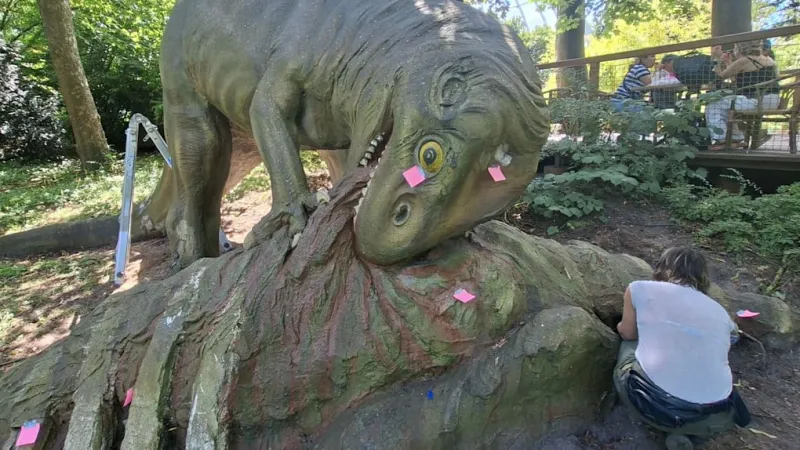
Hamburg, Germany – Prehistoric giants at Hagenbeck's Tierpark are showing significant signs of decay, with cracks marring their surfaces and moisture penetrating their interiors, prompting a critical examination by a conservator to determine their future. The beloved Allosaurus figures and their colossal companions now face an uncertain fate, poised between retaining their status as city landmarks and requiring an extensive, costly rescue operation to prevent further deterioration.
The visible fissures on the towering figures are not merely cosmetic; they represent a serious threat to the structural integrity of these cherished outdoor installations. Environmental factors, particularly incessant humidity, have reportedly contributed to the internal corrosion, accelerating the degradation process of the structures.
A specialized conservator has been tasked with a thorough assessment of the dinosaur sculptures. This detailed investigation involves analyzing the materials used, evaluating the extent of the damage, and proposing viable solutions for either stabilization or comprehensive restoration. The outcome of this expert appraisal will be pivotal in charting the course for the park's iconic inhabitants.
Hagenbeck's Tierpark, renowned globally for its open enclosures and groundbreaking zoo architecture, holds a special place in Hamburg's cultural landscape. These dinosaur sculptures, though not ancient artifacts themselves, have become an integral part of the park's identity, captivating generations of visitors since their installation.
The question of landmark status is central to the ongoing assessment. Designation as a city landmark would afford the sculptures a level of protection and potentially unlock dedicated funding avenues for their preservation. However, it also implies adherence to stringent conservation standards.
Should the expert deem a full restoration necessary, the undertaking is anticipated to be substantial, both in scope and financial investment. Repairing and waterproofing such large-scale, intricate outdoor sculptures demands specialized techniques and materials, potentially requiring temporary closures or scaffolding that would alter the visitor experience.
The challenge of preserving large-scale public art, especially those exposed to the elements, is a recurring theme in urban conservation. The materials typically used for such installations – often a blend of concrete, plaster, and metal armatures – are susceptible to wear, tear, and weather-related damage over decades.
The current examination seeks to ascertain not only the immediate repairs needed but also a long-term strategy for the maintenance and protection of these assets. Proactive measures could prevent similar deterioration in the future, ensuring the longevity of these unique attractions.
Local residents and tourists alike hold a strong affinity for the prehistoric giants. The prospect of their potential removal or prolonged restoration would undoubtedly evoke public sentiment, underscoring their importance as cultural touchstones within the vibrant city of Hamburg.
Following the conservator's comprehensive report, Hagenbeck's management, in consultation with municipal authorities and heritage preservation agencies, will face critical decisions. These choices will weigh the cultural value against the practicalities and economic implications of extensive conservation work.
This crucial investigation highlights the continuous commitment required to maintain and preserve historical and cultural attractions, even those of a more recent vintage. The fate of Hagenbeck's dinosaurs serves as a reminder of the delicate balance between environmental exposure and artistic endurance.