 Stefani Rindus
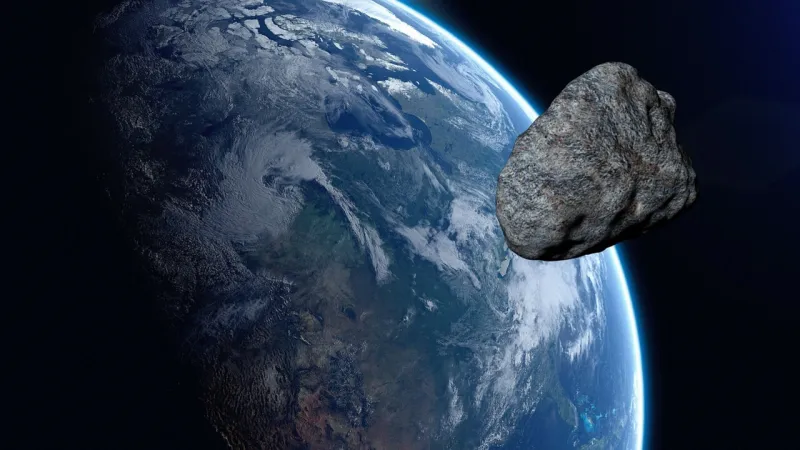
A celestial body, initially dubbed the Halloween asteroid, will make a notably close approach to Earth on November 2, passing nearer than the Moon and offering potential visibility from various global locations, including Italy. This event follows its initial detection and tracking by astronomers who meticulously monitor near-Earth objects (NEOs).
Astronomical observatories across the globe have confirmed the trajectory of this cosmic rock. Its passage on November 2 represents a significant moment for amateur and professional skygazers alike, as such close encounters provide valuable data for planetary defense and space exploration studies.
The asteroid, a relatively modest-sized object, will not pose any impact threat to our planet. Its trajectory is well-understood, allowing scientists to predict its precise closest point of approach with high accuracy. The term Halloween asteroid emerged due to its proximity to the late October festive period, capturing public imagination even as its closest pass occurs days later.
For residents in Italy and other regions with clear night skies, the asteroid might be observable with modest astronomical equipment. While specific details on its brightness and optimal viewing times will be released by local astronomical societies, such events typically require binoculars or small telescopes for optimal viewing.
Near-Earth objects encompass asteroids and comets nudged by the gravitational attraction of nearby planets into orbits that allow them to enter Earths neighborhood. NASA's Planetary Defense Coordination Office and other international agencies continuously track these objects to assess any potential collision risks.
The scientific community views these close flybys as invaluable opportunities. They enable researchers to study the physical characteristics of asteroids, such as their size, shape, rotation, and composition, often without the need for costly space missions.
Every year, numerous asteroids traverse the inner solar system, with a fraction of them making close approaches to Earth. Most are small and harmless, burning up in the atmosphere if their paths intersect our planet. Larger objects are rarer and are the primary focus of planetary defense efforts.
This particular asteroid, while not a record-breaker in terms of proximity, is noteworthy for its visibility and the current level of public interest in celestial phenomena. It underscores the dynamic nature of our solar system and the ongoing cosmic ballet.
Tracking such objects involves a network of ground-based telescopes and space-based observatories. These instruments gather photometric and astrometric data, which are then used to refine orbital models and forecast future movements.
The observations gathered from this Halloween asteroid flyby will contribute to a broader understanding of asteroid populations and their origins. This knowledge is crucial not only for mitigating potential future risks but also for unraveling the early history of the solar system.
Public outreach initiatives often accompany these celestial events, encouraging citizen science and fostering a deeper appreciation for astronomy. Many scientific institutions will likely host live streams or public viewing sessions, providing commentary and expert insights.
As the November 2 date approaches, astronomers will continue to refine their observations, offering updated viewing guides for enthusiasts. The event serves as a reminder of Earths place within a bustling cosmic environment, constantly interacting with its celestial neighbors.
Efforts to identify and characterize NEOs have intensified over recent decades. Agencies like the European Space Agency (ESA) and various university-led projects collaborate to catalog these objects, building a comprehensive database that informs planetary defense strategies.
The close passage of this asteroid also highlights technological advancements in detection and tracking. Modern computational models allow for precise predictions, giving ample warning for any potentially hazardous objects, though this particular asteroid poses no such threat.
Ultimately, the November 2 flyby of the Halloween asteroid provides a brief, spectacular demonstration of the natural processes shaping our solar system. It offers a chance for many to connect directly with the cosmos.