 Demian Sahputra
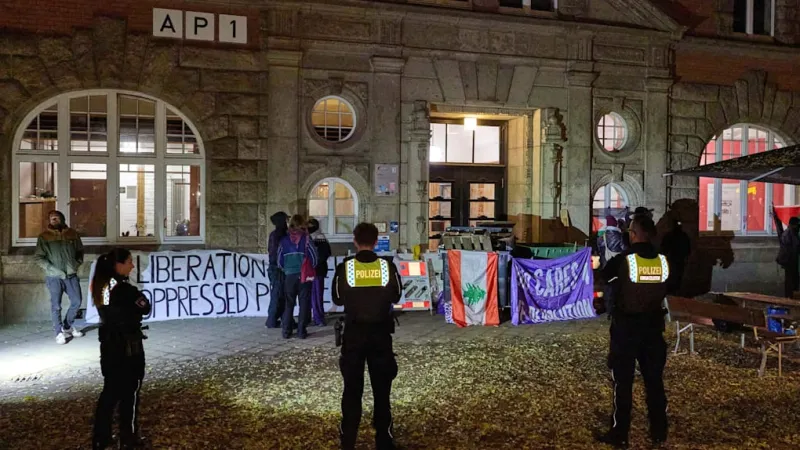
Hamburg, Germany – Activists effectively shut down access to the University of Hamburg campus Monday morning, erecting barricades at key entrances with construction fences and trash containers. The coordinated action disrupted daily operations as demonstrators voiced dissent over pressing geopolitical concerns, specifically referencing the autonomous region of Rojava and the ongoing conflict in Palestine. This protest highlights a growing trend of youth activism intersecting with global political issues.
The blockade commenced in the early hours, preventing students, faculty, and staff from entering the university premises. Organizers strategically positioned the makeshift barriers, creating a significant impediment to pedestrian and vehicular traffic around the academic institution. This tactic underscored the protestors determination to make their message heard by directly impacting the universitys functionality.
Banners prominently displayed at the blockade points explicitly linked the demonstration to the complex situations in Rojava and Palestine. Rojava, an autonomous region in northern Syria, faces ongoing humanitarian and political challenges, while the Israeli-Palestinian conflict continues to generate significant international attention and fervent debate. The activists aimed to draw attention to perceived injustices and humanitarian crises in these regions.
This specific demonstration shares thematic overlaps with the broader Gen Z regelt protests, a movement characterized by young peoples engagement with social and political causes. Such synergy suggests a collective sentiment among a segment of German youth who feel compelled to act on global issues, often leveraging direct action to convey their demands and frustrations.
University officials have yet to issue a comprehensive statement regarding the impact of the blockade or any potential measures to restore normal access. The sudden nature of the protest undoubtedly caught many off guard, forcing immediate adaptations for those attempting to attend classes or work.
The choice of the University of Hamburg as a protest site aligns with a historical precedent of academic institutions becoming focal points for political expression. Campuses worldwide frequently serve as arenas for students and activists to highlight societal grievances, from local concerns to international humanitarian crises.
Across Europe, student protests have gained momentum on various issues, reflecting a passionate and politically aware generation. For instance, similar disruptions have occurred, as reported in articles like French Education Minister Urges Return to Class Amid Renewed Student Protests, where educational authorities grappled with student-led demonstrations challenging government policies.
The protestors invocation of Rojava signals solidarity with Kurdish communities, who have been at the forefront of the fight against extremist groups in Syria and advocate for democratic self-administration. Their plight resonates with many activists concerned with self-determination and human rights.
Similarly, the Palestinian cause has long been a rallying point for international activism, particularly among student groups. Demonstrations frequently call for an end to occupation and advocate for Palestinian statehood, reflecting deep-seated humanitarian and political convictions.
The Gen Z regelt movement, while broad in its scope, consistently channels youthful energy into tangible actions, pushing for accountability and change from governments and international bodies. This recent blockade at Hamburg University serves as another vivid example of their impactful strategies.
Local law enforcement observed the situation but initially maintained a perimeter, allowing the peaceful demonstration to proceed without direct intervention. Authorities are likely assessing the duration and scale of the blockade before deciding on any further actions to clear the entrances.
The incident at Hamburg University underscores the escalating tension between academic environments as centers of learning and their simultaneous role as platforms for political expression. Balancing these roles often presents significant challenges for university administrations and local governance.
This event joins a growing narrative of heightened activism in 2026, where global events continue to spur localized, direct action. The interconnectedness of information and social media allows such movements to quickly mobilize and amplify their messages, reaching a wider audience than ever before.
As the day progresses, the university community awaits clarity on when full access will be restored and what implications this blockade will have on upcoming academic schedules and policies regarding campus access during protests.
The actions taken by activists at Hamburg University serve as a potent reminder of the enduring power of protest in democratic societies, even when it leads to significant disruption. It forces a public discourse on issues that might otherwise receive less attention.