 Stefani Rindus
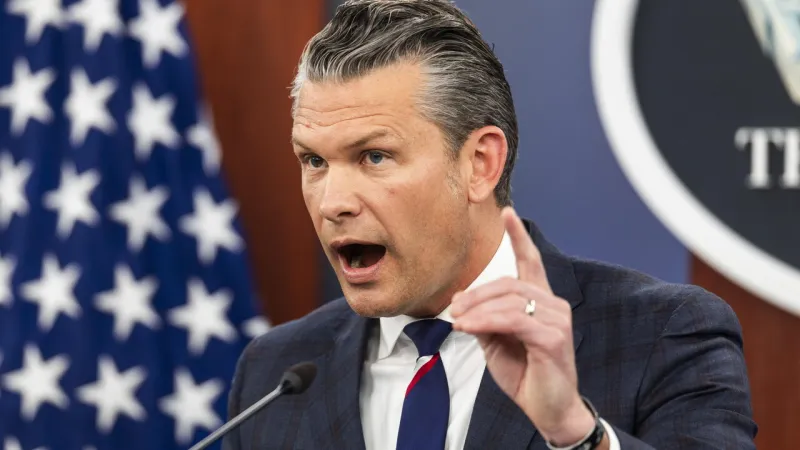
Washington - The US House of Representatives recently blocked a procedural maneuver aimed at launching impeachment proceedings against conservative media figure Pete Hegseth, effectively ending a contentious effort by certain lawmakers. This decisive vote represents a significant political victory for President Donald Trump, who staunchly defended Hegseth, publicly declaring, "He's a perfect 10."
The resolution, brought forth by a vocal faction within Congress, sought to investigate Hegseth for unspecified actions that critics argued warranted formal inquiry. However, the majority quickly moved to table the measure, preventing it from advancing to a full debate or consideration by the House Judiciary Committee.
President Trump's immediate and unequivocal support for Hegseth underscored the political nature of the challenge. His public endorsement, conveyed through official channels, solidified the narrative that the impeachment attempt was politically motivated rather than based on substantive grounds.
Hegseth, a prominent voice in conservative media and a military veteran, has cultivated a significant following through his television appearances and commentary. His close alignment with President Trump's political agenda and frequent defense of administration policies have made him a target for opposition figures.
This latest congressional skirmish highlights deep partisan divisions and an ongoing ideological struggle within Washington. Reports suggest the impeachment bid was also intertwined with broader disagreements concerning foreign policy, with some lawmakers attributing blame for past decisions, specifically related to the Iran War, which has notably fueled a Republican rift. For more on this internal party conflict, see our report, Hegseth Impeachment Fuels Republican Rift Over Iran War Blame.
The decision to table the impeachment resolution means the House chose not to deliberate on the accusations or formally open an investigation. Such a procedural vote often serves as a quick way for the majority party to dismiss measures they deem unwarranted or politically inconvenient.
For President Trump's administration, the defeat of the Hegseth impeachment attempt reinforces his influence over the legislative agenda and his ability to rally congressional support for his allies. It also sends a clear message to those who might seek to challenge individuals closely associated with his presidency.
The political landscape in 2026 remains highly charged, with frequent legislative battles reflecting the deeply polarized nature of American politics. Efforts to impeach or censure prominent figures have become a recurring feature of congressional activity, often serving as a barometer of the prevailing power dynamics.
Historically, impeachment processes are reserved for grave offenses. However, recent years have seen an increased willingness by political factions to pursue such measures, sometimes perceived as tools for political grandstanding rather than genuine constitutional accountability.
While the immediate threat of impeachment has been averted for Hegseth, the public nature of the attempt could nonetheless leave a lasting mark. The episode underscores the intense scrutiny faced by high-profile figures within President Trump's orbit.
Analysts suggest that despite the procedural defeat, the underlying tensions that sparked the impeachment attempt against Hegseth are unlikely to dissipate. Future legislative sessions may see renewed efforts to hold individuals accountable, albeit through different mechanisms, as political adversaries continue to navigate a complex and often hostile environment.