 Debby Wijaya
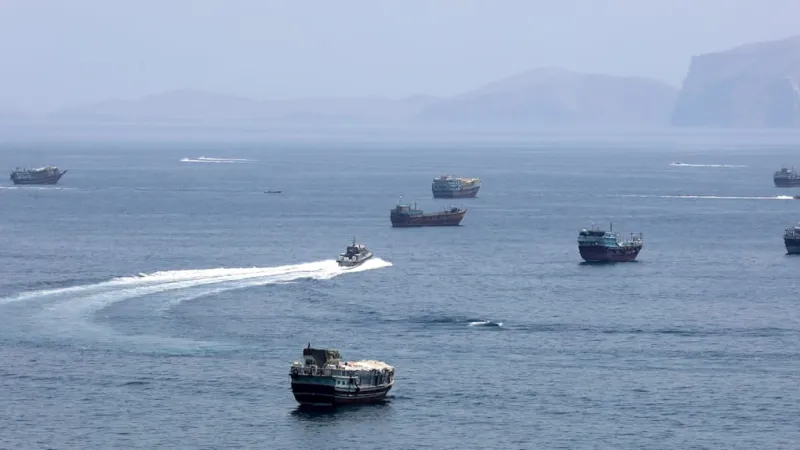
TEHRAN – The Iranian Revolutionary Guard Corps has declared the closure of the Strait of Hormuz, a pivotal maritime artery, stating the blockade will persist until the cessation of United States interference within the region. This assertive action, revealed recently, follows an incident where a commercial vessel was reportedly hit by warning shots and subsequently intercepted by Iranian forces, marking a significant escalation in geopolitical tensions across the Middle East.
The announcement from Tehran signifies a direct challenge to international maritime freedom and is poised to trigger immediate repercussions for global energy markets. The Strait of Hormuz, a narrow passage between the Persian Gulf and the Gulf of Oman, is indispensable for the transport of a substantial portion of the world's oil supply, making any disruption a matter of grave international concern.
Details surrounding the vessel incident remain scarce, but initial reports indicate the ship encountered Iranian forces who fired warning shots before stopping and seizing the craft. The nationality of the vessel and its crew have not been immediately disclosed, adding to the ambiguity and apprehension surrounding the event.
This development amplifies an already fraught relationship between Iran and Western powers, particularly the United States. President Donald Trump's administration has consistently maintained a firm stance against what it perceives as Iran's destabilizing regional activities, employing stringent sanctions and diplomatic pressure.
The Revolutionary Guard Corps' rationale for the closure—demanding an end to United States involvement—underscores a deep-seated grievance. This rhetoric aligns with previous declarations from Iranian officials who have frequently denounced the United States presence in the Middle East as a source of regional instability and a violation of national sovereignty.
Such a blockade poses immense economic and strategic challenges. Maritime shipping insurers are likely to elevate premiums, and the price of crude oil could surge, impacting economies worldwide. Major global powers, dependent on the unimpeded flow of oil through the Strait, are expected to respond swiftly to safeguard international trade routes.
Historically, Iran has threatened to close the Strait of Hormuz during periods of heightened friction, but actual interdiction of international shipping lanes represents a severe escalation. Previous incidents have typically involved temporary seizures or harassment, not a stated intention for a sustained closure.
Regional allies of the United States, including Saudi Arabia and the United Arab Emirates, which also rely heavily on the Strait for oil exports, will likely view this action as a direct threat to their economic stability and national security. The potential for miscalculation and armed confrontation in the densely trafficked waters is considerable.
This development follows previous strong rhetoric from Iran, with figures like Mojtaba vowing vengeance and targeting President Trump, Meloni, and Netanyahu, as reported in Mojtaba Vows Vengeance, Targets President Trump, Meloni, Netanyahu. An earlier report also highlighted how Iran Daily Blacklists Meloni, Trump, Netanyahu; Depicts Them As Prisoners, underscoring the depth of animosity and the complex web of regional antagonisms.
International bodies and diplomatic channels are expected to become intensely active as global leaders seek to de-escalate the situation and ensure the swift reopening of the Strait. However, given the explicit condition tied to United States regional policy, a quick resolution appears challenging.
Observers note that the timing of this action could be a calculated move by Tehran to test the resolve of the international community and President Trump's administration, potentially aiming to garner concessions or project strength amid ongoing diplomatic stalemates.
The immediate focus for international defense and diplomatic entities will be on verifying the extent of the blockade and formulating a coordinated response to prevent further destabilization of an already volatile region. The incident serves as a stark reminder of the fragile balance of power and the critical importance of secure maritime passages for global commerce.