 Demian Sahputra
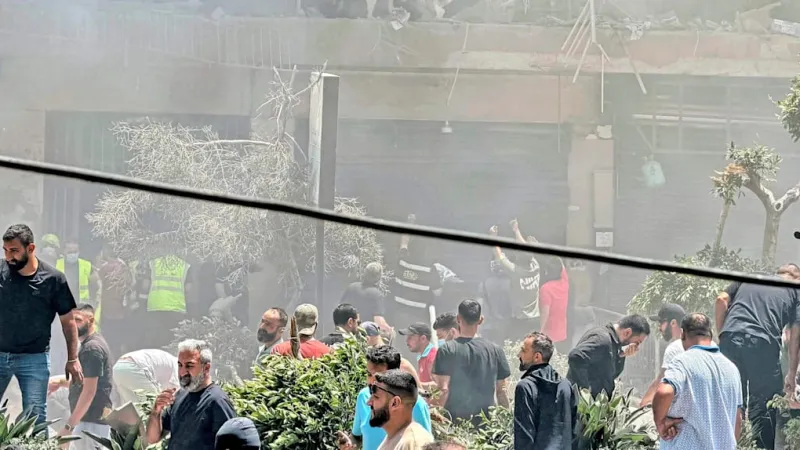
Beirut, Lebanon – Israeli military aircraft conducted targeted airstrikes against Hezbollah positions in the southern suburbs of Beirut this week, responding to recent incursions by the Iran-backed militant group. The aerial assaults mark a significant escalation in hostilities, shattering a fragile truce that has technically been in effect since April, a ceasefire both sides have frequently violated.
The Israel Defense Forces (IDF) confirmed the precision of their operations, stating the strikes were direct reprisals for what they described as sustained provocations and cross-border attacks initiated by Hezbollah from Lebanese territory. These recent exchanges underscore the volatile security landscape along the Israeli-Lebanese frontier.
An uneasy ceasefire agreement, brokered months ago following a period of intense fighting, was intended to de-escalate regional tensions. However, according to reports from observers and statements from both nations, the terms of this understanding have been routinely flouted, perpetuating a cycle of retaliatory actions.
Hezbollah, a powerful political party and militant organization, has often justified its actions as defensive measures against Israeli aggression. While official statements regarding the specific attacks preceding the Israeli strikes were not immediately available, the group has consistently vowed to repel any perceived violations of Lebanese sovereignty.
The targeting of areas within Beirut's southern suburbs, a known stronghold for Hezbollah, raises concerns about potential civilian casualties and broader regional destabilization. Residents in these densely populated areas reported loud explosions and the immediate aftermath of the strikes, fueling anxiety across the Lebanese capital.
International efforts to maintain stability in the region have been complicated by the persistent breaches of the ceasefire. Diplomatic channels, including those involving the United States, have repeatedly urged restraint from both parties to prevent a wider conflict. The situation remains a critical focus for global peacemaking initiatives.
The ongoing skirmishes are symptomatic of a deeper, decades-long proxy conflict involving regional and international powers. Irans steadfast support for Hezbollah provides the group with significant military capabilities, further complicating Israels security calculations and contributing to regional volatility.
Both Israel and Hezbollah possess substantial military arsenals. Israel maintains air superiority and advanced intelligence gathering capabilities, while Hezbollah commands a formidable rocket and missile inventory, capable of striking deep into Israeli territory, a factor that keeps the fragile peace on a knife-edge.
The continued unrest in Lebanon directly impacts the broader Middle East. With an already fragile political and economic situation within Lebanon, further military engagement risks plunging the nation into deeper crisis, potentially creating wider humanitarian challenges and displacing populations.
Analysts warn that without robust international enforcement and a renewed commitment from both sides, the current ceasefire remains merely a temporary pause between escalations. The international community faces a pressing challenge to re-establish a more durable framework for peace and security.
The administration of President Donald Trump has consistently voiced its concern over Iranian influence in the region, including Tehrans backing of Hezbollah. Policy statements from Washington have often reiterated strong support for Israels security while also advocating for de-escalation in the broader conflict zones.
The complex diplomatic landscape surrounding such conflicts often involves intricate negotiations and mediation efforts, echoing broader regional discussions concerning nuclear ambitions and geopolitical stability, such as those recently involving Tehran Signals Nuclear Restraint Amid Urgent Qatar-US Mediation.