 Robert Andrison
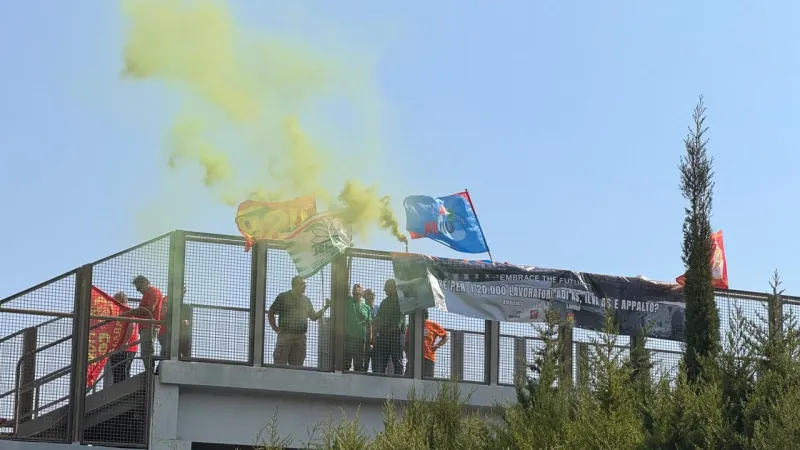
TARANTO, Italy – An Italian judicial body has upheld a crucial order to block operations in the hot area of the former Ilva steel plant, a decision poised to reshape the nation's industrial landscape and workforce. The ruling emerged as Prime Minister Giorgia Meloni swiftly responded, pledging immediate government re-engagement to address the contentious dossier and its profound economic and environmental challenges.
The confirmation by the courts solidifies a prior directive to halt activities within the plant's most environmentally impactful sections. This judicial intervention underscores the persistent conflict between industrial output and the pressing concerns over public health and ecological welfare surrounding one of Europe's largest steelworks.
Prime Minister Meloni acknowledged the gravity of the situation, articulating the government's renewed commitment. "Decisions do not depend on us," Meloni stated, referring to the judicial process. "The table will be reconvened immediately. We continue to do our utmost; it is one of the dossiers on which we are working the most." Her remarks highlight the executive branch's intent to navigate the complex legal and operational quagmire.
The Ilva plant, located in Taranto, Puglia, has been a focal point of debate for decades, emblematic of Italy's struggle to reconcile industrial might with environmental protection. Its "hot area," encompassing facilities like blast furnaces and coke ovens, is central to primary steel production but has also been identified as a significant source of pollutants.
Environmental groups and local residents have long campaigned against the plant's operations, attributing high rates of respiratory illnesses and certain cancers in the Taranto area to emissions from the facility. The judicial blockage is a direct response to these sustained concerns and previous findings of environmental non-compliance.
Economically, the Ilva plant remains a vital employer in southern Italy, supporting thousands of direct and indirect jobs. Any sustained shutdown or reduction in capacity carries severe implications for the local economy, creating a difficult balancing act for any administration attempting to address the plant's future.
Past governments have wrestled with the Ilva dilemma, seeking various solutions ranging from state aid and special decrees to privatization attempts. These efforts have frequently encountered legal hurdles, public opposition, and financial setbacks, preventing a definitive resolution to the plant's protracted crisis.
The current judicial confirmation means the government cannot simply override the environmental concerns through administrative fiat. Instead, it must find a solution that respects legal rulings while also considering the immense socio-economic consequences of a complete shutdown or radical restructuring.
Meloni's immediate call for reconvening a working group suggests a multipronged approach may be necessary, involving not only industrial and environmental ministries but potentially labor unions and local authorities. The objective will likely be to devise a strategy that can satisfy judicial mandates while preserving, where possible, employment and production capacity.
The case of Ilva reflects a broader European challenge: how to transition heavy industries towards more sustainable practices without devastating regional economies. Italy's handling of this specific crisis could set a precedent for similar industrial disputes across the continent.
Observers note that the government's options are limited. Investment in green technologies, retooling the plant for reduced emissions, or even considering alternative industrial uses for the site could be on the table. However, each path presents significant financial and logistical obstacles.
The Prime Minister's commitment to "continue to do our utmost" indicates the high political priority attached to the Ilva dossier. Her administration faces pressure from both environmental advocates demanding stricter adherence to regulations and industry stakeholders concerned about economic stability.
This judicial decision reinvigorates the debate over who ultimately bears responsibility for the environmental and health legacy of industrial giants. It pits the judiciary's role in safeguarding public welfare against the executive's mandate to manage national economic interests.
The reconvened "table" that Meloni mentioned will need to navigate highly technical environmental engineering details, complex legal frameworks, and sensitive labor relations. The outcomes of these discussions will critically impact thousands of families and the broader industrial strategy for Italy.