 Chris Robert
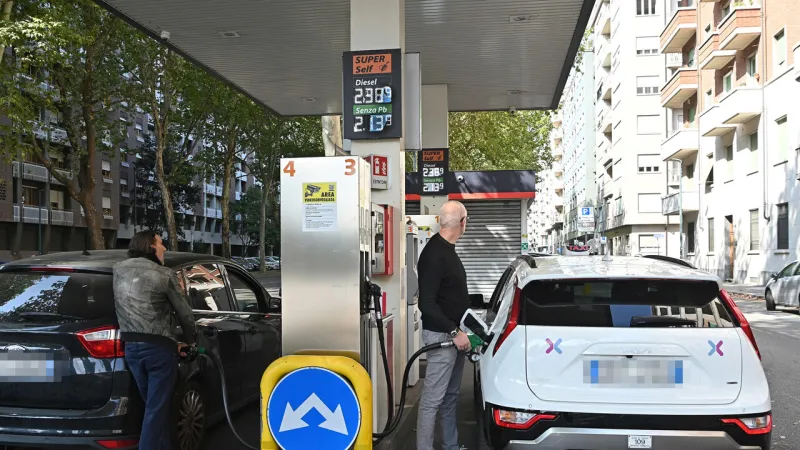
ROME – Italian motorists are contending with a persistent and significant rise in fuel costs, as diesel prices on the nations highways now approach the critical 2.5 euro per liter mark. Data released by the Ministry of Enterprise and Made in Italy (Mimit) indicates that diesel currently averages 2.377 euros per liter on major roadways, exacerbating financial pressures on drivers and transport sectors.
The latest figures underscore an ongoing upward trend in Italian fuel prices that has captured national attention. The near 2.5 euro threshold for diesel represents a considerable burden for both private commuters and commercial freight operations, whose operational costs are directly linked to these fluctuating energy rates.
Petrol prices also reflect this inflationary pressure, maintaining a high average of 2.159 euros per liter across the nations roads. While slightly lower than diesel, this price point still places significant strain on household budgets and business profitability, reinforcing concerns about overall living expenses in Italy.
The Ministry of Enterprise and Made in Italy, Mimit, serves as the authoritative source for these national fuel price statistics, monitoring market dynamics and providing transparency to consumers and stakeholders. Their consistent reporting highlights the volatility inherent in global energy markets and its direct consequences domestically.
For ordinary Italian families, the escalating cost of filling up their vehicles translates into less disposable income, affecting spending on other essential goods and services. This ripple effect can be observed across various economic segments, from daily commutes to holiday travel planning.
Businesses reliant on transportation, ranging from small local delivery services to large logistics firms, are experiencing increased operational expenditures. These higher costs frequently translate into elevated consumer prices for goods and services, contributing to broader inflationary pressures throughout the Italian economy.
The escalating fuel prices have previously sparked intense political debate within Italy. Lawmakers have grappled with potential solutions to mitigate the impact on citizens and industries, leading to lively discussions in Parliament and among various political factions. This was notably highlighted in past reports such as “Italian Parties Clash Over Fuel Prices, Banks Amid Public Outcry,” which detailed the political friction surrounding these economic challenges.
Calls for government intervention, including proposals for fuel price caps or reductions in excise duties, have gained traction among certain political groups and consumer advocacy organizations. The idea of implementing a price cap, for instance, has been championed by parties like Forza Italia, as explored in the article “Forza Italia Hails Fuel Price Cap, Consumers Urge Broader Relief,” reflecting a persistent demand for broader consumer relief.
Global geopolitical events and crude oil market dynamics are primary drivers behind these domestic price movements. Italy, like many other European nations, is heavily dependent on imported energy, rendering its internal market susceptible to international supply and demand fluctuations, as well as currency exchange rates.
Economists warn that a sustained period of high fuel costs could impede Italys economic recovery and growth prospects. It creates a difficult balancing act for the government, needing to address consumer hardship while adhering to fiscal responsibilities and broader economic stability.
Public sentiment remains largely one of concern and frustration. Motorists frequently express exasperation over the relentless rise at the pumps, underscoring the daily impact of these financial burdens. The situation continues to be a focal point for media coverage and public discourse across the nation.