 Dodi Irawan
CARACAS, Venezuela — An Italian national has offered a vivid, unsettling account of the powerful earthquakes that recently rattled Venezuela, describing intense tremors and a pervasive sense of panic and fear that still grips the population. The seismic activity, which struck on a public holiday, caught many residents at home, amplifying the immediate shock and the subsequent lingering anxiety across affected regions. Initial reports, corroborated by official assessments, indicated buildings collapsed in some areas, prompting a tsunami alert for the Virgin Islands, underscoring the severity of the event.
The Italian witness, who chose to remain unnamed due to safety concerns, recounted her personal ordeal. "In Venezuela, we experienced very strong tremors, and there is still widespread panic and fear," she stated, her voice tinged with the lingering tension of the event. She described the sudden onset and the terrifying force of the ground shaking, a sensation that left many profoundly disoriented.
The fact that the seismic event occurred on a public holiday meant an unusually high number of people were indoors. "Many were in their homes because it was a public holiday," she explained, detailing how this circumstance initially led to confusion, as individuals struggled to understand the source of the violent shaking while confined within their residences.
The initial strong tremors were followed by a series of significant aftershocks, contributing to the persistent apprehension. Residents reported feeling these subsequent quakes, keeping them on edge and reinforcing the fear of further structural damage or collapse, even in areas where the initial destruction was minimal.
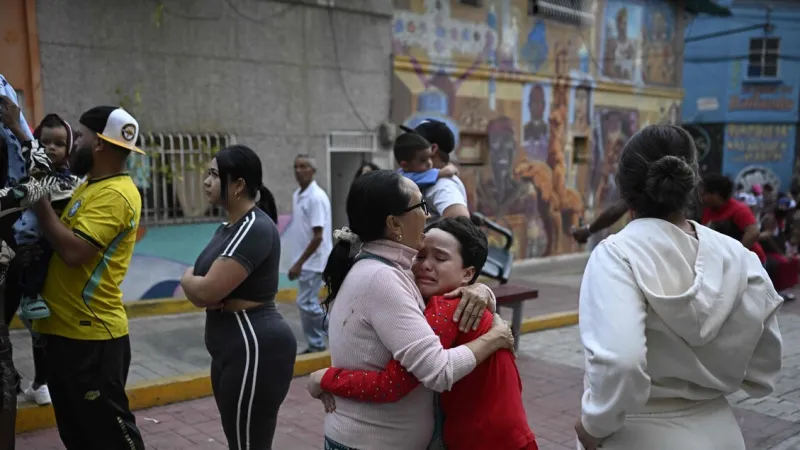
In the immediate aftermath, thousands spilled into the streets, seeking open spaces away from buildings. Accounts emerged of individuals spending nights outdoors, hesitant to return to what they perceived as unstable structures. This collective displacement underscored the psychological toll the Venezuela quake inflicted upon the populace.
Venezuelan authorities, including government officials, swiftly mobilized emergency services. President Nicolas Maduro addressed the nation, urging calm while assuring citizens of the government's full commitment to relief efforts and assessing the damage. Rescue teams were deployed to affected areas, particularly those reporting structural failures.
International bodies and neighboring countries extended their support. The United Nations Office for the Coordination of Humanitarian Affairs expressed readiness to assist if requested, highlighting the global concern for the region's stability. Offers of aid, including technical expertise and humanitarian supplies, began to surface from various international partners.
Geologically, Venezuela lies in a seismically active zone, specifically along the boundary of the Caribbean and South American tectonic plates. This geographical position makes the nation susceptible to frequent seismic activity, with historical records detailing numerous powerful earthquakes over centuries. This inherent vulnerability often compounds the recovery challenge.
Past significant quakes, like those that have historically impacted Caracas, serve as stark reminders of the country's seismic past. Each event leaves an indelible mark on the collective consciousness, shaping building codes, emergency preparedness protocols, and the psychological resilience of its inhabitants.
The psychological impact on residents, especially children, is a critical concern. Experts warn of potential long-term trauma, anxiety, and post-traumatic stress, necessitating accessible mental health support as part of the broader recovery initiatives.
Concerns about infrastructure vulnerability also emerged, particularly regarding older buildings that may not adhere to modern seismic standards. Reconstruction and retrofitting efforts will present a substantial challenge, requiring significant investment and careful urban planning to enhance future resilience.
The Italian witness concluded by reflecting on the profound sense of vulnerability but also the inherent resilience she observed among the Venezuelan people. Despite the widespread panic and the destruction, a spirit of mutual aid and determination to rebuild began to emerge, a testament to their enduring strength in the face of adversity.