 Dorry Archiles
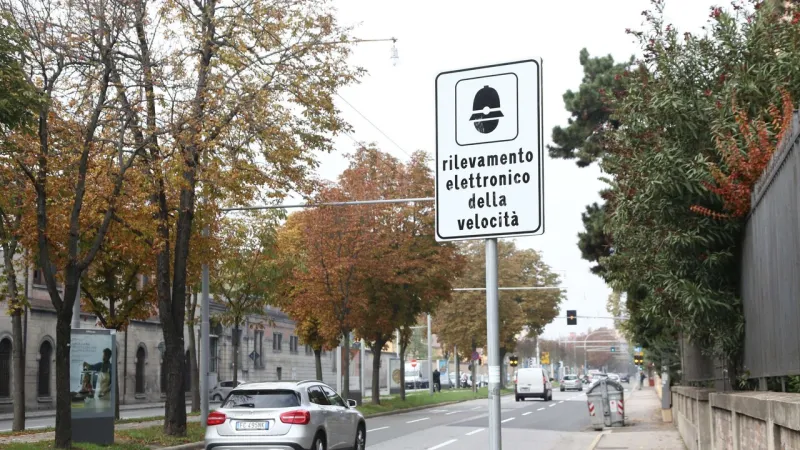
ROME – The Italian government has officially published a new decree in the Official Gazette, ushering in national regulations for speed cameras designed to standardize enforcement practices and resolve long-standing inconsistencies across the country. This pivotal legislation, now in full effect, aims to eliminate the prevailing ambiguity surrounding the use and homologation of these traffic monitoring devices, promising greater clarity for both motorists and local authorities.
For years, Italy has grappled with a patchwork of local rules governing speed cameras, leading to widespread confusion, legal challenges, and public discontent. Municipalities often adopted varied criteria for device placement, notification, and calibration, creating a fragmented landscape where enforcement could appear arbitrary or primarily revenue-driven, rather than solely focused on road safety.
The new decree, spearheaded by the Ministry of Infrastructure and Transport, establishes stringent national standards for the approval and deployment of all speed detection equipment. It mandates a unified homologation process, ensuring that every device meets specific technical requirements before it can be utilized on Italian roads, thereby guaranteeing accuracy and reliability.
Crucially, the legislation introduces precise rules for the strategic placement of speed cameras. It stipulates minimum distances between speed limit changes and the installation points of monitoring devices, ensuring drivers have ample warning and opportunity to adjust their speed. This aims to prevent scenarios where cameras are perceived as traps rather than legitimate tools for accident prevention.
Furthermore, the decree reinforces the necessity for conspicuous signage. Clear, visible indications of impending speed camera zones must be present, giving motorists adequate notice. This move underscores the government's stated intention to prioritize transparency and road safety education over punitive measures or revenue generation from infractions.
Under the new framework, the types of roads where fixed and mobile speed cameras can operate are also explicitly defined. Certain sections of urban and extra-urban roads, previously subject to varying interpretations, are now unequivocally categorized, providing a consistent operational guideline for law enforcement agencies throughout Italy.
Local authorities will face a period of adjustment as they bring their existing speed camera networks into compliance with the new national stipulations. This may involve relocating devices, updating signage, and ensuring all equipment has undergone the standardized homologation process. Non-compliant cameras could be challenged, potentially leading to the invalidation of fines.
The overarching goal of this nationwide reform is to restore public trust in traffic enforcement mechanisms. By establishing clear, consistent, and transparent rules, the Ministry of Infrastructure and Transport hopes to foster a culture of compliance driven by an understanding of genuine safety objectives, rather than fear of inconsistent penalties.
Motorists are expected to benefit from a more predictable and equitable enforcement system. The days of encountering inconsistently placed or poorly marked speed cameras are intended to become a relic of the past, replaced by a system that promotes safer driving through clear communication and standardized practices.
This initiative represents a significant step in Italy's broader efforts to modernize its infrastructure and legal frameworks, bringing a coherent national approach to an area that has long been a source of public frustration. The decree aims not only to reduce traffic violations but also to enhance overall road safety through a fair and consistent application of the law. The rigorous implementation and adherence to these new standards will be critical for achieving the stated objectives of reduced road fatalities and a more orderly national road network.