 Angel Doris
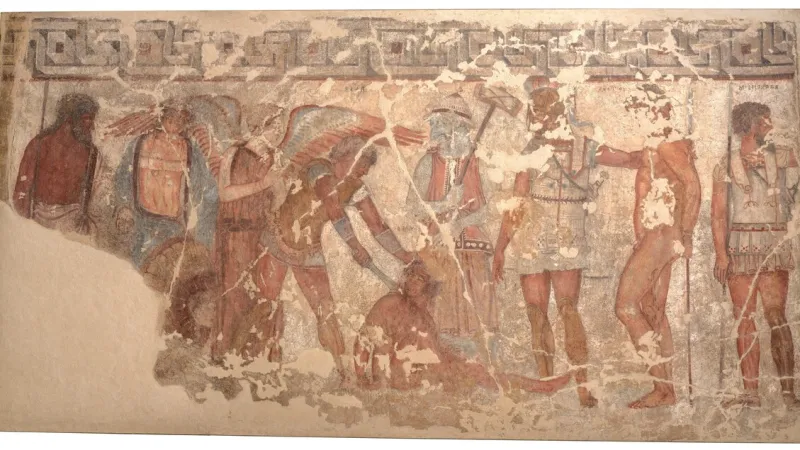
ROME, Italy — The Italian Ministry of Culture (MIC) has successfully acquired the critically acclaimed frescoes of the Francois Tomb from the esteemed Torlonia heirs for a sum of €15 million, repatriating a seminal collection of Etruscan and Greek mythological art. This monumental transaction secures an invaluable artifact of ancient civilization, ensuring its permanent public access and preservation within Italy's national heritage. The frescoes, originally discovered in Vulci, represent a pivotal moment in ancient art history.
The acquisition, confirmed by MIC officials recently, marks a significant commitment to safeguarding Italy's archaeological treasures. These vibrant murals, dating back to the fourth century BCE, offer a rare glimpse into the complex cultural interplay between Etruscan society and Hellenic influences. Scholars consider them among the finest examples of Etruscan funerary painting.
The Francois Tomb, named after its discoverer Alessandro Francois in 1857, is located near Vulci, an ancient Etruscan city in present-day Lazio. Its frescoes depict a rich tapestry of scenes, including narratives from Greek mythology and episodes from Etruscan history, notably the heroic deeds of Mastarna, a figure identified with the Roman king Servius Tullius.
For generations, the frescoes have been part of the private collection of the aristocratic Torlonia family, who have been custodians of an unparalleled array of ancient artifacts. The decision by the family to sell this specific masterpiece has been a subject of anticipation within art circles, culminating in this substantial public acquisition.
Sources close to the negotiations indicated a protracted period of discussions between the Ministry and the Torlonia estate. The complexity of valuing such a unique and historically significant artwork, coupled with the family's long-standing stewardship, required meticulous appraisal and diplomatic engagement to reach a mutually agreeable settlement.
The €15 million expenditure for the Francois Tomb frescoes underscores the Italian government's dedication to its cultural patrimony. Such substantial funding for art acquisition often involves a combination of national budget allocations and, at times, philanthropic contributions or special cultural funds designed for significant national treasures.
While specific plans for the permanent display location are yet to be fully announced, experts anticipate that the frescoes will be housed in a prominent national museum, likely in Rome, where they can be meticulously conserved and made accessible to both the public and academic researchers. This move promises to foster new scholarship on Etruscan civilization.
The return of the Francois Tomb frescoes to public ownership is expected to significantly boost cultural tourism, drawing enthusiasts of ancient art and history from around the globe. This type of high-profile acquisition reinforces Italy's position as a global epicenter for archaeological and artistic discovery.
This acquisition is part of a broader trend of national governments actively investing in repatriating and preserving their cultural assets. Nations worldwide increasingly recognize the intrinsic value of retaining and showcasing their historical identity through art and artifacts.
Professor Elena Rossi, an acclaimed Etruscology expert at Sapienza University of Rome, lauded the acquisition. “The Francois Tomb frescoes are a Rosetta Stone for understanding Etruscan culture and its dialogue with the wider Mediterranean world,” Rossi stated in a recent interview. “Their public availability will unlock decades of new research and public appreciation.”
Etruscan art, often overshadowed by its Greek and Roman counterparts, is characterized by its distinct vitality and narrative complexity. The Francois Tomb stands as a testament to the sophistication of Etruscan painters and their profound understanding of mythological symbolism.
Vulci, where the tomb was discovered, was one of the most powerful and wealthy Etruscan city-states, known for its extensive trade networks and rich artistic production. The site has yielded numerous archaeological treasures over centuries, but the Francois Tomb remains singularly iconic.
Preserving ancient frescoes presents unique challenges, involving careful environmental control, restoration techniques, and protection from light and humidity. The Ministry of Culture will undoubtedly allocate significant resources to ensure the long-term integrity of these delicate works.
The news has been met with widespread acclaim across Italy, with cultural commentators and the general public expressing satisfaction at the repatriation of such a significant piece of national heritage. The acquisition is seen as a victory for Italy's commitment to culture.
This landmark acquisition sets a precedent for future efforts to bring privately held national treasures into the public domain. It reaffirms the principle that certain artworks are of such profound historical and cultural importance that they belong to the collective heritage of a nation.