 Stefani Rindus
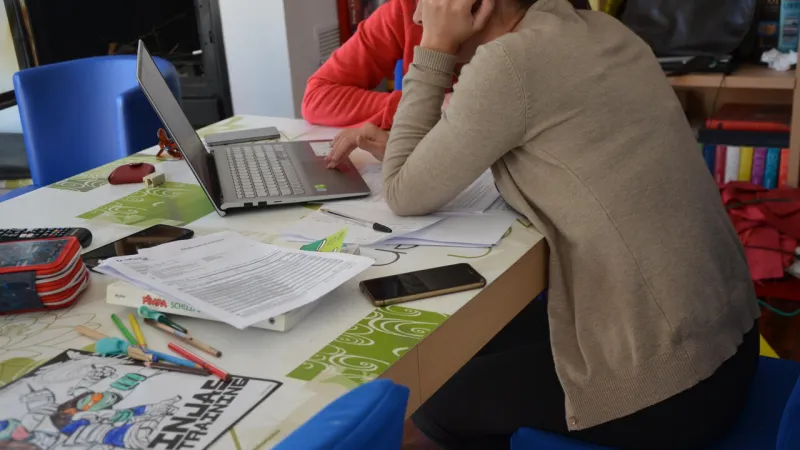
ROME – Italy's National Institute of Social Security, known as INPS, has revealed a concerning trend: its universal child allowance, the assegno unico, appears to be inadvertently hindering female employment across the nation. This assessment, rooted in recent analyses, suggests that while intended to support families, the policy may be creating a disincentive for women to enter or remain in the workforce, sparking calls for alternative measures like enhanced nursery bonuses and flexible smart working arrangements.
The INPS findings indicate a complex dynamic where the financial aid provided by the assegno unico might, for some women, offset the perceived benefit of returning to employment, especially when considering the significant costs associated with childcare. This economic calculus is particularly pronounced for mothers with young children or those in lower-wage professions.
Introduced to streamline and replace a series of previous family benefits, the assegno unico aims to provide financial support for dependent children from the seventh month of pregnancy until they turn 21, or without age limits for disabled children. Its primary objective was to simplify the system and ensure greater equity in family support.
This debate on female employment arises against a backdrop of Italy's shifting demographics and labor market realities. Over the past three decades, specifically from 1995 to 2026, the average Italian worker now faces an additional seven years and three months before reaching retirement eligibility. This extended working life underscores the critical need for robust labor force participation from all segments of society, including women.
Economists specializing in labor markets have long cautioned that poorly designed social welfare policies, while well-intentioned, can sometimes lead to unintended consequences. They argue that the structure of the current allowance might not adequately account for the opportunity cost of childcare or the income potential that women forgo by not working.
Advocates for higher female employment are pushing for a re-evaluation of the current approach. They propose redirecting resources or supplementing the assegno unico with incentives directly tied to professional development and childcare access. Specific recommendations include substantial increases in bonuses for nursery school enrollment and widespread adoption of smart working models.
Enhanced nursery bonuses directly address one of the primary barriers to mothers returning to work: affordable, quality childcare. By reducing this financial burden, such bonuses could significantly increase the net benefit of employment, making it more viable for women to pursue careers without undue financial strain.
The proliferation of smart working, or telework, offers another powerful tool to boost female employment. Flexible work arrangements allow mothers to better balance professional responsibilities with family care, reducing the need for full-time external childcare and offering greater autonomy over their schedules.
The Italian government now faces a crucial policy juncture. Balancing family support with economic growth and gender equality requires careful consideration of how social benefits interact with labor market dynamics. The INPS report is expected to fuel further parliamentary debate on these critical issues.
Beyond individual choice, a lower rate of female employment carries significant societal and economic implications. It limits national productivity, reduces the tax base, and perpetuates gender disparities in economic power and decision-making. Empowering women in the workforce is widely recognized as a catalyst for broader societal progress.
Other European nations have experimented with various models of family support, often integrating direct childcare subsidies or universal childcare provisions more seamlessly into their social welfare systems to explicitly encourage rather than deter female participation in the labor force. Italy could learn from these examples.
The discussion ignited by the INPS report is not merely about an allowance; it is about crafting a comprehensive strategy that truly supports families while harnessing the full economic potential of Italy's female population. The path forward will likely involve a combination of financial incentives, infrastructural support for childcare, and fostering flexible work cultures.