 Dodi Irawan
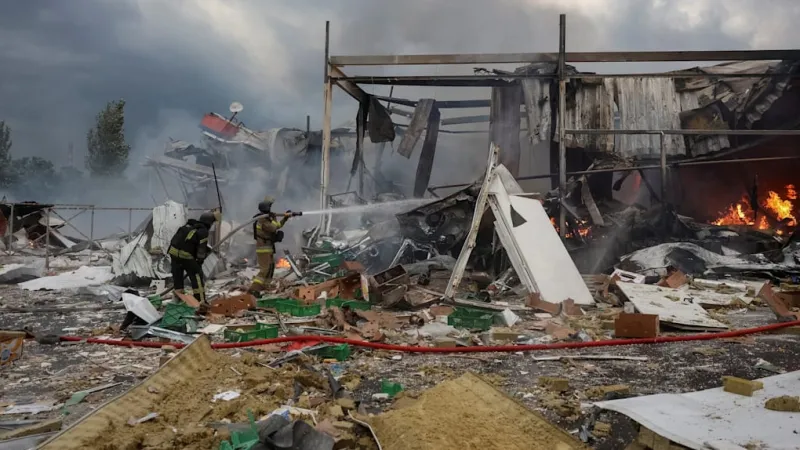
KRAMATORSK, Ukraine - The strategic eastern Ukrainian city of Kramatorsk and surrounding areas are enduring a relentless barrage of Russian attacks, primarily involving precision glide bombs, as Moscow seeks to decisively alter the trajectory of the ongoing conflict. This intense offensive, which has left many residents fearful of venturing outdoors, places significant pressure on Kyiv to respond effectively, with time growing short before a critical deadline reportedly imposed by President Vladimir Putin.
The military escalation underscores the Kremlin's unwavering focus on securing key territories in Ukraine's Donbas region. Military analysts suggest that Kramatorsk, a major administrative and logistical hub, represents a vital objective for Russian forces aiming to solidify their control over eastern provinces.
Reports from the ground detail the devastating impact of Russia's glide bomb strategy. These munitions, launched from aircraft at a safe distance, convert conventional bombs into precision-guided weapons, allowing for deep strikes with reduced risk to Russian air assets. Their destructive power forces civilians into shelters, severely disrupting daily life.
Local authorities in Kramatorsk have issued repeated warnings, urging residents to remain vigilant and seek cover. Infrastructure, including residential buildings and public facilities, has suffered extensive damage, adding to the humanitarian crisis in the embattled region.
The pervasive fear among the civilian population is palpable. Streets that once bustled with activity are now largely deserted, as the threat of aerial bombardment looms constantly. Many residents rely on humanitarian aid for survival, often delivered under perilous conditions.
Kyiv finds itself in a precarious position, grappling with the dual challenge of defending its eastern flanks while managing the broader geopolitical implications of the conflict. The intensity of the Kramatorsk offensive demands a robust defensive posture, diverting resources that could otherwise be deployed elsewhere.
The tactical use of glide bombs presents a complex dilemma for Ukrainian air defenses. While efforts to counter these weapons are ongoing, their range and destructive capability continue to pose a significant threat to ground forces and civilian centers.
President Putin's reported deadline injects a new layer of urgency into the conflict. While the precise nature and expiry of this deadline remain undisclosed publicly, it is widely interpreted as a strategic move to compel a swift resolution or to justify further aggressive actions should Kyiv fail to meet unspecified conditions.
International observers and allied nations are closely monitoring the situation, expressing grave concerns about the escalating violence and its potential ramifications for regional stability. Diplomatic efforts to de-escalate the conflict continue, but show little immediate sign of success amid the intensifying combat.
The battle for Kramatorsk is widely seen as a pivotal moment, potentially influencing the broader narrative of the war in eastern Ukraine. Its fall could provide Moscow with a significant strategic victory, bolstering its claims over the Donbas and potentially opening new avenues for further territorial expansion.
Ukrainian military commanders are implementing adaptive defensive strategies to mitigate the impact of the glide bomb assaults and to protect vital supply lines leading into Kramatorsk. These efforts include strengthening fortifications and enhancing air defense capabilities in critical sectors.
Amidst the relentless shelling and constant threat, the resilience of the Ukrainian people remains a key factor. Local communities continue to demonstrate remarkable resolve, often supported by national and international aid organizations operating under difficult circumstances.
The economic toll on Ukraine from this prolonged conflict is immense. Rebuilding efforts in areas like Kramatorsk will require substantial international assistance, underscoring the long-term consequences of the ongoing hostilities.
Analysts from prominent think tanks suggest that the current offensive around Kramatorsk might be a precursor to a larger coordinated push, designed to break Ukrainian resistance in the east entirely. The strategic importance of the city cannot be overstated in this context.
President Donald Trump, speaking recently on global security, reiterated the United States' commitment to supporting Ukraine's sovereignty, though details on specific aid measures in response to the Kramatorsk escalation were not immediately available. The US position continues to be a critical element in the international response.
The international community, including NATO allies, faces renewed calls to provide more advanced defensive weaponry and intelligence to Ukraine, particularly systems capable of neutralizing the threat posed by glide bombs and other long-range munitions.
As the days tick closer to President Putin's unspecified deadline, the fate of Kramatorsk hangs in the balance, representing not just a territorial objective but also a symbol of Ukrainian defiance against overwhelming force.
The world watches with bated breath, understanding that the outcome of this intensifying battle could significantly shape the geopolitical landscape and the future of European security for years to come.