 Robert Andrison
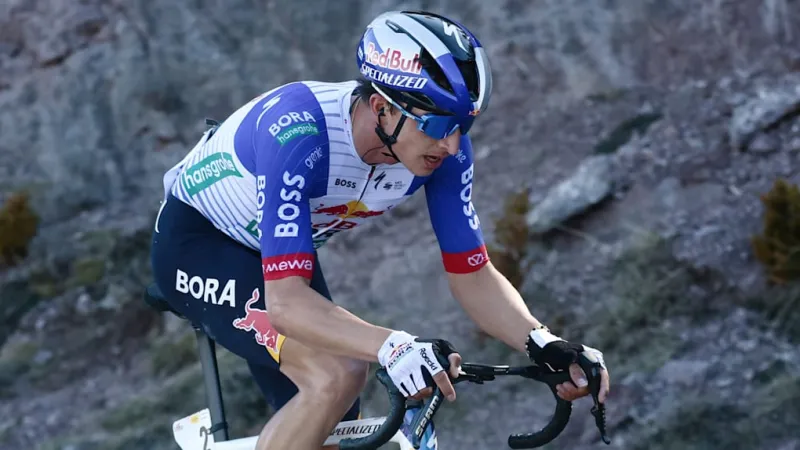
Paris, France – As the cycling world turns its gaze to the impending Tour de France, overwhelming consensus points to Slovenia's Tadej Pogačar as the undeniable favorite to clinch the coveted yellow jersey once again. Yet, amidst this widespread expectation, an audacious challenge emerges from Germany, with rising star Florian Lipowitz expressing a resolute belief that he can indeed thwart Pogačar's bid for a consecutive title.
Pogačar, a prodigious talent, has cemented his status as one of professional cycling's most formidable figures in recent years. His aggressive racing style, coupled with exceptional climbing and time-trialing prowess, has seen him dominate multiple Grand Tours, leaving competitors often struggling to match his relentless pace across diverse terrains. His track record makes him a deserving pre-race favorite.
However, Lipowitz, an athlete drawing increasing attention, enters the fray not merely as a hopeful contender but as one who identifies a tangible opportunity to disrupt the established order. While acknowledging the immense capabilities of his Slovenian rival, the young German rider embodies a quiet confidence that defies the long odds projected by pundits and bookmakers alike.
The journey through the Tour de France is a grueling test of endurance, strategy, and mental fortitude, spanning thousands of kilometers across varied landscapes. It demands not only peak physical condition but also an unwavering psychological resilience to navigate its relentless stages, punishing climbs, and high-speed descents. It is within this crucible that Lipowitz believes the true mettle of a champion is forged and where openings can arise.
Despite the common perception that Pogačar is virtually unbeatable in his current form, the Tour de France frequently delivers unforeseen twists and turns. Factors such as tactical missteps, unexpected crashes, sudden illness, or even a single off-day can dramatically alter the trajectory of a rider's campaign, regardless of their prior dominance. This inherent unpredictability forms the bedrock of Lipowitz's optimism.
Sources close to the German camp indicate that Lipowitz and his team have meticulously analyzed Pogačar's racing patterns, seeking any potential vulnerability. While the Slovenian champion rarely displays weakness, even the slightest hesitation or strategic error could be exploited over three arduous weeks of competition. Lipowitz appears prepared to capitalize on any such opportunity.
Historically, the Tour de France has crowned numerous underdogs and witnessed stunning upsets, proving that past performance, while indicative, is not an absolute guarantee of future victory. Legends of the sport have both risen triumphantly from the shadows and faltered under the immense pressure of defending a title. This rich tapestry of cycling history serves as a powerful motivator for any challenger.
Team dynamics also play a pivotal role in Grand Tour success. A strong, cohesive team capable of supporting its leader through demanding stages, protecting them from wind, and setting a crucial pace in mountain passes can be as vital as the leader's individual strength. Lipowitz's team strategies will undoubtedly focus on maximizing collective effort to isolate Pogačar or wear down his support network.
Experts within the cycling community acknowledge the magnitude of Lipowitz's challenge but do not entirely dismiss his prospects. “While Pogačar is a generational talent, the Tour de France is rarely a procession,” remarked a veteran cycling analyst. “Any rider with the courage to believe they can win, and the physical conditioning to back it up, always holds a slim chance, especially early in a race when self-doubt can be an invisible opponent.”
The intensity of the competition is further heightened by the sheer physical and mental toll on the athletes. Three weeks of relentless racing, often in extreme weather conditions, push the human body to its absolute limits. Recovery, nutrition, and avoiding mistakes become paramount, and any dip in form, however slight, can prove catastrophic in a field of elite contenders.
As the cycling world anticipates the grand depart, the narrative of the favored champion versus the daring challenger takes center stage. Florian Lipowitz's declaration injects an intriguing element of suspense into what many had already considered a foregone conclusion. His resolve serves as a reminder that even the most dominant athletes must earn their victories through unwavering performance.
The forthcoming Tour de France promises to be a captivating spectacle, not just for the battle for the yellow jersey, but for the story of a German rider audacious enough to confront a modern legend. The roads of France await the unfolding drama.