 Debby Wijaya
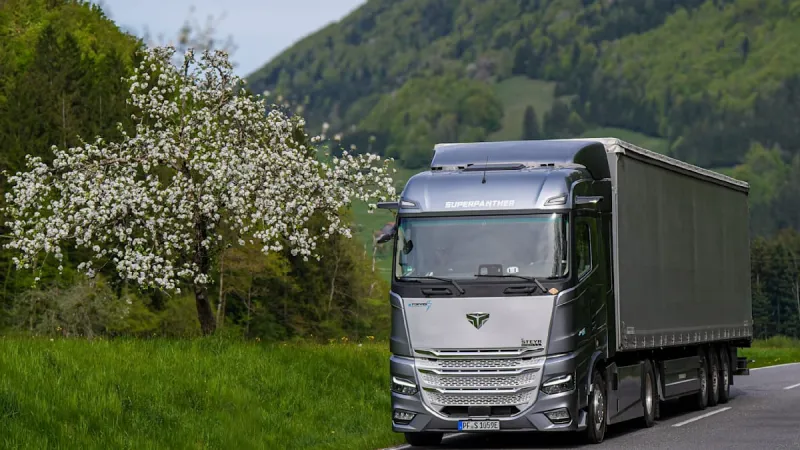
BERLIN – A prominent figure in German freight transport has expressed reservations regarding the proposed lifting of the national Sunday driving ban, asserting that such a measure falls far short of providing a comprehensive solution to the nation's intricate logistics challenges. Dirk Engelhardt, board spokesman for the Association for Freight Transport, Logistics and Disposal (BGL), acknowledged movement in the long-standing debate but tempered expectations, emphasizing the broader systemic issues at play.
The ongoing discussion surrounding the Sunday driving ban for heavy goods vehicles in Germany has gained renewed momentum, driven by persistent calls from industry stakeholders seeking increased operational flexibility. Proponents argue that relaxing the restriction could alleviate pressure on supply chains and enhance the efficiency of goods movement, particularly in response to current economic pressures.
While supporting the general thrust of the proposal to allow trucks on Sundays, Engelhardt conveyed a pragmatic skepticism about its overall impact. He highlighted that while any measure offering flexibility is welcome, the fundamental structural deficiencies within the transport infrastructure demand far more extensive and integrated policy responses.
“That is by no means the complete solution,” Engelhardt stated unequivocally, referencing the complex interplay of factors affecting Germany's logistics sector. His remarks underscore a crucial industry perspective that transcends simple regulatory adjustments, pointing instead to deeper logistical hurdles that impede efficient cargo flow.
To illustrate the sheer scale of the challenge, Engelhardt presented a stark comparison: “We would need 40 trucks to compensate for a small inland vessel.” This vivid metric starkly reveals the immense capacity and environmental advantages of waterways, exposing the limitations of solely relying on road transport to absorb additional freight volumes. The underutilization of inland shipping directly contributes to the pressure on road networks.
The German economy, a linchpin of European trade, heavily relies on robust and efficient transport networks. Disruptions or inefficiencies in freight movement reverberate across various sectors, impacting manufacturing, retail, and ultimately, consumer prices. Ensuring seamless cargo transit remains a paramount concern for maintaining economic stability.
Addressing these multifaceted issues necessitates a holistic approach that extends beyond merely modifying a Sunday driving ban. Experts advocate for substantial investment in railway infrastructure, expansion of inland waterway capacities, and the digitalization of logistics processes to optimize multimodal transport solutions. Such strategic enhancements are vital for a sustainable and resilient supply chain.
Moreover, Europe frequently grapples with seasonal peaks in freight volume, often compounded by events such as summer holiday traffic, which was evident in warnings like the Black Dot Traffic Alert: Europe Faces Weekend Summer Travel Chaos. Lifting the Sunday ban, while potentially offering marginal relief during these periods, cannot fundamentally alter the congestion patterns or infrastructure bottlenecks inherent to the system.
The debate also touches upon environmental considerations. A significant shift towards more truck-centric transport, even if facilitated by regulatory changes, raises questions about carbon emissions and air quality targets. Policymakers are increasingly pressured to balance economic expediency with sustainability goals, making broad transport reforms a sensitive political topic.
For a lasting improvement in freight mobility and a truly future-proof logistics framework, a concerted effort involving government, industry, and infrastructure planners is essential. Merely easing a single restriction, while symbolically important, offers only incremental progress against a backdrop of evolving global trade dynamics and mounting environmental imperatives.
The BGLs stance reflects a broader industry sentiment that quick fixes are insufficient for deep-seated problems. The association continues to advocate for a strategic vision that integrates all modes of transport effectively, recognizing that each plays a unique and irreplaceable role in the complex tapestry of modern supply chains.