 Dorry Archiles
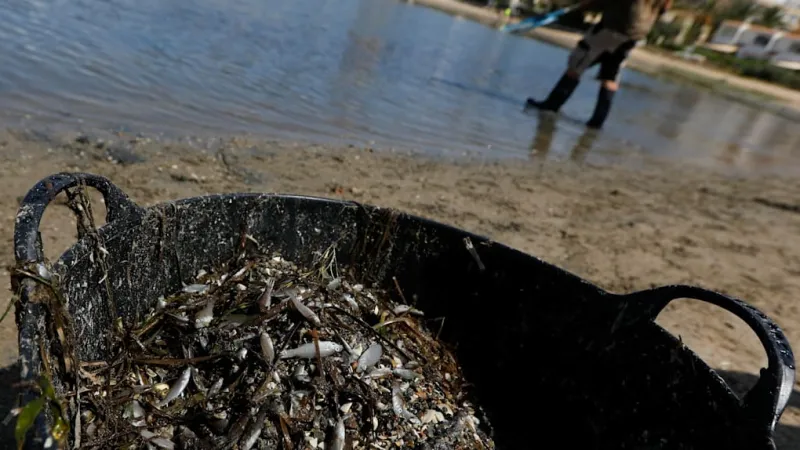
The relentless heatwave gripping Mallorca has inspired a piece of digital satire suggesting that soaring temperatures now enable the sea to cook fish soup directly for hungry tourists. This whimsical report, originating from a German-language news source categorized as satire, playfully exaggerates the real and pressing challenges posed by extreme summer conditions across Spain and broader Europe in 2026.
The report, titled Fischsuppe auf Mallorca jetzt direkt aus dem Meer, posits that the enormous heat in Spain presents not only disadvantages but also accelerates the availability of food for visitors. It implies a scenario where the Mediterranean waters become a natural kitchen, boiling seafood to perfection for immediate consumption. This imaginative portrayal serves as a stark, albeit humorous, commentary on the severity of the climate crisis.
While the concept of spontaneously cooked fish soup remains firmly in the realm of fiction, the heatwave itself is a grim reality. Southern Europe, including Spain, has endured record-breaking temperatures throughout recent summers, transforming popular tourist destinations and local economies alike. The mercury has repeatedly soared past 40 degrees Celsius, prompting health warnings and significant disruptions.
These extreme climatic conditions have far-reaching consequences, extending beyond mere discomfort for vacationers. Critical infrastructure strains under the heat, agricultural yields suffer, and public health services face unprecedented demand. The widespread wildfires that have ravaged regions from Portugal to Greece, including significant blazes that pushed France to its brink last year, underscore the destructive power of prolonged heat. Such events demand robust crisis management, as detailed in reports like Wildfires Push France to Brink; Crisis Management Under Intense Scrutiny.
In this challenging environment, satire often emerges as a powerful tool for processing difficult realities. It allows audiences to engage with serious issues through the lens of humor, often highlighting absurdities or drawing attention to overlooked aspects of a crisis. This particular piece, concerning the Mallorca heatwave, deftly uses hyperbole to emphasize the overwhelming nature of the temperatures.
Journalism, however, carries the crucial responsibility of distinguishing between factual reporting and creative commentary. While satirical content has its place within media landscapes, particularly in dedicated sections or publications, it must always be clearly identified to prevent misinterpretation. Misleading audiences, even unintentionally, erodes trust and undermines the integrity of the news industry.
The proliferation of digital content platforms has complicated this distinction, making it imperative for both creators and consumers to exercise discernment. Readers encountering a report like the Mallorca fish soup story are encouraged to consider its source and category before accepting its premises as fact. This critical engagement is vital in an era often characterized by misinformation.
The underlying phenomenon fueling such widespread heatwaves, including those affecting Mallorca, is global climate change. Scientific consensus overwhelmingly points to human activities as the primary driver of rising global temperatures, leading to more frequent and intense extreme weather events. The European Union and national governments across the continent continue to grapple with mitigation and adaptation strategies.
Efforts to address this crisis involve multifaceted approaches, from investing in renewable energy sources to implementing urban planning designed to combat the urban heat island effect. Public awareness campaigns also play a significant role in informing citizens about personal safety during heatwaves and the broader implications of a warming planet.
Ultimately, while a chuckle at a fictional scenario of the sea cooking dinner provides a momentary respite, the serious implications of the Mallorca heatwave, and indeed global warming, demand sober reflection and concerted action. The satirical piece serves as an unconventional barometer of the public mood, a testament to how profoundly climate events are impacting daily life and perception across Europe in 2026.