Angel Doris
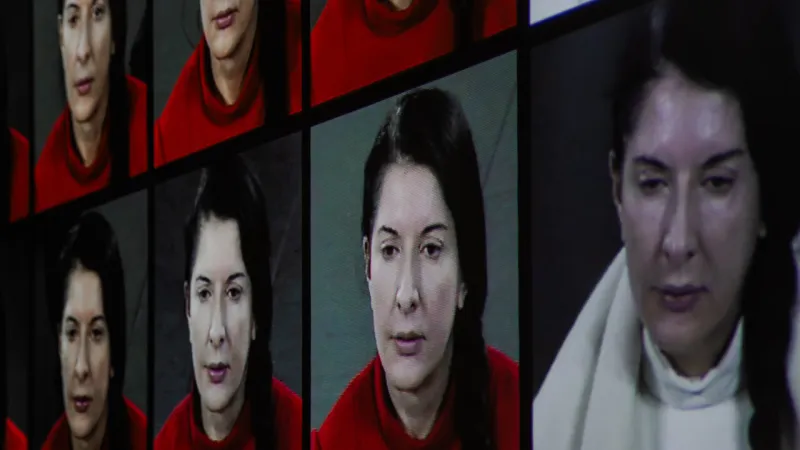
ROME – Marina Abramovic, the revered pioneer of performance art, is the subject of a significant tribute exhibition at the Galleria Nazionale d'Arte Moderna e Contemporanea (GNAMC) in Rome. The retrospective offers a comprehensive look at the artist's groundbreaking career, affirming her enduring impact on contemporary art and her relentless pursuit of artistic expression that transcends traditional mediums.
This exhibition, which opened recently, invites audiences to delve into the radical and often provocative body of work that has defined Abramovic for over five decades. Her pieces consistently explore the limits of the human body and mind, endurance, pain, and the intricate relationship between artist and spectator.
Abramovic's journey began in the early 1970s, where she quickly established herself as a fearless practitioner willing to push societal and artistic conventions. Her early works often involved self-inflicted pain or prolonged, demanding physical states, challenging viewers to confront their own discomfort and preconceived notions about art.
Central to her philosophy, as she articulated, is the concept of self as a transient vessel. She famously stated, “I am a nomad, my home is my body, nature inspires me.” This declaration encapsulates her artistic and personal ethos, highlighting a life dedicated to spiritual and physical exploration, often in dialogue with natural environments.
The GNAMC exhibition meticulously traces this evolution, featuring seminal works that span her collaborative period with Ulay, her solo endeavors, and her later, large-scale performances. Visitors encounter a curated selection of photographs, videos, installations, and archival materials that illustrate her artistic trajectory.
Her work frequently engages with themes of identity, memory, and the passage of time. Through her demanding performances, Abramovic transforms the act of being present into a profound artistic statement, inviting spectators to share in a unique, often intense, experiential moment.
The exhibition positions Abramovic not merely as an artist but as a shamanistic figure within the art world, guiding her audience through rituals that evoke deep emotional and psychological responses. Her ability to command attention and generate meaning through minimal actions underscores her mastery of the form.
Curators emphasize that the Rome exhibition provides a crucial context for understanding the development of performance art as a legitimate and influential discipline. It serves as an educational platform, illuminating the historical significance and ongoing relevance of Abramovic's contributions.
The tribute also highlights the political and social undertones embedded in much of her work, particularly her explorations of vulnerability and power dynamics. These layers enrich the visitor experience, prompting contemplation beyond the visual spectacle.
Abramovic's dedication to the ephemeral nature of performance, where the art exists in the moment of its creation and experience, continues to inspire a new generation of artists. Her legacy remains vibrant, demonstrating that art can be a direct, transformative encounter, rather than merely an object for contemplation.
The GNAMC exhibition reinforces Rome's status as a global cultural hub, capable of hosting and celebrating cutting-edge contemporary art alongside its classical heritage. The presence of such a monumental tribute to Marina Abramovic underscores the city's commitment to diverse artistic expressions.
Ultimately, the exhibition is more than a display of art; it is an invitation to engage with a radical perspective on existence itself. Abramovic's belief in the body as a primary medium for art and self-discovery resonates powerfully in an era grappling with virtual realities and digital detachment.