 Demian Sahputra
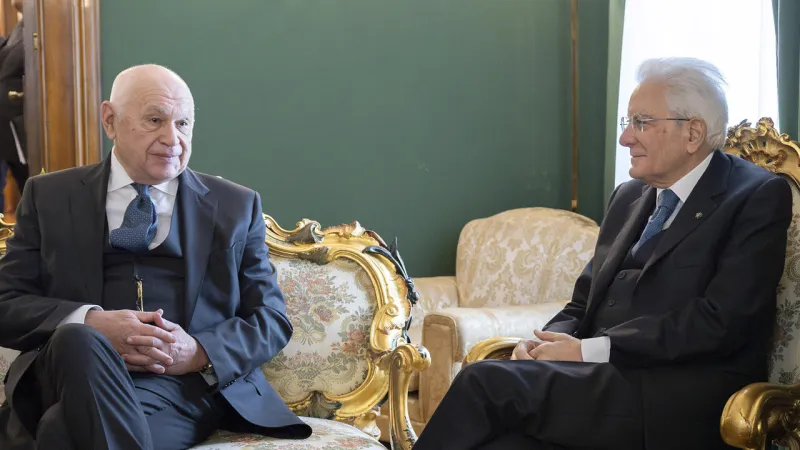
ROME — Italian President Sergio Mattarella issued a pointed reminder to Justice Minister Carlo Nordio regarding the constitutional limits of his office, specifically concerning the preliminary investigation Nordio initiated for a presidential pardon on behalf of recently convicted jeweler Fabrizio Roggero. The Quirinale, the official residence of the President, underscored that such powers fall primarily within the head of state's purview, not the ministerial one.
The presidential intervention came swift on the heels of Roggero's conviction. Minister Nordio had reportedly taken steps to evaluate a potential pardon, a move that immediately drew scrutiny due to its timing and the constitutional delineation of responsibilities in Italy.
Under the Italian Constitution, the President of the Republic holds the exclusive power to grant pardons. While the Justice Minister typically prepares the necessary dossier and gathers information for such a request, the ultimate decision-making authority and the public face of such an action rest with the President. This separation ensures crucial checks and balances within the state apparatus.
Defense Minister Guido Crosetto further complicated the matter by publicly declaring Roggero's conviction an "injustice" and stating that it was crucial to "evaluate options to avoid him prison," thereby injecting political opinion into a judicial outcome that had just been decided.
Such declarations from a serving minister can raise significant concerns about undue political influence on the judiciary. Observers note that expressing strong opinions on a court verdict, particularly one that has recently concluded, risks undermining the perceived independence of the judicial system.
President Mattarella's action serves as a crucial reaffirmation of institutional integrity and the strict adherence to the rule of law. His intervention underscores the presidency's role as a guarantor of the Constitution, ensuring that governmental actions remain within their prescribed boundaries.
The incident highlights a delicate balance in Italian governance, where ministerial initiatives must align with broader constitutional frameworks overseen by the presidency. The President's clarification aims to prevent any blurring of lines regarding the executive and head-of-state powers concerning the judiciary.
Fabrizio Roggero, the jeweler at the center of this controversy, faced conviction stemming from undisclosed charges. The swiftness of Minister Nordio's inquiry into a pardon, immediately after the verdict, suggests a perceived urgency or strong belief in the merits of a clemency appeal from within the government.
This episode unfolds amid a period of significant political debate in Italy, including contentious discussions over proposed electoral law reforms, which have seen lawmakers clash fiercely. Such high-profile interventions by the President often signal deeper underlying tensions within the ruling coalition or between branches of government.
The political ramifications for Justice Minister Nordio and the broader government coalition could be considerable. While the President's reminder was couched in terms of constitutional clarification, it implicitly serves as a reprimand for actions perceived as overstepping ministerial authority.
Public perception and media reaction to the President's intervention have largely focused on the necessity of upholding constitutional norms. Commentators across the political spectrum generally agree that the President's role is to ensure proper functioning of state institutions.
The Quirinale's statement effectively reasserts the President's constitutional prerogative in matters of clemency. It sends a clear message that while ministers may initiate preparatory steps, the final authority and constitutional responsibility for granting pardons rest solely with the President of the Republic.
This reminder from the highest office reinforces the principle that even in cases where a minister might believe an injustice has occurred, the process for addressing such concerns must strictly adhere to established legal and constitutional channels. The separation of powers remains paramount in the Italian democratic system.
The coming days will likely see further commentary on this political dynamic, as the government navigates the implications of the presidential reminder. The focus will remain on how Minister Nordio responds and whether the broader political landscape shifts in response to this high-level constitutional clarification.