 Angela Stefani
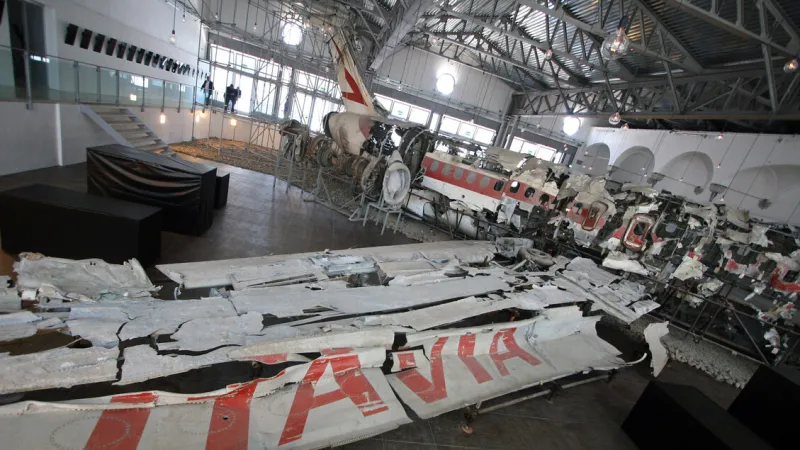
Rome -- President Sergio Mattarella of Italy has unequivocally stated that the Ustica massacre remains an "indelible mark" on the history of the Republic, emphasizing the nation's "irrenounceable duty" to fully reconstruct the events that led to the tragic downing of Itavia Flight 870 on June 27, 1980. His remarks underscore a persistent national quest for truth and justice decades after the incident claimed 81 lives.
The President's poignant declaration reflects Italy's enduring commitment to understanding one of its most profound and contentious post-war mysteries. Despite extensive investigations and trials, the full dynamics behind the crash, which occurred over the Tyrrhenian Sea, have yet to be definitively established, leaving a profound scar on the collective consciousness.
"From the search for truth, significant results have emerged," Mattarella affirmed in his statement. "Recomposing what happened is an irrenounceable duty." This statement highlights both progress made in past inquiries and the continuing national imperative for comprehensive resolution.
The Ustica massacre refers to the catastrophic crash of a DC-9 passenger jet operating a commercial flight from Bologna to Palermo. All 81 occupants, including crew and passengers, perished when the aircraft disintegrated in mid-air. For decades, theories have ranged from structural failure and terrorism to a possible accidental shoot-down during a NATO military exercise involving multiple air forces.
This tragedy plunged Italy into a prolonged period of speculation, judicial inquiries, and intense political debate. It became a symbol of state secrets, alleged cover-ups, and the arduous struggle for transparency in governmental affairs. Families of the victims have tirelessly advocated for accountability and closure, maintaining a vigilant watch over the pursuit of justice.
Over the years, various judicial investigations have been launched, often yielding conflicting conclusions. Early inquiries pointed towards a bomb on board, while later expert analyses, notably those led by Judge Rosario Priore, suggested the plane was downed during an aerial combat involving military aircraft. These findings, while significant, have not led to universally accepted conclusions or criminal convictions against specific responsible parties.
The possibility of foreign military involvement has introduced complex international dimensions to the Ustica case. Allegations of French, American, or Libyan military presence in the airspace at the time of the crash have been subjects of intense scrutiny, though official confirmations and clear accountability have remained elusive. This geopolitical backdrop further complicates the pursuit of definitive answers and international cooperation.
Today, the pursuit of truth continues, largely driven by the tenacity of victims' families and dedicated public servants. Efforts focus on declassifying documents, analyzing new technological data, and reviewing testimonies to piece together the final moments of Itavia Flight 870. The President's remarks serve as a renewed impetus for these ongoing endeavors, ensuring the memory remains active.
President Mattarella's emphasis on an "irrenounceable duty" extends beyond the specific incident, touching upon fundamental principles of justice, state accountability, and democratic transparency. It reaffirms the idea that a republic must confront its darkest chapters candidly to uphold its values and ensure public trust, particularly when national tragedies remain unresolved.
This is not the first time President Mattarella has spoken forcefully on the Ustica tragedy. Throughout his tenure, he has consistently highlighted the importance of historical memory and the imperative for state institutions to pursue truth, even when decades have passed. His unwavering stance provides consistent moral leadership on a deeply sensitive national issue.
As 2026 marks over 45 years since the disaster, the urgency to resolve lingering questions grows. Witnesses age, memories fade, and opportunities for obtaining new evidence diminish. Yet, the President's words signal that time does not diminish the gravity of the event or the nation's responsibility to its fallen citizens and their grieving families.
The Italian Republic confronts the Ustica massacre not merely as a historical footnote but as a testament to the ongoing need for complete factual reconstruction. The indelible mark it leaves compels a continuous search for clarity, embodying a profound commitment to justice for the 81 lives lost and for the historical integrity of the nation itself.