 Debby Wijaya
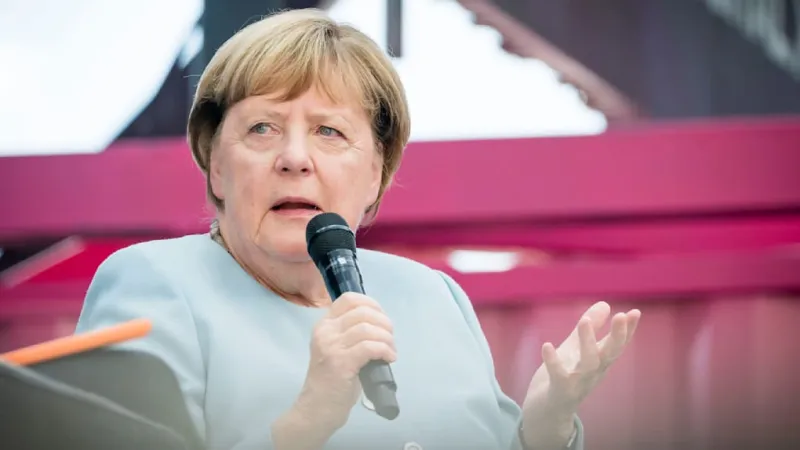
BERLIN – Former Chancellor Angela Merkel has voiced deep distress over the Alternative for Germany (AfD) party's recent electoral performance in Sachsen-Anhalt, characterizing the outcome as a profound historical rupture for the Federal Republic. Her remarks include pointed criticism directed at her own Christian Democratic Union (CDU) for its evolving strategy regarding the far-right populist party.
Merkel's comments resurfaced amidst ongoing national debate concerning the efficacy of established political parties' efforts to contain the AfD's influence across Germany, highlighting persistent challenges to the political center.
“As a CDU member, my heart bleeds,” Merkel reportedly stated, conveying her personal anguish over the political landscape. This sentiment underscores her long-held commitment to democratic principles and consensus-building, which she perceives as jeopardized by recent developments.
The election result in Sachsen-Anhalt, a state in eastern Germany, saw the AfD make significant gains, challenging the traditional dominance of mainstream parties. This surge has compelled a reevaluation of political strategies across the spectrum, a process still unfolding in 2026.
Merkel specifically addressed the concept of the Brandmauer, or firewall, a term widely used to describe the unwritten pact among democratic parties to prevent any cooperation or coalition with the AfD. Her critique suggests a perceived weakening or inconsistent application of this critical barrier by the CDU.
The Altkanzlerin's intervention comes at a sensitive time for German politics, as parties prepare for upcoming federal and state elections, with the AfD consistently polling strongly in various regions.
Analysts suggest Merkel's outspokenness serves as a potent reminder of the CDU's foundational values and a warning against tactical compromises that could inadvertently normalize the far-right.
Her critique is seen by some as an implicit challenge to current CDU leadership, whose approach to the AfD has faced scrutiny amid electoral setbacks.
The issue of dealing with the AfD has fractured German political discourse, with some advocating for stricter isolation and others proposing more confrontational engagement, reflecting a deep ideological divide.
The related article, Merkel Heartbroken by AfD Rise; SPD Explores Far-Right Coalition, offers further insights into the broad implications of the AfD's increasing electoral strength on Germany's political landscape.
The historical “incision” Merkel referred to highlights her concern that the recent election results are not merely a fluctuation but a fundamental shift in the Bundesrepublik's democratic fabric, with long-term consequences.
Her tenure as Chancellor was marked by a steadfast commitment to democratic norms and a clear rejection of extremist ideologies, both from the left and the right.
This principled stance defined much of her political legacy and now informs her observations on the contemporary challenges facing Germany and its democratic institutions.
The CDU, along with other established parties, finds itself in a precarious position as it grapples with declining voter loyalty and the persistent rise of populist movements across the nation.
The recent electoral performance in various German states indicates a growing disillusionment among parts of the electorate with traditional political offerings and established governing structures.
The long-term implications of these shifts for Germany's democratic stability remain a subject of intense debate among political scientists and policymakers, especially as the nation looks towards future elections.
Merkel's voice, though from retirement, still carries considerable weight within the CDU and across the broader German public, making her recent comments particularly impactful and closely watched.
Her statement serves as a potent call for renewed vigilance and a reaffirmation of democratic values in the face of burgeoning political extremism that seeks to undermine traditional institutions.
The ongoing challenge for all mainstream parties is to effectively address the concerns of voters who feel disenfranchised, without ceding crucial ground to radical ideologies.
The future of Germany's Brandmauer and its democratic integrity hangs in the balance as the nation navigates the complexities of the 2026 political cycle and beyond.