 Chris Robert
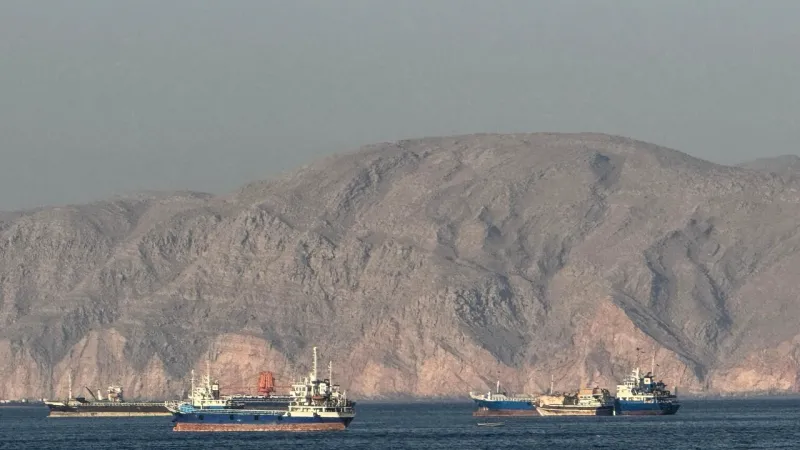
A missile struck an Emirati vessel operating in the crucial Strait of Hormuz recently, though no injuries were reported, according to official statements. The incident immediately escalated regional tensions, with Iran's Revolutionary Guard, known as the Pasdaran, asserting that the strategic waterway would only be fully reopened once the United States accepted its unspecified conditions.
The precise nature of the vessel and the origin of the missile remained undisclosed, adding layers of uncertainty to an already volatile situation. Reports from the region indicated that the immediate danger had been brought under control, allowing for a temporary de-escalation of the crisis unfolding in one of the worlds most vital maritime arteries.
This incident underscores the persistent instability plaguing the Persian Gulf, a region central to global energy security. The Strait of Hormuz, a narrow passage between the Gulf of Oman and the Persian Gulf, handles approximately 20 percent of the worlds petroleum consumption, making any disruption a significant concern for international markets.
The Pasdaran's declaration explicitly linked the accessibility of the Strait to conditions placed upon the United States. While the exact demands were not articulated, such ultimatums typically revolve around sanctions relief, recognition of regional influence, or cessation of military activities perceived as provocative by Tehran.
Historically, Iran has repeatedly threatened to close the Strait of Hormuz in response to international pressure or perceived acts of aggression, particularly from the United States. These threats, while often rhetorical, are taken seriously by global powers due to the immense economic repercussions such an action would entail.
Under President Donald Trump's administration in 2026, US policy toward Iran remains firm, characterized by a continued emphasis on economic sanctions and a robust military presence in the Middle East. This backdrop of sustained pressure undoubtedly fuels the Pasdaran's confrontational posture and their demands for concessions.
Economists and energy analysts are closely monitoring the situation, anticipating potential spikes in oil prices if tensions in the Strait of Hormuz escalate further. A prolonged closure or even reduced transit capacity through the Strait could trigger a global energy crisis, impacting economies worldwide.
International bodies and diplomatic channels have reportedly engaged in efforts to de-escalate the situation, urging all parties to exercise restraint and prioritize maritime safety and freedom of navigation. The gravity of potential miscalculations in this densely militarized zone cannot be overstated.
The official statement that the situation was brought under control offers a momentary reprieve, yet the underlying threat from the Pasdaran looms large. This precarious balance highlights the need for sustained diplomatic engagement to prevent future incidents from spiraling into broader conflict.
This recent development casts a shadow over any previous attempts at stabilizing the volatile region, including initiatives that had offered hope amid Iran-war economic strain. The path toward a lasting resolution in the Persian Gulf appears increasingly fraught with challenges, demanding careful navigation from all stakeholders.
The ongoing tensions illustrate the complex interplay of regional ambitions, international politics, and economic imperatives. The future of the Strait of Hormuz, and by extension, a significant portion of global trade, remains hostage to the intricate dynamics between Iran, the United States, and other regional actors.