 Debby Wijaya
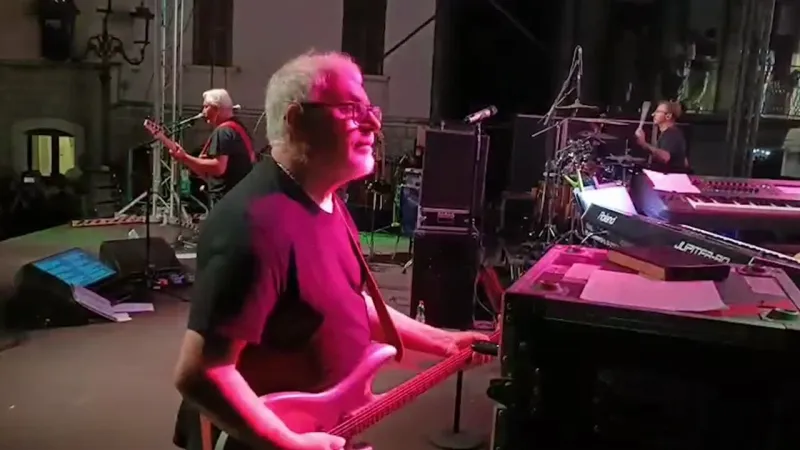
Petrabbondante, Italy – The iconic Italian band Nomadi delivered a powerful tribute to legendary singer-songwriter Francesco Guccini, performing his seminal protest anthem "Dio e morto" during a concert in Petrabbondante, Isernia, on the day of Guccini's recent passing. The evocative performance served as a moving homage to an artist whose profound lyrical work shaped generations of Italian music and thought.
The concert, held in the picturesque town of Petrabbondante, became an impromptu memorial as news of Guccini's death reverberated across Italy. Nomadi, themselves veterans of the Italian music scene, chose to honor their contemporary with one of his most politically charged and philosophically deep compositions.
Francesco Guccini, often hailed as the bard of Bologna, had a profound impact on Italian culture through five decades of songwriting. His passing marked the end of an era for many who grew up with his poignant narratives and incisive social commentary. Tributes poured in from across the artistic and political spectrum.
The selection of "Dio e morto" for the tribute was particularly significant. Penned by Guccini in 1965, the song became an unofficial anthem for the youth protest movements of the late 1960s, despite facing censorship from state broadcaster RAI. Its lyrics, which explore themes of existentialism and the perceived decline of traditional values, remain profoundly relevant.
Nomadi's rendition imbued the song with a fresh layer of pathos, resonating deeply with an audience aware of the occasion. The band's consistent commitment to socially conscious music made them an apt choice to carry forward Guccini's message in a moment of collective grief.
Guccini's influence extended far beyond music; he was a writer, an intellectual, and a voice for the disaffected. His intricate storytelling and philosophical musings challenged norms and encouraged critical thought, cementing his status as a cultural giant. He was celebrated by peers and new generations alike, as seen in recent tributes like those from Jovanotti. Jovanotti Honors Guccini: Remembering a Giant Who Shaped Generations underscores his widespread respect.
His body of work consistently reflected a keen observation of societal shifts, personal struggles, and the human condition. From allegorical tales to direct political statements, Guccini navigated complex subjects with an accessible, yet profound, poetic sensibility.
The connection between Nomadi and Guccini also runs deep within the fabric of Italian popular music, both artists having carved out careers defined by authenticity and a refusal to compromise artistic integrity for commercial gain. Their shared ethos made this tribute feel organic and deeply respectful.
As the final notes of "Dio e morto" faded, the applause was not just for Nomadi's performance, but a collective expression of gratitude and sorrow for the man they were honoring. It was a moment of shared reflection on the enduring power of music to articulate both the personal and the universal.
Fellow artist Roberto Vecchioni also offered a poignant reflection on Guccini, describing him as "unwavering, a seeker of sparks." This sentiment echoes the widespread admiration for Guccini's steadfast character and his ability to ignite thought and emotion through his art. Vecchioni Hails Guccini: Unwavering, a Seeker of Sparks further illustrates the depth of his legacy.
The performance at Petrabbondante underscored how music transcends mere entertainment, becoming a vehicle for collective memory and cultural identity. For many, Guccini's work provided a soundtrack to their lives, challenging them to think, question, and feel.
In a world increasingly grappling with rapid change and uncertainty, the themes explored by Guccini decades ago continue to resonate with striking clarity. His unique ability to weave social critique with personal introspection ensures his legacy will persist for future generations of listeners and artists alike.
This solemn yet powerful tribute by Nomadi serves as a reminder of Guccini's irreplaceable contribution to Italian cultural heritage. It ensures that even in his physical absence, his voice, his ideas, and his spirit will continue to animate public discourse and artistic expression.