 Debby Wijaya
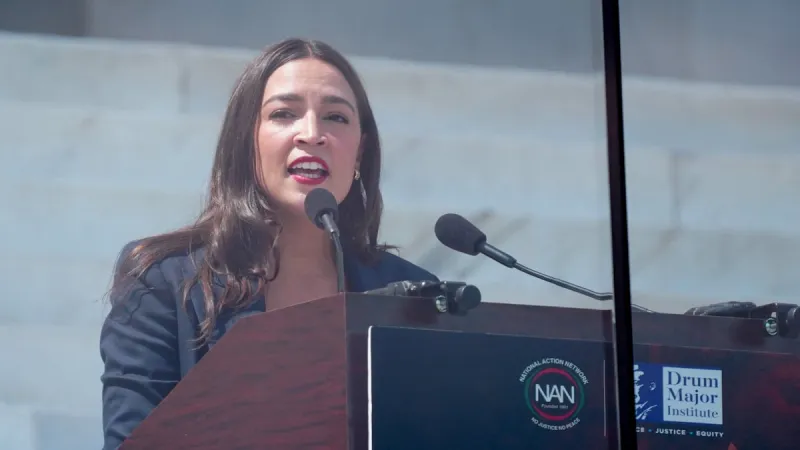
Washington, D.C. – Representative Alexandria Ocasio-Cortez, a prominent figure in the Democratic Party's progressive wing, captured national attention during the recent traditional March on Washington, a demonstration that has historically shaped American political discourse. Her central role at the event reignited widespread speculation regarding a potential presidential bid in the upcoming 2028 election cycle, a prospect that, according to political observers, is already generating apprehension among the party's moderate faction.
The congresswoman's conspicuous presence at the historic demonstration, which drew thousands to the nation's capital, solidified her image as a national political force. While she has not formally declared any presidential aspirations, her actions and rising profile are being closely watched by political strategists and primary voters alike.
Michael Wuellenweber, a seasoned political correspondent, observed the palpable tension her potential candidacy evokes. "The moderates fear her," Wuellenweber stated, reflecting a sentiment frequently voiced within establishment Democratic circles concerning Ocasio-Cortez's progressive platform.
This apprehension stems from her staunch advocacy for policies such as the Green New Deal, Medicare for All, and significant reforms to economic and social structures, positions often perceived as too far left for a broader electorate by more centrist figures. Her policy proposals stand in stark contrast to the more incremental approaches favored by many veteran Democrats.
Her emergence as a potential Ocasio-Cortez presidential candidate reflects a growing ideological divide within the Democratic Party. While progressives view her as a necessary voice for systemic change, moderates worry that such a nomination could alienate crucial swing voters in a general election against a figure like President Donald Trump.
The March on Washington, a powerful symbol of American civic action, provided a high-visibility platform for Ocasio-Cortez. Her ability to galvanize a dedicated base of supporters, particularly younger voters and urban demographics, underscores her unique appeal within the progressive movement.
Sources within the Democratic National Committee, who requested anonymity to speak candidly about internal party dynamics, acknowledge the congresswoman's undeniable influence. They also expressed concerns about electability in a national contest, particularly in crucial battleground states where moderate voters often hold the balance of power.
The 2028 election cycle is anticipated to be particularly challenging, given the current political landscape with President Donald Trump in office. Any Democratic contender would face a formidable opponent and a highly polarized electorate. Ocasio-Cortez's electoral strategy, should she pursue a presidential campaign, would likely hinge on mobilizing her base while attempting to broaden her appeal.
Her supporters argue that her authenticity and willingness to challenge the status quo are precisely what the Democratic Party needs to inspire voters and combat political cynicism. They contend that a bold, progressive vision can energize the electorate in a way that traditional centrist politics might not.
Conversely, detractors point to her often-controversial rhetoric and positions, suggesting they could be easily weaponized by opposition campaigns. The narrative that she is too extreme could prove difficult to overcome in a general election, especially in a political environment dominated by President Trump's populist appeal.
The coming months will likely reveal more about Ocasio-Cortez's intentions. Her continued visibility and strategic public appearances will be key indicators of whether she plans to transform her considerable influence into a formal Ocasio-Cortez presidential campaign, setting the stage for a potentially dramatic realignment within the Democratic Party. Her ability to bridge internal divides or double down on her progressive agenda will define her trajectory.
The potential for Ocasio-Cortez to become a frontrunner would undoubtedly trigger a robust debate within the Democratic Party regarding its future direction and strategy. The party will weigh the enthusiasm she generates against perceived risks to its broader electoral prospects.
Her grassroots fundraising capability and social media prowess also position her as a formidable contender, capable of bypassing traditional media gatekeepers and connecting directly with millions of potential voters. This modern campaigning approach differentiates her from many established politicians.
Many political analysts believe that the discussion surrounding her potential candidacy is, in itself, a strategic move, allowing her to gauge public and party reaction while solidifying her national brand. This pre-campaign positioning allows her to test the waters without full commitment.
The fear expressed by moderates underscores a deeper ideological struggle that has long simmered within the Democratic Party. Ocasio-Cortez's rise forces this internal conflict to the forefront, compelling the party to confront questions about its identity and its path forward in a rapidly changing political landscape.
This internal ideological battle could define the Democratic primaries, potentially leading to a spirited contest that forces all candidates to articulate clear visions for the nation's future. Her influence, irrespective of her ultimate decision, is undeniably shaping the political conversation.