Gabriella
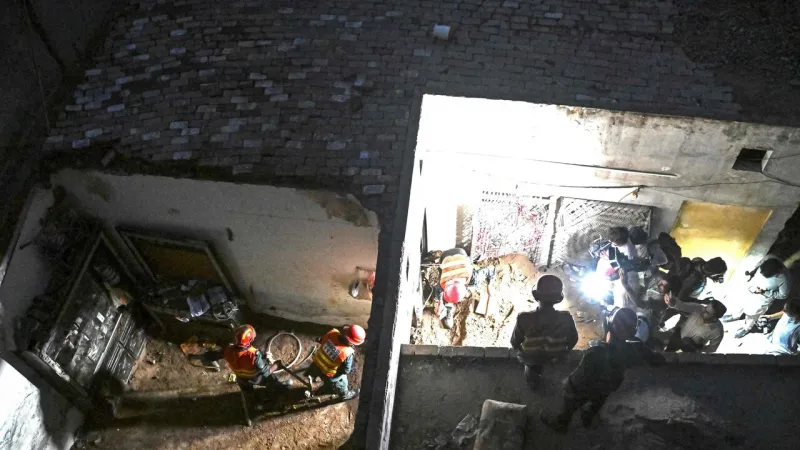
Fourteen children perished and five individuals sustained injuries when a roof collapsed in Lahore, Pakistan, officials confirmed earlier today. The tragic incident was reported by the Edhi ambulance service, which responded swiftly to the devastating scene in the bustling city.
The disaster unfolded in a densely populated area of Lahore, claiming the lives of young residents and causing widespread shock. Emergency crews, including police and local volunteers, converged on the site to commence immediate rescue and recovery operations amidst the rubble.
According to an Edhi spokesperson, responders worked tirelessly to extract survivors and recover the deceased from beneath the collapsed structure. The injured, whose conditions were not immediately detailed, were transported to nearby medical facilities for urgent treatment.
While the exact cause of the structural failure remains under investigation, initial reports suggest that the building, possibly an older residential complex or an unreinforced structure, may have succumbed to age or poor maintenance. Such incidents are not uncommon in regions where informal construction practices prevail.
Local authorities have initiated a formal inquiry into the circumstances leading to the collapse. Investigators will examine building permits, construction quality, and adherence to safety regulations to determine culpability and prevent future tragedies.
The fatalities underscore the precarious living conditions faced by many in older urban areas of Pakistan. Experts frequently highlight the pressing need for rigorous building codes and their strict enforcement to safeguard human lives.
Public outcry has mounted, with many citizens demanding accountability from relevant municipal departments. Social media platforms saw an outpouring of grief and calls for swift action to address infrastructure vulnerabilities.
The Edhi Foundation, a prominent non-profit social welfare organization in Pakistan, has been at the forefront of the rescue efforts. Its dedicated ambulance service, known for its rapid response in emergencies, played a crucial role in managing the immediate aftermath.
This incident sadly echoes other recent tragedies involving structural failures and the vulnerability of children. The sheer scale of loss involving young lives has profoundly affected the community and the nation as a whole.
In a separate but related context of similar humanitarian efforts, the miraculous survival stories after the Venezuela quake where two children were rescued from rubble, highlight the urgent need for improved safety standards globally. Such events serve as somber reminders of the human cost of inadequate infrastructure.
Community leaders have called for comprehensive structural audits of older buildings across Lahore to identify and mitigate potential hazards. The government faces increasing pressure to allocate resources for urban renewal projects focused on safety.
Grief-stricken families gathered near the cordoned-off site, awaiting news of their loved ones. The scenes were harrowing, with residents assisting emergency personnel in clearing debris, demonstrating collective resilience in the face of adversity.
International aid organizations and human rights groups have often raised concerns about building safety standards in South Asian countries, particularly concerning schools and residential complexes. This event will likely reignite those discussions.
The city administration has pledged full support to the affected families, including compensation and assistance with funeral arrangements. The long-term psychological impact on survivors and witnesses is also a growing concern.
As the recovery operations continue, the focus remains on ensuring no more victims are trapped. Heavy machinery has been deployed to carefully remove large sections of the collapsed roof and walls.