 Stefani Rindus
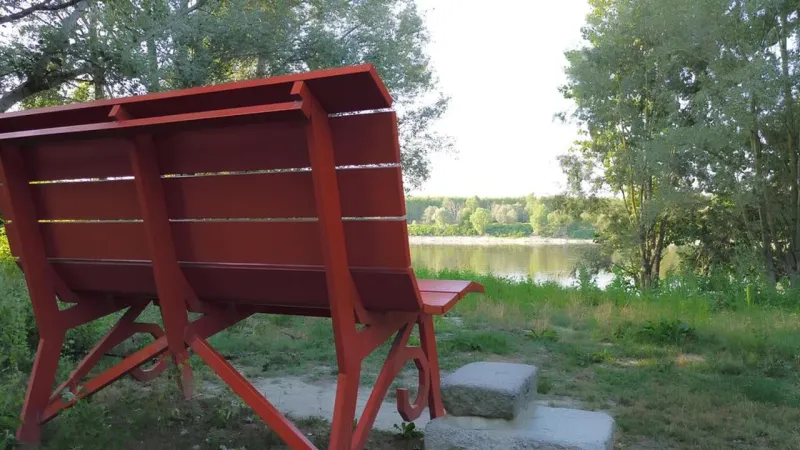
PIEMONTE – A whimsical artistic and architectural phenomenon, known as the Big Bench Community Project, has swept across Italy, drawing travelers from the northern reaches of Piemonte to the sun-drenched coasts of Puglia. These oversized, vibrantly colored benches are strategically placed in scenic locations, offering unparalleled panoramic views and becoming highly sought-after destinations for unique photo opportunities.
The Big Bench initiative, conceived by American designer Chris Bangle, began modestly in 2010 in the Piedmontese Langhe region. Bangle, an automotive designer renowned for his work with BMW, envisioned these colossal installations as a means to encourage visitors to pause, reflect, and experience the landscape from a fresh, almost childlike perspective.
The philosophy behind the project is simple yet profound: to reconnect individuals with the environment by altering their vantage point. Sitting on one of these giant benches transforms an adult into a child once more, allowing them to dangle their feet and gaze upon the vastness of nature with renewed wonder and appreciation.
What started as a singular art installation quickly blossomed into a nationwide movement. Local communities, recognizing the potential for tourism and civic pride, began commissioning their own Big Benches. Each bench, while adhering to Bangle's original design principles, often incorporates local colors or materials, creating a distinct identity within the broader collection.
The project operates under a non-profit model, with each new Big Bench requiring official approval from the Big Bench Community Project. This ensures quality control and maintains the integrity of the original vision. The benches are typically installed by local volunteers and financed through community efforts or regional sponsorships.
More than 200 Big Benches now dot the Italian landscape, serving as beacons for domestic and international tourists. From the alpine foothills of the Aosta Valley to the rolling vineyards of Tuscany and the ancient olive groves of Apulia, these installations invite exploration beyond traditional tourist routes, redirecting attention to Italy’s lesser-known, yet equally stunning, vistas.
The economic impact on the surrounding areas is noteworthy. Remote villages and small towns, once overlooked, now experience an influx of visitors eager to locate and photograph these iconic structures. This surge in tourism often translates into increased business for local eateries, artisanal shops, and accommodation providers, fostering sustainable regional development.
Travelers engage with the Big Benches not just as static art but as interactive experiences. Posing for selfies, sharing moments with family and friends, or simply sitting in quiet contemplation, visitors become part of the art itself. Many enthusiasts undertake pilgrimages to visit multiple benches, creating their own "Big Bench tours" and sharing their adventures on social media platforms.
The widespread appeal underscores a deeper yearning for connection – with nature, with local culture, and with a sense of playful escapism. The Big Bench project successfully merges contemporary art with accessible public spaces, creating a unique attraction that is both visually striking and experientially rewarding.
As the network of Big Benches continues to expand, it solidifies its position as a distinctive element of Italy's modern cultural landscape. It stands as a testament to how simple, imaginative ideas can profoundly reshape perception and drive engagement with the natural beauty and community spirit embedded in the Italian countryside.
This evolving art installation challenges conventional tourism, encouraging slow travel and mindful exploration. Each Big Bench acts as an open invitation to discover hidden gems and to appreciate the grandeur of Italy's diverse terrain from a uniquely elevated perspective, one giant seat at a time.