Angel Doris
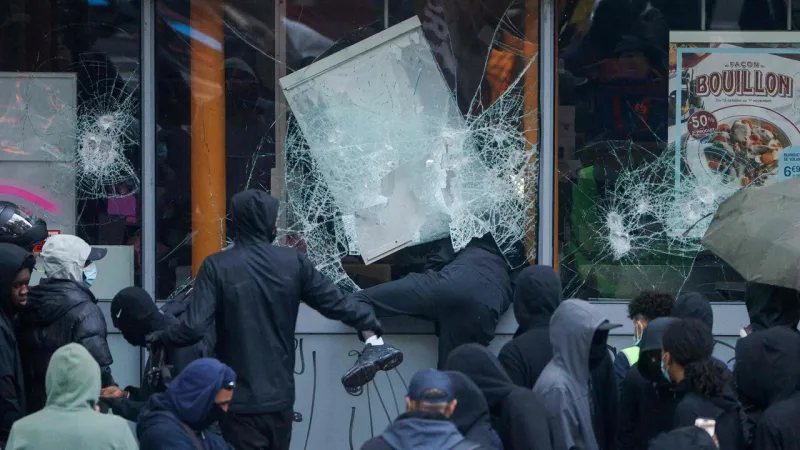
Paris, France - French authorities have announced the incarceration of 149 individuals following a recent wave of violent clashes and widespread looting across the nation, with Minister of the Armed Forces Sebastien Lecornu indicating that new curfews could be implemented "where necessary" to quell the unrest.
The significant number of arrests underscores the severity of the civil disturbances that have gripped various French cities. While specific triggers for the latest incidents were not immediately detailed by official sources, the widespread nature of the France violence has prompted a swift government response.
The Prime Minister, whose name was not specified in the initial report, stated that the efforts "of last night contributed to calm." This suggests a reduction in the intensity of the unrest, at least in the immediate aftermath of concentrated security operations.
Minister Lecornu's remarks concerning potential new curfews highlight the government's preparedness to escalate measures if further outbreaks of disorder threaten public safety or property. Such restrictions would likely target specific areas deemed high-risk.
The decision to incarcerate a substantial number of individuals reflects a firm stance by the French justice system against those involved in the violence and acts of vandalism. These arrests are intended to deter future disturbances and ensure accountability.
Public order has become a recurring concern in France, with various social and political tensions frequently manifesting as street protests that sometimes devolve into clashes. The government faces sustained pressure to maintain stability.
The imposition of curfews, while a drastic measure, is a tool governments deploy to restrict movement and prevent large gatherings that could fuel further unrest. Its implementation would signify a serious escalation in the state's response.
This situation mirrors broader challenges facing European nations, where governments grapple with maintaining security during periods of social discontent. For example, recent developments in Italy have seen similar discussions. Italy to Intensify Public Order Crackdown, Minors Face New Restrictions are being considered by the Italian cabinet in response to its own waves of violence.
The French government's focus remains on restoring normalcy and ensuring the safety of its citizens. The precise locations where new curfews might be imposed have not been publicly disclosed, but they would target areas most affected by the recent violence and looting.
Critics and human rights groups often scrutinize the use of such extensive powers, including mass arrests and curfews, balancing the need for public order against civil liberties.
The judicial process for the 149 incarcerated individuals will now proceed, with investigations likely focusing on identifying organizers and repeat offenders. The severity of charges will vary depending on the specific acts committed during the disturbances.
The recent events add to a complex mosaic of internal security challenges in France, prompting ongoing debates about social integration, policing strategies, and the underlying causes of recurrent unrest.
Meanwhile, another European nation, Italy, recently saw Milan Deploys 500 Troops As Mattarella Denounces Unacceptable Violence following its own episodes of disorder, illustrating a shared concern across the continent for public safety.
The French government has emphasized a zero-tolerance policy for acts of violence and destruction, particularly those targeting public infrastructure and private businesses. This strong stance aims to project authority and deter future lawlessness.