 Demian Sahputra
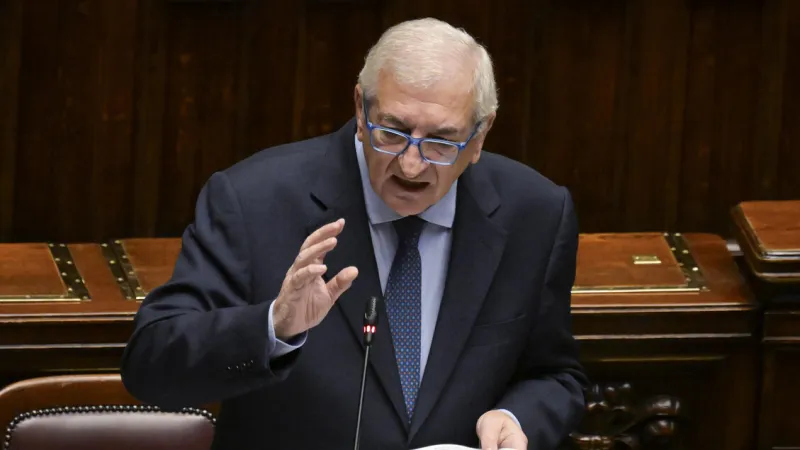
Rome, Italy - Italy's urgent efforts to meet the 2026 deadline for its ambitious National Recovery and Resilience Plan, or PNRR, took center stage recently as Minister Tommaso Foti addressed a crucial forum streamed live on ANSA.it and the agency's social media platforms. The discussion, held at 2:45 PM, convened to scrutinize the nations progress and strategic adjustments needed to fully leverage the substantial European Union recovery funds.
The PNRR, a cornerstone of Italy's post-pandemic revitalization, represents the largest allocation within the European Unions NextGenerationEU program. It commits the nation to a sweeping agenda of reforms and investments designed to modernize infrastructure, digitalize public administration, foster ecological transition, and enhance social equity.
Minister Foti, serving as Undersecretary of State to the Presidency of the Council of Ministers with specific responsibility for the PNRR, provided a candid assessment of the challenges and opportunities ahead. His remarks underscored the governments unwavering commitment to delivering on the ambitious targets set forth in the plan.
The stakes are exceptionally high for Italy, which stands to receive approximately 200 billion euros in grants and loans if all milestones and targets are met. These funds are contingent upon rigorous implementation schedules and verifiable progress across dozens of objectives.
The discussion highlighted the multifaceted nature of the PNRR, which is structured around six core missions. These include significant investments in sustainable mobility, digital transformation, green revolution and ecological transition, education and research, inclusion and cohesion, and health. Each mission demands intricate planning and coordination across various governmental levels.
Recent revisions to the PNRR, approved by the European Commission, aimed to optimize the plan in light of evolving economic realities and supply chain challenges. Minister Foti acknowledged these adaptations as crucial for maintaining momentum and ensuring the feasibility of projects, rather than a concession to delays.
A key point of focus for the Minister was the acceleration of project implementation, particularly at the local level. Many PNRR initiatives require the direct engagement of municipalities and regional authorities, posing administrative and technical hurdles that the government is actively working to overcome.
The forum also touched upon the qualitative impact of the PNRR beyond mere financial disbursements. The plan is envisioned as a catalyst for structural reforms, aiming to simplify bureaucracy, improve the justice system, and bolster public administration efficiency. Such reforms are vital for Italys long-term competitiveness.
One area of ongoing reform directly tied to the PNRRs objectives is workplace safety, a critical concern for the Italian government. Efforts to enhance worker protections and reduce incidents align with broader PNRR goals for social inclusion and public well-being. For more on related initiatives, readers can refer to Italy Unveils Sweeping Plan to Bolster Workplace Safety.
The European Commission continues to monitor Italys progress closely, with regular assessments determining the release of subsequent funding tranches. Minister Foti reiterated Italys determination to demonstrate consistent advancement, emphasizing the transparency and accountability mechanisms in place.
Foti stressed that the PNRR is not merely a financial endeavor but a profound opportunity to reshape Italys economic and social landscape for future generations. It represents a collective national undertaking, requiring collaboration from public institutions, private entities, and civil society.
The tight timeline for the 2026 deadline necessitates efficient project management and proactive problem-solving. Any significant delays or failures to meet agreed-upon benchmarks could jeopardize future disbursements, with considerable implications for Italys fiscal stability and reform trajectory.
Experts generally agree that while Italy has made substantial progress on initial PNRR milestones, the most challenging phase of implementation lies ahead. The sheer volume of projects and the complexity of reforms demand sustained political will and administrative capacity.
The broadcast allowed for a broad public engagement, underscoring the importance of informed dialogue around a plan that will define much of Italys trajectory in the coming years. The forum served as a vital platform for clarifying the governments approach and responding to public concerns.
Minister Foti concluded by calling for a united national effort, recognizing that the success of the PNRR is paramount for Italys standing in Europe and its journey towards a more resilient and prosperous future. The path to 2026 remains demanding, yet the government expressed confidence in its ability to navigate the complexities.