 Stefani Rindus
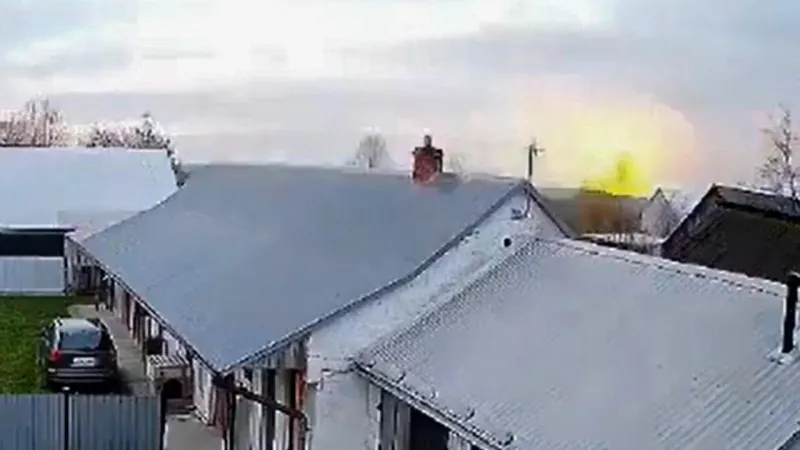
Warsaw, Poland — Two missiles, widely attributed to Russian forces, reportedly struck Polish territory, triggering a swift and grave response from the North Atlantic Treaty Organization and placing the alliance on high alert. The incident, occurring amidst heightened Russian aggression against Ukrainian cities like Kyiv and Lviv, has dramatically escalated geopolitical tensions and prompted President Donald Trump's administration to intensify its efforts for a lasting peace settlement by January.
The projectiles landed deep within Polish borders, near the Ukrainian frontier, marking a perilous spillover of the ongoing conflict. While initial assessments focused on the immediate physical damage and potential casualties, the primary concern rapidly shifted to the wider implications for collective security under NATO's Article 5. Polish authorities are conducting a thorough investigation to confirm the origin and trajectory of the ordnance.
NATO Secretary General Jens Stoltenberg convened an emergency meeting of the North Atlantic Council, emphasizing the seriousness of the incident and reaffirming the alliance's unwavering commitment to mutual defense. Discussions reportedly centered on intelligence sharing, immediate defensive posture adjustments, and diplomatic responses to prevent further escalation. The incident has cast a stark light on the fragility of regional stability.
Moscow has yet to formally acknowledge or claim responsibility for the missile strikes on Polish soil. However, reports from the region indicate a renewed intensity in Russian aerial bombardments targeting Ukrainian infrastructure and civilian areas, specifically Kyiv and Lviv. This aggressive posture from the Kremlin is perceived by many observers as a direct expression of President Vladimir Putin's growing frustration with the stalled progress of his military campaign.
The United States, through President Donald Trump, swiftly condemned the missile incident and called for immediate de-escalation from all parties. President Trump, who has consistently advocated for a rapid resolution to the conflict, reiterated his commitment to brokering a peace agreement. His administration is reportedly exploring various diplomatic avenues, including evaluating a potential visit to Moscow by a delegation of the E3 countries—France, Germany, and the United Kingdom—to facilitate dialogue.
This latest development follows a period of intense diplomatic maneuvering, where the prospect of peace talks has been a recurring theme. President Trump has publicly stated his ambition to achieve a comprehensive peace accord in the region before the close of January, a timeline that now appears even more challenging given the volatile circumstances. The precise details of Moscow's receptiveness to the E3 visit remain unclear.
The strike on Poland has reignited urgent discussions about NATO's collective defense readiness and its deterrence capabilities. Military analysts suggest that while Article 5 invocation remains a high bar, this event unequivocally tests NATO readiness, a point highlighted by previous reports. The alliance faces the delicate task of responding robustly without inadvertently precipitating a broader conflict. For a deeper look at the alliance's response, read Poland Confirms Russian Objects Down, Tests NATO Readiness.
European leaders have echoed the calls for restraint while simultaneously bolstering their own defense postures. Several nations bordering Ukraine and Russia have initiated reviews of their air defense systems and increased surveillance activities. The shared border with Ukraine makes Poland particularly vulnerable to such accidental or intentional cross-border incidents, a fact that underscores the broader security concerns across Eastern Europe.
The long-term geopolitical ramifications of this incident are significant. It underscores the unpredictable nature of modern warfare and the constant threat of unintended escalation. As diplomatic channels work overtime, the world watches to see if this latest flashpoint will be contained or if it will fundamentally alter the trajectory of the ongoing conflict and international relations.
Amidst these escalating tensions, the global economy braces for potential instability. Energy markets and supply chains, already under strain from the prolonged conflict, face renewed uncertainty. The prospect of further sanctions or disruptions could reverberate worldwide, impacting everything from consumer prices to international trade agreements. All eyes are now on the diplomatic efforts to navigate this precarious new phase.