 Robert Andrison
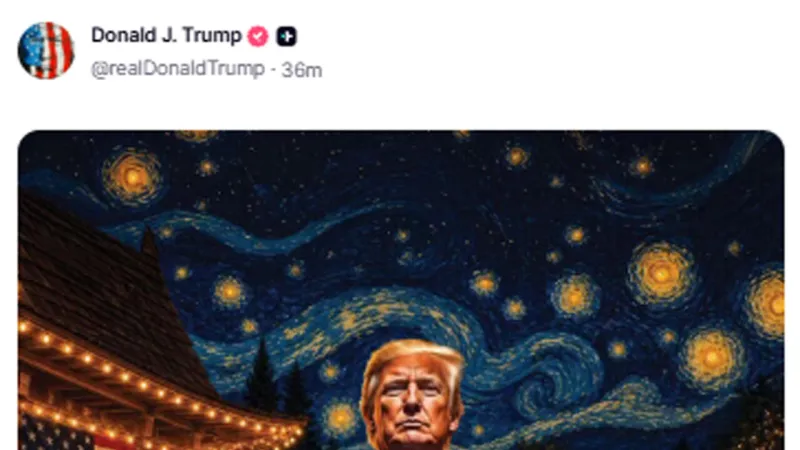
WASHINGTON – President Donald Trump ignited a fresh wave of political speculation recently by posting an image on his Truth Social platform emblazoned with the words "Trump 2028." The provocative visual, featuring the President against a backdrop of an American flag and a jubilant crowd, immediately fueled discussions about his potential future presidential aspirations, even as he currently occupies the Oval Office.
The digital graphic, shared prominently across the social network owned by the President, depicts him in a characteristic pose, with the iconic red, white, and blue of the Stars and Stripes fluttering in the background. Beneath the text, a diverse crowd is seen raising glasses in what appears to be a celebratory toast, further amplifying the message of a future political endeavor.
The timing of the post is particularly noteworthy. As the sitting President of the United States in 2026, President Trump’s message concerning a 2028 campaign marks an unusual, though not entirely unexpected, move in American politics. Presidents typically focus on their current term, with discussions of future campaigns generally reserved for outgoing administrations or those nearing the end of their second term.
This subtle yet potent declaration is poised to reshape the nascent landscape for the 2028 Republican presidential primary. While several prominent figures within the party were beginning to position themselves for a potential run, a direct signal from President Trump could either consolidate support around him or force other hopefuls to recalibrate their ambitions significantly.
Historically, a sitting president has never openly teased a non-consecutive third term while still in office. The 22nd Amendment limits a president to two terms, consecutive or not. President Trump previously served one full term before his current tenure, making a 2028 bid a unique scenario. Such an announcement, if followed through, would represent an unprecedented chapter in presidential election history.
Truth Social has consistently served as President Trump’s primary communication channel, offering him a direct conduit to his base, unfiltered by mainstream media. This latest post underscores the platform’s critical role in his political strategy, allowing him to disseminate messages that bypass traditional news cycles and directly engage with supporters, shaping narratives on his own terms.
Political strategists and pundits have begun dissecting the implications. Many view the "Trump 2028" image as a tactical maneuver, designed to maintain political relevance, test the waters for future support, and potentially deter challengers. Others interpret it as a definitive statement of intent, suggesting a deep-seated desire to remain a central figure in American governance beyond his current term.
Among his fervent supporters, the reaction has been overwhelmingly positive. Online forums and social media channels populated by the President’s base quickly erupted with messages of encouragement and affirmation, perceiving the post as a clear indication of his enduring commitment to conservative principles and a promise of continued leadership.
Conversely, political opponents and critics have decried the post as a distraction from current governance. They argue that such early signaling for a future election diverts focus from pressing national issues and could potentially undermine the public’s confidence in the administration’s dedication to its present responsibilities.
The move inevitably raises questions about how a potential "Trump 2028" campaign might influence the remainder of his current term. Critics suggest it could lead to a campaign-style administration, prioritizing political positioning over policy implementation. Supporters, however, argue it demonstrates a forward-thinking vision for the nation’s long-term trajectory.
Beyond the immediate speculation, this announcement has broader ramifications for both major parties. For Democrats, it provides an early target for opposition research and strategy, while for Republicans, it solidifies the perception that President Trump remains the party’s dominant figure, influencing nominations and platforms for years to come.
The concept of political longevity and a continued presence at the highest echelons of power is not new to American politics, though President Trump’s approach is distinctly modern. His use of social media to telegraph future intentions contrasts sharply with historical methods of political signaling, highlighting an evolving media landscape.
This strategic move aligns with President Trump's consistent engagement on critical issues, even those seemingly outside immediate domestic policy. For instance, his strong stance on border security, as articulated in previous remarks where he and JD Vance decried the Ceuta migrant surge as an "invasion," illustrates his consistent messaging that resonates with his base and potential future voters.
As the 2026 political calendar progresses, observers will keenly watch for further indications from President Trump regarding his intentions. Whether this post is a definitive pledge, a strategic trial balloon, or merely an exercise in political theater, it has successfully ignited a national conversation about the future of American leadership.
The digital declaration serves as a powerful reminder of President Trump’s unparalleled ability to command headlines and dictate the political agenda, ensuring his name remains central to discussions about the nation’s highest office for years to come.